
Copper ETFs and the U.S. Stockpiling-Driven Price Surge: Assessing the Sustainability of the Rally Amid Political and Supply Risks
The copper market in 2026 has become a focal point for investors, driven by a confluence of geopolitical tensions, supply chain disruptions, and speculative fervor. At the heart of this volatility lies the U.S. government's strategic stockpiling of copper, a move that has reshaped global trade flows and pushed prices to record highs. As copper surge in popularity, the critical question remains: Is this rally sustainable, or is it a flashpoint for instability amid escalating political and supply risks?
The U.S. Stockpiling Surge: A Catalyst for Price Volatility
The U.S. has emerged as a central hub for copper inventory, . This surge is directly tied to uncertainty over potential tariffs on refined copper imports under Section 232 of U.S. trade law. Traders and importers have rushed shipments to the U.S. to avoid potential duties, creating a fragmented global market where U.S. prices trade at a persistent premium over the London Metal Exchange (). By early 2026, , while U.S. , the widest spread in decades.
This artificial scarcity in global markets has exacerbated supply shortages elsewhere. European and Asian manufacturers now face acute regional premiums, . Analysts warn that the U.S. hoarding of copper could leave the rest of the world undersupplied, particularly as key mines like Chile's Mantoverde and Indonesia's Grasberg face operational disruptions.
Copper ETFs: Fueling the Rally and Navigating Fragmented Markets
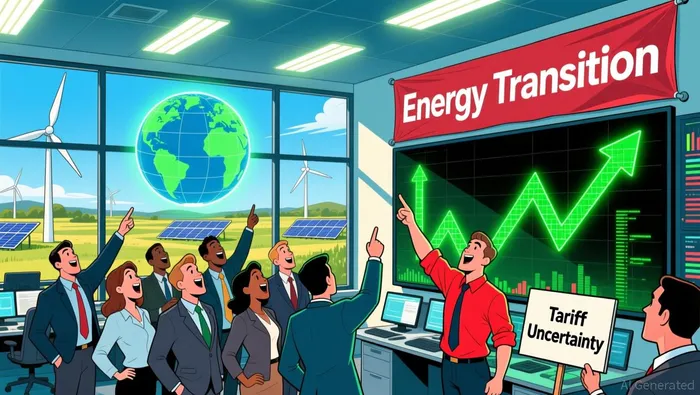 Copper ETFs have played a pivotal role in amplifying the price surge. Funds like the Global X Copper Miners ETFCOPX-- (COPX) have , reflecting growing institutional and retail demand for exposure to the red metal. These ETFs are structured to capitalize on long-term structural demand drivers, including the energy transition, AI-driven infrastructure, and electrification. However, their strategies are increasingly shaped by the fragmented market dynamics created by U.S. uncertainty.
For instance, ETFs are now favoring producers with U.S. assets or domestic supply chain positions, anticipating a sustained premium for U.S.-listed copper. This shift is supported by the CME-LME arbitrage spread, which incentivizes copper flows into the U.S. despite higher shipping costs. J.P. Morgan analysts note that ETFs are acting as stabilizing forces in a volatile market, with inflows signaling confidence in copper's long-term fundamentals.
Sustainability of the Rally: Structural Demand vs. Political Uncertainty
The sustainability of the current rally hinges on two competing forces: structural demand and political risks.
Structural Demand: Copper's role in the energy transition is undeniable. Goldman Sachs and J.P. Morgan project a , driven by surging demand for grid upgrades, electric vehicles, and AI data centers. With mine lead times averaging 10–15 years, the supply side is ill-equipped to meet this demand, creating a long-term imbalance. This dynamic positions copper ETFs to benefit from sustained price appreciation, even as near-term volatility persists.
Political Risks: The U.S. Secretary of Commerce's June 2026 decision on tariffs will be a pivotal moment. If tariffs are implemented, they could lock in U.S. inventory and widen regional price disparities, reinforcing the current premium. Conversely, a decision to exempt copper from tariffs could trigger a sudden shift in trade flows, leading to a rapid inventory rebuild outside the U.S. and downward pressure on prices. Additionally, the Trump administration's proposed 50% tariff in early 2025 has already created a self-fulfilling prophecy, with traders front-loading shipments to avoid hypothetical duties.
Supply-Side Constraints: A Double-Edged Sword
Supply disruptions further complicate the outlook. Mine outages, such as the fatal mudslide at Grasberg and labor strikes in Chile, have tightened global availability. Meanwhile, years of underinvestment in new projects have left the market with little buffer to absorb shocks. However, these constraints also highlight the fragility of the current rally. If production stabilizes or new projects come online, the premium could unwind, particularly if U.S. tariffs are delayed or scaled back.
Conclusion: A Balancing Act for Investors
The copper ETF rally is underpinned by a compelling narrative: structural demand from the energy transition, geopolitical-driven stockpiling, and a global supply deficit. However, its sustainability depends on navigating political and supply-side risks. For investors, the key is to differentiate between short-term volatility and long-term fundamentals.
While near-term price swings are inevitable-driven by tariff decisions, mine outages, and macroeconomic signals-the long-term outlook remains bullish. As Goldman Sachs notes, , driven by structural demand. Copper ETFs, with their adaptability to fragmented markets and exposure to strategic producers, are well-positioned to weather the turbulence and capitalize on this transformative era for the red metal.





Comentarios
Aún no hay comentarios