
Copper Demand, Political Risk, and ESG Tensions in the Resolution Copper Project: A Strategic Investment Analysis
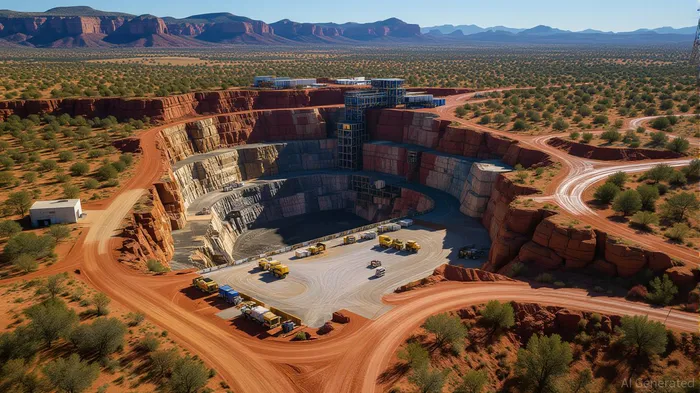
The Resolution Copper Project, a $2 billion endeavor targeting one of North America's largest copper deposits, sits at the intersection of critical mineral demand, geopolitical tensions, and ESG scrutiny. As global copper consumption accelerates—driven by the energy transition and electrification—investors must weigh the project's potential against a backdrop of regulatory uncertainty, environmental risks, and social opposition. This analysis evaluates the long-term viability of the project, contextualizing its challenges within the broader dynamics of the copper market and global supply chains.
Copper Demand: A Decade of Acceleration
Global copper demand is projected to grow at a 2.6% CAGR through 2035, outpacing historical trends. The energy transition alone accounts for 23% of this demand by 2050, with electric vehicles (EVs) and renewable infrastructure as key drivers. A single EV requires 80–100 kg of copper, compared to 20 kg for a conventional vehicle, while wind turbines and solar panels demand 5–6 times more copper per megawatt than fossil fuel plants.
The Resolution Copper Project, with its 40 billion-pound reserve and 1 billion-pound annual output, could supply 25% of U.S. demand once operational. However, the project's 10-year construction timeline and 40-year lifespan must align with a rapidly shifting market. reveal volatility tied to supply constraints and geopolitical factors, underscoring the need for long-term price visibility.
Political Risk: A Minefield of Legal and Tribal Challenges
The project's path to approval has been fraught with legal battles. The U.S. Forest Service's 2025 republished Final EIS and Draft Record of Decision (DROD) mark a regulatory milestone, but a 9th Circuit Court injunction has temporarily blocked the land exchange—a critical step for transferring 5,300 acres of private land to the mining companies. The San Carlos Apache Tribe's opposition, rooted in the sacred status of Oak Flat, has galvanized environmental groups and added a layer of political complexity.
Geopolitical dynamics further complicate the project. The U.S. government's push for domestic mineral independence—framed as a national security imperative—has positioned the project as a strategic asset. Yet, shifting political priorities, such as the Trump administration's expedited approvals versus Biden-era ESG mandates, create regulatory uncertainty. reflects investor sensitivity to these risks, with both companies navigating a delicate balance between production targets and stakeholder expectations.
ESG Tensions: Environmental and Social Trade-Offs
The Resolution Copper Project's block caving method, while efficient for deep deposits, poses significant environmental risks. Subsidence from mining could create a 2,000-foot-deep, 2-mile-wide crater, irreversibly altering the Oak Flat ecosystem. Critics argue that the project's carbon footprint—linked to energy-intensive extraction and processing—contradicts decarbonization goals.
Socially, the project's $149 million annual payroll and $200 million in federal revenue align with economic development objectives, but community engagement remains contentious. The San Carlos Apache Tribe's legal and cultural objections highlight the growing importance of social license to operate. Meanwhile, the project's $1.5 billion in state and local tax revenue must be weighed against potential long-term environmental remediation costs.
Investment Implications: Navigating a High-Stakes Landscape
For investors, the Resolution Copper Project embodies both opportunity and risk. Its potential to supply 25% of U.S. copper demand aligns with decarbonization and infrastructure modernization goals, but its success hinges on resolving legal, environmental, and social challenges. Key considerations include:
1. Regulatory Resilience: The project's ability to secure final permits and navigate the 90-day USFS response period post-objection period.
2. ESG Alignment: Mitigation strategies for subsidence, water usage, and carbon emissions, including partnerships with local tribes and environmental groups.
3. Market Dynamics: The interplay between global copper prices, U.S. refining capacity constraints, and trade policies (e.g., tariffs on semi-finished goods).
indicate improving sustainability metrics, but the Resolution Copper Project's unique risks may test these credentials. Investors should monitor the project's progress in securing a Final Record of Decision and its ability to integrate ESG frameworks like the Copper Mark.
Conclusion: A Calculated Bet on the Future
The Resolution Copper Project represents a pivotal test case for critical mineral investments in an era of geopolitical and environmental turbulence. While its scale and strategic value are undeniable, its long-term viability depends on resolving legal disputes, addressing ESG concerns, and aligning with the energy transition's demands. For investors, the project underscores the necessity of diversifying supply chains, prioritizing jurisdictional stability, and embedding ESG criteria into capital allocation. As the world races to electrify its economy, the copper sector's ability to navigate these tensions will define its role in the 21st-century energy landscape.
suggest a widening gap, making projects like Resolution Copper increasingly vital. However, the path to profitability is anything but smooth—a reality that demands both strategic foresight and operational agility.







Comentarios
Aún no hay comentarios