
Copper's Crucible: Navigating Structural Shortages in a Smelting-Driven Market
The global copper market is entering a period of unprecedented tension, driven by a confluence of structural imbalances, geopolitical maneuvering, and the relentless march of electrification. As China's stockpiling ambitions collide with supply-side bottlenecks and a smelting-concentrate mismatch, investors are facing a rare opportunity to position themselves for a long-term copper rally. Let's dissect the key drivers and why this is a buy signal for aggressive investors.
China's Strategic Stockpiling: A Demand Catalyst
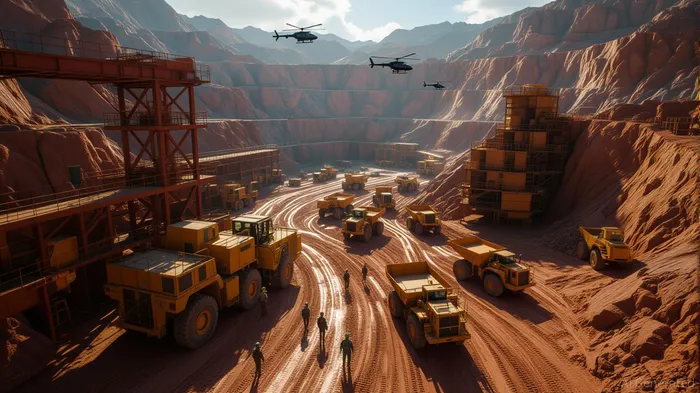
China, the world's largest copper consumer, has ramped up its stockpiling efforts to historic levels in 2025. State reserves are projected to add 400,000 tons this year, with storage capacity expanded by 35% since 2022. This move isn't just about securing supply—it's a strategic hedge against geopolitical risks and a tightening market.
The National Development and Reform Commission's 14th Five-Year Plan aims to boost domestic concentrate production to 2.1 million tons by 2026, but this pales against annual refined copper consumption of over 14 million tons. The gap is being filled by imports from Chile, Peru, and Mongolia, with Mongolia's Oyu Tolgoi mine seeing a 22.5% year-over-year surge in exports. Yet, even this diversification cannot mask the underlying shortage.
The data shows a clear trend: imports are rising despite seasonal dips, driven by smelters operating at 92% utilization rates—far above the global average. This is a red flag for investors: when the world's largest consumer hoards copper, the global market tightens.
Mine Disruptions and the Concentrate Crunch
The supply side is in turmoil. Key projects face delays or outright shutdowns:
- KAZ Minerals' East Zhezkazgan mine (Kazakhstan): A March accident slashed output by 600 tons/day.
- Kamoa-Kakula (DRC): Production guidance was cut by 28%, reducing annual output to 370,000–420,000 tons.
- Hudbay's Snow Lake mine (Canada): Wildfires forced an indefinite suspension, underscoring climate risks.
Even Indonesia's decision to allow 1.27 million tons of concentrate exports (with a 7.5% export tax) offers only temporary relief. Analysts warn that without new discoveries—only four major deposits found in five years—the 30% deficit by 2035 (per the IEA) is inevitable.
The chart reveals the crux of the problem: smelting capacity is expanding 18% since 2020, while mine output grows just 7%. This mismatch has driven treatment and refining charges (TC/RC) into negative territory—-$57.50/ton in May 2025—a historic inversion signaling smelters are now paying miners to process concentrate.
Smelting Capacity Overhang: A Structural Crisis
The TC/RC collapse reflects a market in disarray. Chinese smelters, buoyed by state support, operate at full tilt, while international peers face brutal choices:
- Glencore's Pasar smelter (Philippines) halted operations until July 2025 due to ownership disputes.
- JX Advanced Metals (USA) is shifting to recycled materials and considering production cuts.
The divergence is stark: Chinese smelters add 500,000–1 million tons/year of capacity (e.g., Tongling's new plants), while global projects like Adani's Indian smelter strain supply further. This overcapacity in smelting vs. undercapacity in mining creates a self-reinforcing cycle: negative TC/RC rates force marginal smelters to shut, but Chinese state-backed giants keep running, worsening the imbalance.
Geopolitical Risks: Trade Wars and Resource Nationalism
Supply chains are fracturing under geopolitical pressures:
- US tariffs: Proposed 15% duties on refined copper imports have spurred a 18% QoQ surge in US imports from Chile.
- Scrap nationalism: Countries like Vietnam and Malaysia are restricting copper scrap exports, eroding recycling's role as a 40% demand solution by 2035.
China's Belt and Road investments—over $15 billion in overseas mines since 2020—are securing long-term supply, but this risks a resource arms race. The DRC's Kamoa-Kakula and Peru's Cerro Verde are battlegrounds where geopolitical rivalries could disrupt flows.
The Investment Case: Long Copper, Now
The fundamentals scream long exposure to copper:
1. Demand Growth: Electrification is a 2.6% CAGR demand driver to 2035. EVs alone require three times more copper per vehicle than ICE cars, and solar/wind projects use 4–5 tons/ MW.
2. Supply Constraints: Declining ore grades, environmental hurdles (water scarcity affects 7% of global supply), and a 17-year lag from discovery to production mean deficits will deepen.
3. Valuation: Copper is undervalued relative to other commodities (e.g., aluminum is oversupplied, nickel faces Indonesian export bans).
Action Items:
- Buy CUPM (Copper ETF): Tracks COMEX copper futures, offering direct exposure.
- Consider JJC (3x leveraged copper ETF): For aggressive investors willing to ride volatility.
This comparison shows copper's resilience amid broader metal weakness. With $9,000/ton prices, it's still below 2022 peaks—making now an entry point.
Conclusion: Act Before the Policy Floodgates Close
The structural shortage is baked into the market. China's stockpiling, mine disruptions, and a smelting overhang are tightening supply faster than most realize. Geopolitical frictions will only amplify these trends.
Investors who wait until deficits are undeniable may miss the upside—by then, governments could impose export curbs or price caps. Act now. Position in copper futures or ETFs before the world's transition to green energy turns a deficit into a crisis.
The clock is ticking—copper's crucible is about to boil over.
Disclaimer: This analysis is for informational purposes only. Always consult a financial advisor before making investment decisions.







Comentarios
Aún no hay comentarios