
Copper's Crossroads: Navigating Volatility in a Tariff-Tinged Market
The copper market has become a battleground of geopolitical tension and technical volatility, with prices caught between short-term bullish dynamics and longer-term risks tied to U.S.-China trade disputes. As the July 9 tariff deadline looms, traders must balance fundamentals-driven strategies with technical triggers to capitalize on this critical crossroads. Below, we dissect the key drivers and outline a path forward for investors.
Technical Analysis: Key Levels Define the Battle
Copper's price action since early 2025 reveals a tight range, with LME prices hovering near $9,800/ton as of June 19. Technical analysis highlights critical support and resistance zones that will dictate near-term direction.
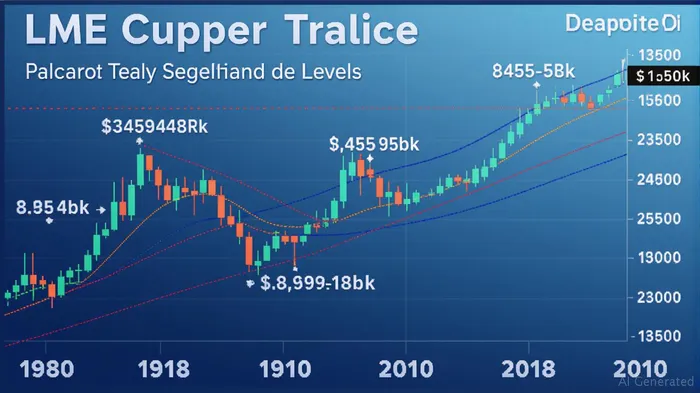
- Immediate Support: $9,600/ton (psychological threshold and recent swing low)
- Key Resistance: $10,000/ton (annual high) and $10,500/ton (2023 peak)
- Near-Term Range: $9,600–$10,000, with a break above $10,000 signaling a bullish breakout toward $10,500.
The RSI (14) remains neutral at 55, suggesting no overbought/oversold extremes. Traders should monitor volume trends—sustained upside momentum requires daily volume above 20,000 LME lots.
Fundamentals: Tariffs, Trade, and Supply Constraints
The market is pricing in two opposing forces:
1. Bullish Catalysts:
- Supply Tightness: LME inventories have plunged to multi-year lows (<50,000 tons), with smelters in China and Chile restricting exports.
- Structural Demand: EV and renewable energy projects require 2–4x more copper per unit than traditional infrastructure.
- Dollar Weakness: A declining USD index (+2% YTD) supports commodity prices.
- Bearish Risks:
- Tariff Uncertainty: If July 9 talks fail, reimposed tariffs could disrupt China's 50% share of global demand, triggering a $200/ton price drop.
- Overheated Premiums: The Comex-LME spread (currently 7%) could collapse if tariffs are avoided, eroding U.S. premium-driven gains.
Inventory Dynamics: A Double-Edged Sword
- LME Stocks: At 48,000 tons (vs. 100,000+ in 2024), low inventories amplify price spikes during supply disruptions.
- Comex vs. SHFE: U.S. inventories have surged to 120,000 tons (+30% YTD), reflecting speculative flows ahead of the tariff deadline. A post-July 9 exodus from Comex could pressure prices.
Fund Positioning: Bulls vs. Bears
Speculative funds hold a net long position of 150,000 LME contracts, betting on tariff-driven scarcity. However, a sudden shift in trade policy could trigger a “short-covering” sell-off.
Trading Strategy: Neutral-to-Bullish Short-Term, Bearish Long-Term
Short-Term (0–3 Months):
- Buy Signal: Enter long positions on dips to $9,600/ton, targeting $10,000.
- Stop-Loss: Exit below $9,400/ton (200-day SMA).
- Trigger: A positive July 9 trade update or a sustained close above $10,000.
Long-Term (6–12 Months):
- Bearish Thesis: If tariffs escalate, China's demand destruction and Comex inventory overhang could push prices to $8,500/ton.
- Hedge: Use put options (strike at $9,000) to protect against downside risk.
Risk Management: Key Thresholds
- Technical Watch:
- Resistance Break: $10,500/ton (2023 high) invalidates bearish outlook.
- Support Failure: Below $9,000/ton signals macroeconomic recession risks.
- Fundamental Watch:
- July 9 Deadline: Resolve tariff uncertainty.
- LME Inventory Rebuild: A rebound to 100,000 tons would signal supply relief.
Conclusion
Copper remains a high-reward, high-risk trade in Q3 2025. Traders should exploit short-term bullish momentum while hedging against the tariff overhang. The July 9 deadline is the ultimate pivot point—positioning accordingly could mean the difference between capitalizing on a cyclical rally and avoiding a structural bear market.
Stay vigilant, set stops, and let the data guide your next move.







Comentarios
Aún no hay comentarios