
Copper's Crossroads: Navigating Surpluses, Tariffs, and the Green Transition
The global copper market is at a critical juncture. A projected 289,000-ton surplus in 2025—more than double 2024's levels—has sent shockwaves through commodities markets. Yet beneath the surface of oversupply lies a paradox: copper remains the lifeblood of the energy transition, with each electric vehicle requiring 85kg of copper and solar/wind infrastructure demanding vast quantities. For investors, the challenge is clear: how to position for a metal that is both oversupplied today and indispensable tomorrow?
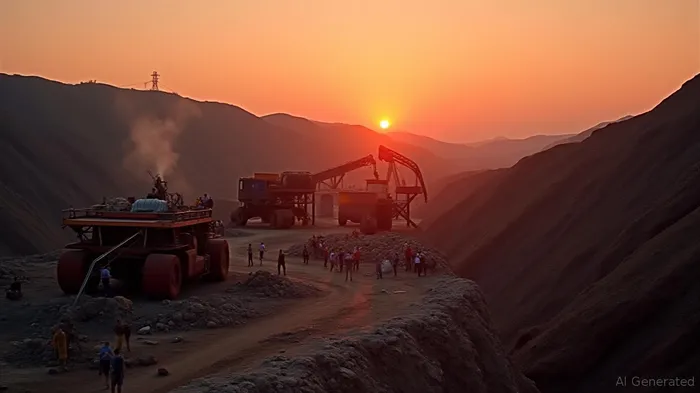
The Supply Surge: Winners and Losers
The surplus is fueled by Chile's record production, which hit 486,574 tonnes in May 2025, a 9.4% annual jump. Chile's resurgence—driven by advanced AI-driven mining and expansions at Codelco's Rajo Inca and Antofagasta's Los Pelambres—has boosted its global share to 25%, easing prices. Meanwhile, Peru and the DRC are catching up, with the latter's Kamoa-Kakula mine (operated by Ivanhoe Mines) producing 437,061 tonnes in 2024, a 12% rise.
But not all regions shine. Indonesia's output dipped in 2025 due to regulatory hurdles, while Chile faces declining ore grades (now 0.65% vs. 1.0% in 2005) and water scarcity. These headwinds suggest future production growth will be uneven, creating opportunities for companies with high-grade reserves and sustainable practices.
Demand: China's Slowdown and the Green Pivot
The ICSG warns that China's copper demand growth will drop to 0.8% in 2026, down from 2% in 2025. This reflects broader economic softness and the fading stimulus of 2023. Yet China's renewable energy push—including 30% annual solar growth—remains a copper magnet. Meanwhile, the U.S. EV boom (Tesla's Q1 deliveries rose 53% Y/Y) and Europe's infrastructure spending (Germany's €100bn climate plan) are secondary drivers.
The wildcard? U.S. tariffs. Proposed duties on Chinese copper imports aim to revive domestic production but risk destabilizing global flows. Traders are already rushing shipments to the U.S. ahead of tariffs, creating volatility. Investors should monitor **** (Ivanhoe Mines, a key DRC player), as geopolitical risks could disrupt supply chains.
Tariffs and Trade: A Double-Edged Sword
U.S. policies are reshaping trade dynamics. By targeting Chinese imports, Washington seeks to favor domestic mines like Freeport-McMoRan (FCX), which operates the Cobre Panama project. However, tariffs could backfire: shows weak correlation, as geopolitical uncertainty outweighs policy gains.
The EU and Japan face their own dilemmas. Europe's reliance on Chilean imports makes it vulnerable to supply shocks, while Japan's trade negotiations with the U.S. (deadline: July 2025) could redefine Asia's copper trade.
Investment Playbook: Long-Term Value in a Volatile Market
The near-term surplus suggests caution, but the energy transition's copper demand (projected to double by 2030) is a non-negotiable. Here's how to play it:
- Quality Producers with Low Costs:
- Codelco (state-owned, Chile): Benefits from scale and high-grade reserves.
Ivanhoe Mines (IVN): Kamoa-Kakula's 4.95% copper grade and access to the Lobito Corridor (cutting transport time to 4 days vs. 25) give it a logistics edge.
Green Tech Plays:
- First Quantum Minerals (FMG): Expands in the DRC and Canada, with EV-linked projects.
ETFs: COPX (Global X Copper Miners ETF) offers diversified exposure to miners.
Avoid Overextended Firms:
Companies like Southern Copper (SCCO)—reliant on Peruvian projects facing community disputes—face execution risks.Hedge with Futures:
Use Copper Futures (HG) to lock in prices if physical demand surges post-2026.
The Bottom Line
Copper is caught in a tug-of-war between short-term oversupply and long-term necessity. Investors must balance near-term volatility with the metal's critical role in decarbonization. Focus on firms with low costs, geopolitical resilience, and exposure to EV/renewables. As one trader noted: “Copper is the new oil—it's just more rusty.”
Final Call: Buy quality producers (IVN, FMG) and ETFs (COPX) on dips below $3.50/lb, but keep a close eye on tariffs and DRC production. The green transition won't wait—we can't either.





Comentarios
Aún no hay comentarios