
Copa Holdings' Recent Stock Decline: Navigating Short-Term Volatility Amid Long-Term Strategic Strength
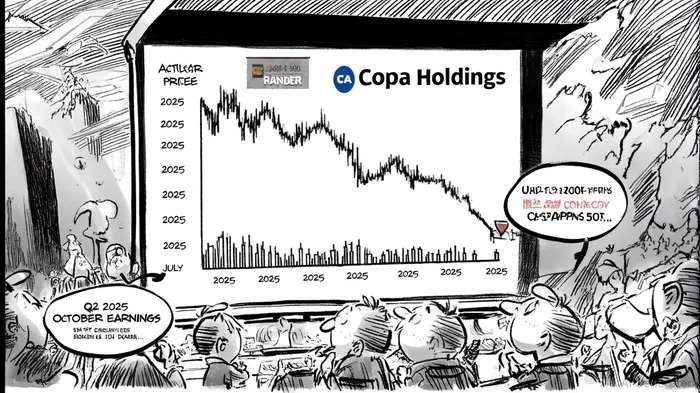
Copa Holdings (CPA) has experienced notable short-term volatility in late 2025, with its stock price dropping -2.15% on October 10 to close at $121.69, underperforming broader markets but still outpacing the S&P 500's -2.71% decline on the same day, according to a Yahoo Finance report. This recent turbulence raises critical questions for investors: Is the decline a temporary correction driven by macroeconomic headwinds, or a signal of deeper structural challenges? A closer examination of the company's financials, analyst sentiment, and strategic initiatives reveals a nuanced picture where short-term risks coexist with long-term resilience.
Short-Term Volatility: Market Forces and Industry Pressures
The recent pullback in CPA's stock price reflects a confluence of factors. Broad market volatility, driven by concerns over inflation and interest rates, has weighed on equities, particularly in capital-intensive sectors like aviation. On October 1, 2025, CPACPA-- fell -1.04% to $117.59, a decline attributed to both sector-wide weakness and specific operational headwinds, according to a GlobeNewswire release. MarketBeat's Q2 summary shows that Copa's revenue per available seat mile (RASM) and passenger yields contracted by 2.8% and 4.1%, respectively, signaling pricing pressures in a competitive Latin American market, per the MarketBeat report.
However, these challenges are not unique to Copa. The broader airline industry is grappling with post-pandemic demand normalization and fuel cost fluctuations. For instance, Copa's Q2 2025 operating margin of 21%-despite a $149 million net profit-suggests that cost discipline and route optimization are mitigating some of these pressures, as shown in its Yahoo Finance profile. The company's reaffirmed 2025 guidance of 21–23% operating margins and 7–8% ASM growth underscores its confidence in navigating these headwinds, per a Nasdaq press release.
Long-Term Strategic Value: Fundamentals and Analyst Confidence
While short-term metrics paint a mixed picture, Copa's long-term strategic value remains compelling. The company's balance sheet is a cornerstone of its resilience: as of Q2 2025, it held $1.4 billion in cash and 42 unencumbered aircraft, with a conservative net debt/EBITDA ratio of 0.6×, according to its company financials. This financial flexibility positions Copa to invest in growth without overleveraging, a critical advantage in cyclical industries.
Analyst sentiment further reinforces this optimism. A consensus of 12 analysts covering CPA assigns a "Strong Buy" rating, with an average 12-month price target of $159.8, implying a 31.32% upside from its October 10 closing price, per the StockAnalysis forecast. This optimism is grounded in Copa's projected revenue and earnings growth: $3.98 billion in 2026 revenue (a 9.04% increase from 2025) and $18.39 EPS (10.69% growth), as disclosed in its earnings release. Such figures outpace industry averages and reflect the company's ability to scale efficiently.
Copa's strategic investments also bolster its long-term outlook. The delivery of three Boeing 737 MAX 8 aircraft in Q2 2025, coupled with plans to expand its fleet by year-end, signals a commitment to capacity growth and route diversification, according to the WSJ analyst page. These moves align with rising demand in Latin America, where Copa dominates the U.S.-to-Colombia corridor and is expanding into emerging markets like Costa Rica and Ecuador.
Catalysts to Watch: Earnings and Market Dynamics
The next critical inflection point for CPA will be its Q3 2025 earnings release on November 19, 2025, as noted in a Yahoo News article. Investors will scrutinize the company's ability to maintain its 21–23% operating margin guidance amid RASM pressures and fuel costs. A positive surprise could reignite momentum, while a miss might exacerbate short-term volatility. Historically, CPA's stock has shown a positive response following earnings releases. Since 2022, the average 30-day return after an earnings event was approximately +7.1%, outperforming the benchmark's +1.7% return during the same period. However, with only three events in the sample, the results should be treated as indicative rather than conclusive.
Meanwhile, broader market dynamics will play a pivotal role. If inflationary fears abate and interest rates stabilize, the airline sector-historically sensitive to economic cycles-could see a rebound. Copa's strong cash reserves and disciplined cost structure make it well-positioned to benefit from such a scenario.
Conclusion: Balancing Risks and Rewards
Copa Holdings' recent stock decline reflects legitimate short-term challenges, including industry-wide RASM pressures and macroeconomic uncertainty. Yet, these risks are overshadowed by the company's robust financials, strategic investments, and analyst confidence. For investors with a medium-term horizon, the current pullback may present an opportunity to access a business with durable competitive advantages and a clear path to growth.
As always, the key lies in distinguishing between transient noise and enduring value. In Copa's case, the latter appears firmly intact.





Comentarios
Aún no hay comentarios