
COP30 and the Rise of Emerging Market Green Tech Leadership: Assessing China's Growing Role in the Global Energy Transition
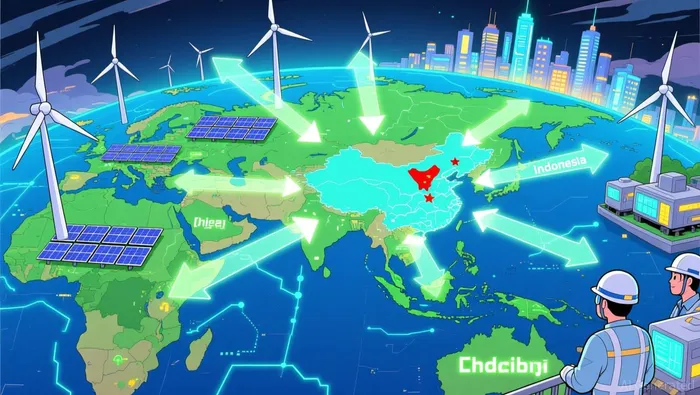
China's Green Tech Exports: A Catalyst for Global Decarbonization
China's clean technology exports have surged to unprecedented levels, with August 2025 marking a record $20 billion in shipments, driven by EVs and solar photovoltaic (PV) systems, according to an Ember report. The cost of solar panels has plummeted by over 80% in the last decade, making Chinese-made solutions indispensable for countries seeking affordable renewable energy, the report notes. For instance, New Zealand sourced 89% of its solar PV equipment from China in 2023, as the World Economic Forum noted, a trend mirrored across Southeast Asia and Africa.
Chinese EV battery manufacturers now hold a 60% global market share, with exports rising 30% year-on-year in 2023, the World Economic Forum said. This dominance is not merely a product of scale but also of innovation: Chinese companies account for 75% of global patent applications in clean energy technology, up from 5% in 2000, according to an Ember report. Such advancements are enabling 25% of emerging markets to leapfrog the U.S. in end-use electrification, while 63% have surpassed it in solar generation share, the Ember report found.
Geopolitical Shifts and the Redefinition of Energy Security
China's green tech leadership is reshaping global energy security, reducing reliance on fossil fuels and challenging traditional power structures. By 2025, renewable energy accounted for 84% of China's electricity demand growth, with fossil fuel use declining by 2% in the first half of the year, according to an Ember report. This transition is mirrored in emerging markets, where Chinese-made technologies are enabling countries to bypass costly infrastructure upgrades and directly adopt renewables.
The geopolitical implications are profound. China's projected solar manufacturing capacity of 1,255 GW by 2030 exceeds the International Energy Agency's (IEA) net-zero target of 761 GW, according to an Ember report, signaling a global overcapacity that could further drive down costs. For nations like Brazil, which hosted COP30, this means access to scalable, affordable solutions to meet climate goals without sacrificing economic growth, as noted in a Reuters report.
Investment Opportunities: Infrastructure, Innovation, and Carbon Markets
For investors, the intersection of China's green tech leadership and emerging market demand offers three key opportunities:
- Clean Energy Infrastructure: Chinese firms are financing and building solar and wind projects in Southeast Asia, Africa, and Latin America. These projects align with COP30's emphasis on climate finance and provide stable returns through long-term power purchase agreements.
- Innovation in Battery and Grid Technologies: Chinese companies are leading in next-generation battery chemistry and smart grid systems. For example, advancements in solid-state batteries could disrupt the EV market, offering higher energy density and faster charging, according to an Ember report.
- Carbon Markets and Emissions Trading: China's participation in the Brazil-led Open Coalition for the Integration of Carbon Markets at COP30 aims to standardize carbon trading rules, as reported by the South China Morning Post. This could unlock new investment flows in carbon credit exchanges, particularly in emerging markets with high abatement potential.
COP30 and the Road Ahead: Strategic Implications for Investors
At COP30, China's role as a climate leader is being redefined. While the U.S. remains absent from high-level climate negotiations, China is leveraging its green tech exports to position itself as a partner for global decarbonization, the Sky News report noted. Vice Premier Ding Xuexiang's call to remove trade barriers for green products, reported by the RTHK, underscores Beijing's intent to dominate the next phase of the energy transition.
For investors, the message is clear: diversifying exposure to China's green tech ecosystem and its emerging market partners is no longer optional. The integration of carbon markets, the proliferation of low-cost renewables, and the acceleration of electrification in developing economies are creating a new paradigm-one where China's leadership is both a catalyst and a constraint.
Conclusion
China's green technology revolution is a double-edged sword. While it democratizes access to clean energy, it also centralizes supply chains and raises questions about long-term sustainability. For investors, the key lies in balancing these dynamics: capitalizing on China's cost advantages while hedging against geopolitical risks. As COP30 underscores the urgency of climate action, the winners will be those who align with the realities of a world increasingly powered by Chinese innovation.







Comentarios
Aún no hay comentarios