
Converging Media Platforms and Digital Entertainment Consolidation: Canal+'s Strategic Acquisition of MultiChoice and the Rise of Africa's Dominant Super App
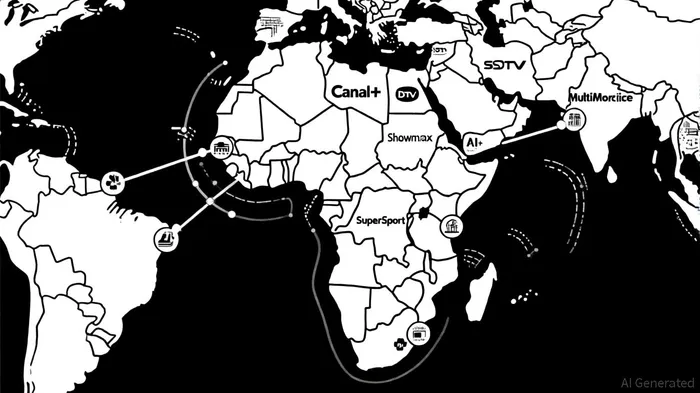
The global media landscape is undergoing a seismic shift as traditional pay-TV operators and digital streaming platforms collide. At the forefront of this transformation is Canal+'s landmark $2 billion acquisition of MultiChoice Group Limited, a deal that has redefined Africa's entertainment ecosystem. By merging Canal+'s European expertise with MultiChoice's African dominance, the combined entity now commands 40 million subscribers across 70 countries, positioning itself as a formidable player in the race to build a continent-wide "super app" for digital entertainment [1].
Strategic Acquisition and Regulatory Navigation
Canal+'s acquisition of MultiChoice was not merely a financial transaction but a masterclass in regulatory agility. To comply with South Africa's stringent foreign ownership laws, Canal+ structured the deal through a new entity, LicenceCo, which holds broadcasting licenses while ensuring local economic participation [4]. This creative approach allowed Canal+ to secure 94.39% of MultiChoice's shares while committing to R26 billion in local content investments-a pledge critical to securing regulatory approval from the South African Competition Tribunal [2]. The move underscores a broader trend: global media conglomerates are increasingly tailoring their strategies to align with local regulations and cultural priorities, a necessity in markets where political and economic sovereignty remain paramount [3].
Super App Ecosystem and Digital Integration
The acquisition's most transformative element is the creation of a unified digital platform. Canal+ and MultiChoice plan to integrate MultiChoice's DStv and Showmax services with Canal+'s global content library into a single "super app" experience. This platform will leverage AI-driven content recommendations, mobile-first delivery, and advanced streaming technology to cater to Africa's rapidly digitizing audience [4]. For instance, DStv Stream-a digital extension of MultiChoice's satellite TV service-will anchor the super app, enabling seamless cross-platform access to local and international programming [3].
This strategy mirrors the playbook of global giants like NetflixNFLX-- and Disney+, but with a critical edge: hyper-local relevance. By prioritizing African originals and sports programming (via SuperSport), the super app aims to capture the continent's $20 billion media market, which is projected to grow at a 12% CAGR through 2030 [5]. Analysts note that the merged entity's ability to blend global content with local storytelling could become its defining competitive advantage .
Competitive Positioning and Market Challenges
While the acquisition positions Canal+ as Africa's largest pay-TV operator, challenges loom. Critics warn of reduced media pluralism, with smaller broadcasters struggling to compete against a near-monopoly [2]. MultiChoice's recent subscriber losses in Ghana and Nigeria-attributed to rising competition from streaming services-also highlight operational risks [4]. However, Canal+'s track record in Asia and Europe suggests a capacity for innovation. For example, its secondary inward listing on the Johannesburg Stock Exchange (JSE) aims to maintain liquidity for local investors while attracting international capital-a hybrid model that could stabilize the merged entity's financials [1].
The super app's success will hinge on its ability to address Africa's fragmented digital infrastructure. While urban centers enjoy robust internet connectivity, rural markets remain underserved. Canal+'s investment in mobile-first delivery and offline content caching could bridge this gap, but execution will be key.
Future Outlook and Investment Implications
For investors, the Canal+-MultiChoice merger represents a high-conviction bet on Africa's digital future. The combined entity's $2.8 billion valuation reflects optimism about its potential to dominate a market where 60% of the population is under 25 [5]. However, risks include regulatory pushback, integration costs, and the threat of global streaming platforms expanding their African footprint.
A would illustrate the merger's immediate impact. Similarly, a could highlight growth opportunities.
Conclusion
Canal+'s acquisition of MultiChoice is more than a corporate milestone-it's a blueprint for the future of media consolidation in emerging markets. By harmonizing global and local content, navigating regulatory complexity, and investing in digital infrastructure, the merged entity is poised to redefine Africa's entertainment landscape. For investors, the key question is not whether the super app will succeed, but how quickly it will adapt to the continent's dynamic and often unpredictable market forces.





Comentarios
Aún no hay comentarios