
The Convergence of Macroeconomic Policy, Geopolitical Shifts, and Bitcoin's Next Leg Higher
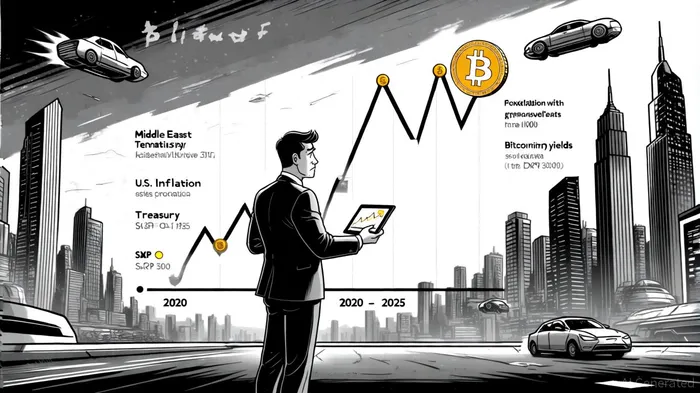
The global financial system is undergoing a seismic shift. Traditional pegs—fiat currencies, gold, and centralized reserves—are losing their grip as macroeconomic instability and geopolitical fragmentation redefine the rules of asset allocation. In this post-traditional-peg world, BitcoinBTC-- is emerging not merely as a speculative asset but as a strategic cornerstone for institutional and sovereign portfolios. The convergence of U.S. fiscal imbalances, deglobalization, and regulatory clarity is creating a perfect storm for Bitcoin's next leg higher.
Macroeconomic Policy: The Death of the Dollar's Monopoly
The U.S. dollar's dominance is eroding. According to a report by Bloomberg, the “One Big Beautiful Bill Act” (OBBBA) has exacerbated fiscal deficits, with the U.S. government projected to spend $6.5 trillion on debt servicing by 2026 [3]. This unsustainable trajectory has driven institutional investors to seek alternatives. Bitcoin's fixed supply of 21 million coins offers a stark contrast to the inflationary nature of fiat. Between 2020 and 2024, Bitcoin surged over 1,000% while U.S. inflation hit 20% [2].
Institutional adoption is accelerating. Spot Bitcoin ETFs in Europe and the U.S. have drawn over $50 billion in net inflows since early 2025, directly purchasing BTCBTC-- and tightening liquidity [4]. Corporate treasuries are also pivoting: 267 publicly listed firms, including MicroStrategy, now hold Bitcoin on balance sheets, with Q2 2025 purchases totaling $427 million [1]. This shift is not speculative—it's a hedge against a currency losing credibility.
Geopolitical Shifts: Bitcoin as a Geopolitical Arbitrage Tool
Geopolitical tensions are amplifying Bitcoin's strategic value. The IMF has warned that trade barriers have tripled since 2019, with over 3,000 active restrictions in 2023 [2]. In this fragmented landscape, Bitcoin's censorship-resistant nature becomes a critical asset. During the 2022 Russia-Ukraine conflict, Bitcoin facilitated $100 million in sanctions-busting donations [2].
The Middle East's volatility has further cemented Bitcoin's role as a safe-haven asset. As stated by a report from OKX, Bitcoin's price often spikes during regional crises, reflecting its dual identity as both a speculative vehicle and a store of value [1]. Meanwhile, nations like El Salvador and Pakistan are leveraging Bitcoin to bypass U.S. dollar dependency, while China's strict crypto controls highlight the asset's role in challenging centralized financial power [3].
Strategic Asset Allocation: Bitcoin's Unique Value Proposition
Bitcoin's appeal lies in its structural advantages. Unlike gold, which has a 0.8 correlation with equities during crises, Bitcoin's correlation with traditional assets is near zero [1]. This low correlation enhances portfolio diversification, particularly in a world where central banks are increasingly at odds with market forces.
Sovereign adoption is the next frontier. The U.S. Strategic Bitcoin Reserve, established in March 2025, mirrors similar initiatives in Germany and U.S. states like Ohio and Pennsylvania [2]. Franklin Templeton predicts a global trend of nations allocating Bitcoin to diversify reserves, citing its resilience against geopolitical shocks [3]. Meanwhile, the EU's MiCA framework has created a regulatory sandbox for institutional investors, contrasting with the U.S.'s fragmented approach [1].
The 2024 Halving and Regulatory Clarity: Catalysts for Growth
The 2024 Bitcoin halving—a 50% reduction in block rewards—has introduced scarcity, historically preceding price surges. Combined with regulatory clarity (e.g., the GENIUS Act's stablecoin rules), this event has positioned Bitcoin as a legitimate reserve asset [5]. As noted by Grayscale, the halving's supply shock, coupled with institutional demand, could drive Bitcoin to $150,000 by 2026 [3].
Conclusion: A New Paradigm for Global Finance
The post-traditional-peg world is here. Bitcoin's convergence with macroeconomic instability, geopolitical fragmentation, and institutional adoption is not a bubble—it's a structural shift. For investors, the question is no longer if Bitcoin will matter, but how much it will dominate. In a world where trust in centralized systems is waning, Bitcoin offers a decentralized alternative: a digital, scarce, and globally accessible store of value.






Comentarios
Aún no hay comentarios