
The Contrarian's Playbook: Why the Indian Rupee is an Undervalued Safe Haven in a Volatile World
In a world where Asian currencies are reeling from rising U.S. bond yields and geopolitical tensions, the Indian rupee (INR) stands out as a paradoxical beacon of stability. While the Indonesian rupiah, Malaysian ringgit, and Philippine peso have all dipped amid dollar strength, the rupee has defied expectations—flattening forward premiums and narrowing yield differentials hint at a market undervaluing India’s macro resilience. For contrarian investors, this presents a rare tactical opportunity: long rupee positions now could capitalize on a Fed rate-cut cycle, India’s inflation moderation, and the RBI’s strategic interventions.
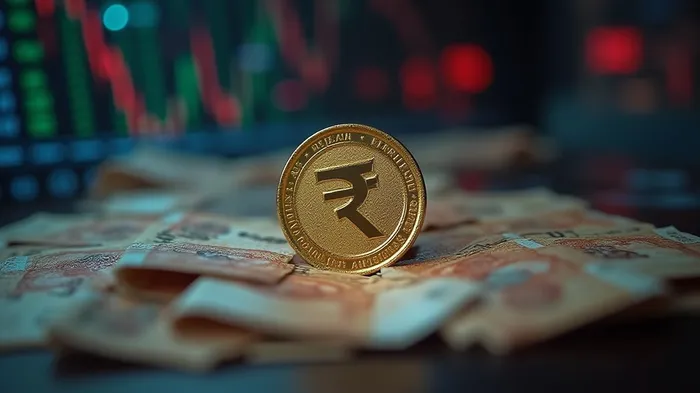
The Rupee’s Defiant Stability: A Macro Backdrop to Bet On
The INR’s resilience is no accident. Three key factors underpin its relative strength:
1. Improved External Balances: India’s current account deficit has narrowed to a historically tight 0.5% of GDP (per RBI data), thanks to software exports, remittances, and a surge in defense and pharmaceutical exports. This reduces vulnerability to capital flight.
2. RBI’s Active Defense: The central bank’s $874.6 million equity inflow management and forward contract interventions have stabilized liquidity. The RBI’s policy rate, now at 5.40%, remains higher than U.S. Treasury yields, offering a rare positive carry in an emerging market.
3. Inflation Moderation: Core inflation has cooled to 5.0% year-on-year, giving the RBI flexibility to pivot dovish as the Fed’s rate-cut cycle unfolds. This contrasts sharply with Asia’s commodity-importing peers, which face input-cost pressures.
Flattening Forward Premiums: A Contrarian Buy Signal
Forward markets are pricing in a 30% discount to the rupee’s potential upside, as 12-month forwards trade at 86.50 vs. spot rates near 84.00. This "flattening" reflects skepticism about India’s growth trajectory—but it’s a misread. The narrowing premium signals underpriced resilience, rewarding investors who bet on the rupee’s ability to outperform as global rates peak.
For contrarians, the carry trade opportunity is compelling: borrowing in U.S. dollars at 4.5% and investing in Indian debt yielding 6.2% delivers a 1.7% annualized spread, with rupee appreciation potentially doubling returns. This is a low-risk, high-reward asymmetry, especially as oil prices stabilize.
Why the Fed’s Rate-Cut Cycle Fuels INR Outperformance
The Fed’s pivot is the catalyst. With U.S. bond yields peaking at 4.3%, the yen-dollar carry trade is unwinding, redirecting capital flows toward Asia’s better-managed economies. India’s $600 billion forex reserves—the world’s third-largest—are a bulwark against external shocks, while the RBI’s forward guidance ensures policy credibility.
The Geopolitical Hedge: Oil, China, and Rupee Resilience
Risks remain, of course. A spike in oil prices could pressure India’s trade deficit, but contrarian investors should see this as a buying opportunity. India’s strategic oil reserves (now at 14 days of consumption) and diversification of imports (e.g., UAE, Brazil) mitigate shocks. Meanwhile, China’s yuan depreciation to 7.2250/USD creates a relative value play: as Asian currencies weaken, the rupee’s stronger fundamentals stand out.
Execute Now: The Tactical Play
- Entry Point: Buy INR/USD at 84.00, targeting 82.00–83.00 by year-end.
- Hedge Against Oil Risk: Use 20% of capital in WTI crude put options to cushion against geopolitical supply disruptions.
- Hold for: 6–12 months, until Fed cuts materialize and India’s inflation prints confirm moderation.
Conclusion: The Rupee’s Time to Shine
The Indian rupee isn’t just surviving—it’s thriving in a storm. With external balances improving, RBI credibility intact, and Fed dovishness on the horizon, this is a contrarian’s dream. The flattening forward curve is a mispricing waiting to be exploited. Act now: allocate to INR-denominated debt or forex pairs, and position yourself to profit as Asia’s most undervalued currency finally gets its due.
The rupee’s resilience isn’t luck—it’s strategy. Don’t miss the boat.







Comentarios
Aún no hay comentarios