
Contrarian Opportunities in Bitcoin Mining and Ethereum Market Sentiment Post-2025 Crash
The October 2025 crypto crash, triggered by geopolitical tensions and a 100% tariff on Chinese imports under U.S. President Donald Trump, sent BitcoinBTC-- and EthereumETH-- into a tailspin. Bitcoin plummeted from $122,000 to below $102,000, while Ethereum dropped 30% in a matter of days, according to an Upstanding Hackers report. However, this volatility has created a unique landscape for contrarian investors, with both assets showing signs of stabilization and long-term fundamentals remaining intact. This article examines Bitcoin mining profitability and Ethereum's market sentiment to identify opportunities for strategic entry in the post-crash environment.
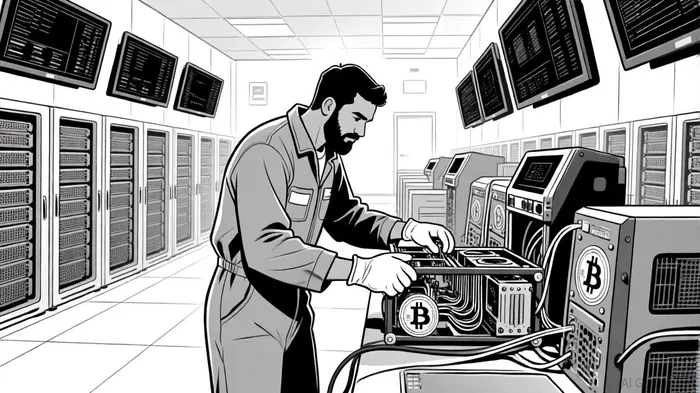
Bitcoin Mining: A Tale of Resilience and Efficiency
Bitcoin's post-crash rebound to $115,040 as of October 13, 2025, has provided a lifeline for miners, despite the challenges posed by the 2024 halving and rising network difficulty. The global hashrate surged to 1.05 ZH/s, pushing mining difficulty to an all-time high of 150.84T, according to a CoinDesk report. Yet, profitability remains uneven. Miners in high-cost regions like the U.S. face energy expenses exceeding $0.1 per kWh, while operations in the Middle East and Central Asia benefit from subsidized rates as low as $0.035–$0.07 per kWh, according to a Lumerin analysis.
The Mining Equilibrium Index (MEI) at 1.06 underscores a fragile economic environment, with only the most efficient miners surviving, according to an Analytics Insight article. Bitmain's Antminer S21+ and MicroBT's WhatsMiner M66S+-offering 216 TH/s at 16.5 J/TH and 17 J/TH, respectively-have become critical for maintaining margins, according to a Cointelegraph report. Meanwhile, hashprice has fallen below $50 per petahash, reflecting the industry's shift toward industrial-scale mining and AI-driven optimization, according to a HashClimber analysis.
For contrarian investors, the collapse in hashprice and the consolidation of mining operations present opportunities. Acquiring hashrate in low-cost regions or investing in hosted mining services could yield outsized returns as Bitcoin's price stabilizes above key support levels.
Ethereum's Accumulation Phase: A Contrarian Play?
Ethereum's price action post-crash has been more ambiguous. Trading at $4,113 as of early October 2025, ETH faces headwinds from declining on-chain activity and ETF outflows of $389 million, according to a BeInCrypto analysis. The On-Balance Volume (OBV) indicator has been in a bearish trend, suggesting weak demand and a potential drop below $4,000, per a CoinCentral piece. However, technical patterns like the cup-and-handle formation and ascending triangle on ETH/USD charts hint at a possible rebound to $7,500 by year-end, according to an OKX outlook. Historically, such patterns have shown an average event-day win rate of ~56%, with cumulative excess returns peaking at +8% around day 20 before decaying to +5.7% by day 30.
The Fusaka upgrade, scheduled for December 2025, could catalyze Ethereum's recovery by enhancing scalability and reducing transaction fees. This upgrade, coupled with growing stablecoin usage and record ETF inflows, positions Ethereum as a potential beneficiary of institutional adoption, according to a CoinMarketCap forecast. Yet, risks persist, including regulatory challenges and competition from Layer-1 blockchains like SolanaSOL--.
Ethereum's open interest and funding rates also signal speculative positioning. Rising open interest indicates active position-building, while declining funding rates suggest an increase in short positions-a setup that could lead to a short squeeze if the price breaks into the Gap Zone, according to a Coin Republic analysis. For investors willing to navigate this volatility, Ethereum's accumulation phase offers a compelling case for long-term exposure.
Contrarian Thesis: Buy the Dip, Not the Noise
The post-crash environment has exposed both Bitcoin and Ethereum to short-term pain but also revealed long-term value. Bitcoin's MVRV ratio of 1.48 and NVT score of 174 suggest the market is not yet overextended, while Ethereum's technical patterns and upcoming upgrades provide a bullish narrative, according to a Sandmark analysis. For Bitcoin miners, the collapse in hashprice and the shift to low-cost regions create a buying opportunity for infrastructure and hashrate acquisitions. Similarly, Ethereum's sideways consolidation and speculative positioning offer a chance to enter at discounted levels.
However, caution is warranted. Both markets remain vulnerable to macroeconomic shocks, particularly if U.S.-China tensions escalate before the November 1 tariff deadline. Investors should prioritize positions with strong fundamentals and diversify across Bitcoin mining infrastructure and Ethereum's post-upgrade potential.
"""






Comentarios
Aún no hay comentarios