
Contrarian Investing in Crypto: Navigating the 2025 Crash and the Road to Recovery
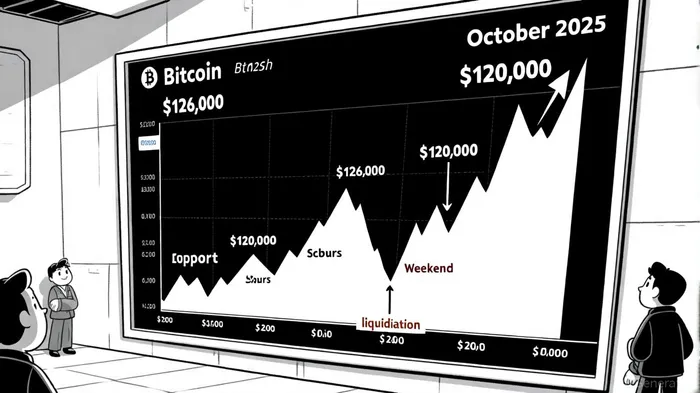
The October 2025 crypto crash, triggered by U.S. President Donald Trump's 100% tariff announcement on Chinese tech imports, exposed the market's vulnerability to macroeconomic and geopolitical shocks. BitcoinBTC-- plummeted from $126,000 to under $110,000 in minutes, while EthereumETH-- lost over 13% of its value, wiping out $20 billion in assets within 24 hours, according to Forbes. For contrarian investors, this volatility-though jarring-presents an opportunity to reassess the long-term narrative of crypto's resilience and adoption.
The Anatomy of the Crash: Geopolitics, Leverage, and Liquidity
The crash was not a singular event but a convergence of systemic pressures. Trump's tariffs exacerbated fears of a U.S.-China trade war, triggering a global selloff that spilled into crypto markets, according to Coinpedia. Compounding this, a whale's sale of 24,000 BTCBTC-- flooded thin liquidity zones, initiating a cascade of $1.65 billion in liquidations, as reported by BeInCrypto. Meanwhile, ETF outflows-$253 million for Bitcoin and $251 million for Ethereum-removed critical support, accelerating the downturn, per CoinDesk.
Ethereum's technical breakdown below $4,000 further amplified panic, as market makers scrambled to hedge with put options, noted by the Institute of Internet Economics. Yet, these dynamics underscore a critical insight for contrarians: crypto's volatility, while extreme, often reflects overreactions to macro shocks rather than fundamental flaws in the asset class.
Recovery Signals and Contrarian Logic
By the weekend, Bitcoin had rebounded 5%, and Ethereum surged over 20%, signaling a market reset rather than a collapse, according to CryptoTimes. Analysts attribute this to Trump's reassurances and the inherent resilience of crypto's 2025 bull cycle, as Forbes noted. For investors willing to navigate short-term chaos, three factors suggest a cautious optimism:
- Key Support Levels: Bitcoin's ability to hold above its 200-day moving average (around $115,000) indicates institutional confidence in its long-term trajectory, a point highlighted earlier by BeInCrypto. Ethereum's recovery near the $3,500 support zone similarly suggests a floor for further downside risk, per Forbes.
- Liquidity Rebuilding: Post-crash, market makers and arbitrage strategies are stabilizing thin liquidity zones, a structural repair CoinDesk described as critical for preventing future cascades.
- Fundamental Adoption Trends: Despite the crash, Bitcoin's on-chain activity and Ethereum's Layer 2 adoption remain robust, pointing to a maturing ecosystem less reliant on speculative flows, according to the Institute of Internet Economics.
The Case for Contrarian Entry
Contrarian investing in crypto demands a focus on dislocation rather than panic. The October 2025 crash, while severe, mirrors historical patterns where sharp corrections have preceded multi-year bull runs. For instance, Bitcoin's 2018 crash and Ethereum's 2020 bear market both culminated in record highs within 18–24 months.
However, entry points must be strategic. Investors should prioritize assets with strong fundamentals-such as Bitcoin's halving-driven scarcity and Ethereum's post-merge energy efficiency-over speculative altcoins. Additionally, hedging against macro risks (e.g., geopolitical tensions) through diversified portfolios can mitigate future shocks, as CryptoTimes recommended.
Risks and the Path Forward
Prolonged trade wars or regulatory instability could delay recovery. Yet, the market's rapid rebound-despite these risks-highlights crypto's growing integration with traditional finance. As BlackRock's recent ETF warning noted, institutional adoption is a double-edged sword: it amplifies volatility but also anchors long-term value, a tension Forbes discussed.
For contrarians, the key is to balance skepticism with conviction. The October 2025 crash, while painful, may prove to be a buying opportunity for those who recognize that crypto's volatility is a feature, not a bug, in its journey toward mainstream acceptance.






Comentarios
Aún no hay comentarios