
Contrarian Currency Plays: USD Longs and GBP Shorts in a Volatile Landscape
The U.S. dollar and British pound are at a critical crossroads as diverging macroeconomic policies, geopolitical risks, and market sentiment collide. For contrarian investors, this volatility presents a high-reward opportunity to position against overreactions to short-term data while capitalizing on long-term fundamentals. Let's dissect the playbook for long USD and short GBP strategies, supported by technical rebounds, bond market signals, and upcoming employment data.
The Fed's Data Dance: Why USD Bulls Should Smile
Market expectations for Fed rate cuts have whipsawed since April 2025, with June's probability dropping to 66.7% from a peak of 78% (see ). This shift reflects a “precarious equilibrium” between disinflation progress and new risks like U.S. steel tariffs. While traders obsess over near-term inflation prints, the Fed's data dependence creates a contrarian edge:
- Core PCE inflation dipped to 2.6% in March 2025 but faces upward pressure from tariffs. A May reading above 2.8% (due June 1) could delay cuts, boosting USD demand as markets reassess.
- Labor market resilience (unemployment at 4.2%) and elevated job openings mean the Fed won't panic-cut, even if GDP contracts.
The U.S. Dollar Index (DXY) has already begun a technical rebound, rising to 97.00 after breaking multi-year lows (see 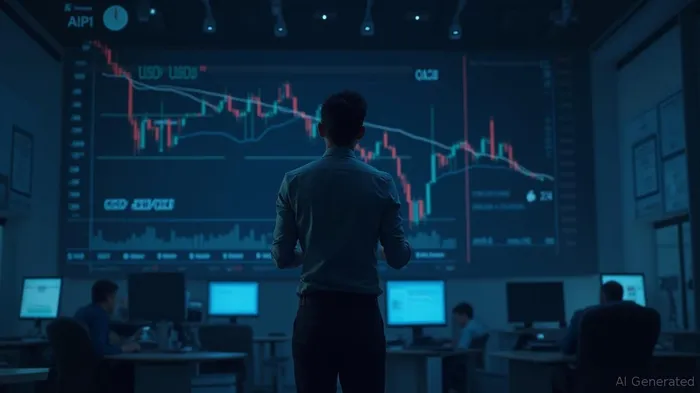 ). Key resistance levels at 98.20–98.60 and 99.40–99.57 could trigger a sustained rally if the June Nonfarm Payrolls (NFP) report surprises to the upside.
UK Political Risks: GBP's Soft Underbelly
The British pound faces structural headwinds from fiscal uncertainty and bond market selloffs. Despite the Spending Review 2025's focus on infrastructure and R&D (allocating £39B to housing and £14.2B to nuclear energy), the government's 16% real-terms cut to departmental budgets highlights austerity risks.
- Bond yields tell the story: UK 10-year gilt yields hit 4.65% in early June, a 0.39% rise year-on-year (see ). This reflects investor skepticism about fiscal discipline and inflation risks from global trade tensions.
- Political instability looms: The “One Big Beautiful Bill” adding $3.3T to U.S. deficits creates cross-Atlantic fiscal drag, while unresolved EU trade disputes and irregular migration policies strain GBP sentiment.
The GBP/USD pair has fallen to 1.25, with further declines likely if the UK's Q2 GDP growth disappoints (current forecasts: 1.5% annualized). Contrarians should short GBP via futures or ETFs like DBR, which tracks inverse GBP performance.
Technical and Fundamental Sweet Spots: Timing the Trades
- USD Longs:
- Entry: Buy UUPUUP-- (USD Bull ETF) at DXY levels below 97.70, targeting resistance at 98.20–98.60.
- Confirmation: A June NFP print above 130K jobs (vs. 110K consensus) would catalyze a move to 99.50+.
Hedging: Pair USD exposure with inverse rate-cut ETFs (e.g., IHD) to guard against delayed cuts.
GBP Shorts:
- Entry: Short GBP/USD at 1.25, aiming for 1.22–1.20 by Q3. Target GBP weakness if UK bond yields breach 4.8%.
- Trigger: A miss on UK Q2 GDP or a spike in gilt yields post-Fed meeting.
Risks and Reality Checks
- Fed Overreach: If inflation cools faster than expected, rate cuts could still materialize, capping USD gains.
- UK Fiscal Surprise: A credible debt reduction plan or EU trade breakthrough could stabilize GBP.
Final Take: Contrarian Currency Plays for Q3 2025
The USD's technical rebound and GBP's bond-driven weakness create a compelling contrarian narrative. By leveraging USD longs (via UUP) and shorting GBP (via DBR), investors can capitalize on market overreactions to short-term data while betting on Fed discipline and UK fiscal realities. Monitor the June 8 ADP report and June 9 NFP as critical catalysts—positioning ahead of these events could amplify returns.
As always, size positions for volatility: Allocate 5–10% of portfolios to these trades, and set stop-losses at key technical levels. The next few weeks will test whether fundamentals or fear dominate currency markets—contrarians should bet on the former.







Comentarios
Aún no hay comentarios