
Contrarian Crypto Trading: Mastering the Emotional Tides of the Market
In the volatile world of cryptocurrency, emotional decision-making often leads to catastrophic outcomes. Yet, the most successful traders and investors have long understood the power of contrarian strategies-buying when fear dominates and selling when greed takes hold. This philosophy, famously articulated by Binance co-founder Changpeng Zhao (CZ), has proven its resilience through years of market cycles. By dissecting CZ's approach, Bitcoin's price action, and the Fear & Greed Index, we uncover actionable insights for navigating the emotional tides of crypto markets.
CZ's Philosophy: Discipline Over Emotion
Changpeng Zhao's trading ethos is rooted in behavioral finance principles. "The best time to buy is when everyone is scared. The best time to sell is when everyone is greedy," CZ has repeatedly emphasized. This mantra reflects a deep understanding of market psychology: fear drives prices to irrational lows, while greed inflates them to unsustainable highs.
CZ's personal portfolio exemplifies this discipline. As of 2025, 98.48% of his crypto holdings are allocated to BNBBNB--, the native token of the BNB Chain, with BitcoinBTC-- comprising 1.32% and minimal exposure to other assets according to The Block. This heavy concentration in BNB-a token he co-founded-suggests a long-term conviction in the ecosystem, while his Bitcoin allocation reflects a strategic hedge against macroeconomic shifts. Notably, during Bitcoin's 2024 rally to $93,434, CZ urged caution, warning that "future dips were inevitable" and advising traders to avoid overexposure as reported. His actions align with the principle of selling during euphoria to lock in gains, rather than chasing returns.
The Fear & Greed Index: A Contrarian Compass
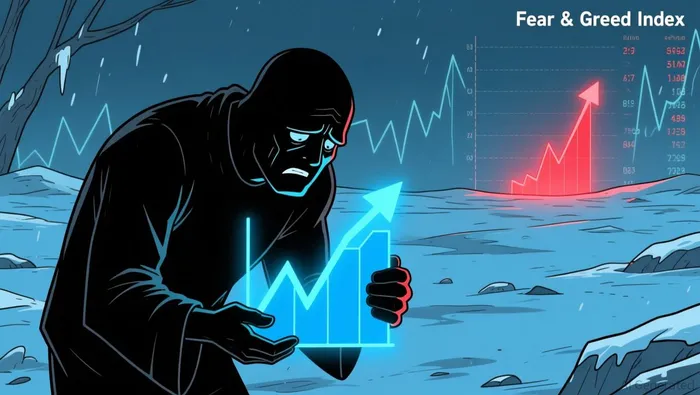
The Bitcoin Fear & Greed Index, a composite metric derived from price momentum, volatility, derivatives data, and social trends, has become a critical tool for contrarian traders. In 2025, the index reached extreme fear levels multiple times, most notably dropping to 21 on November 5, 2025, as Bitcoin traded below key psychological levels. Historical data shows that such extreme fear often precedes market rebounds, though the lag can be prolonged. For instance, when the index fell below 10 in April 2025, Bitcoin's price stagnated for weeks despite the bearish sentiment according to Yahoo Finance. This underscores the need for patience and supplementary analysis when acting on contrarian signals.
A case study from 2023–2025 illustrates the index's utility. A strategy of buying Bitcoin when the index hit or fell below 20 and selling at 80+ generated a 1,145% return, outperforming a traditional buy-and-hold approach by nearly 100 basis points. This outperformance highlights the index's value in identifying mispricings driven by collective emotion. However, as researchers note, periods of extreme fear can persist for months without immediate recovery, emphasizing the importance of combining sentiment analysis with technical and on-chain metrics.
Real-World Applications: Binance's Strategic Resilience
Binance's institutional strategy under CZ's leadership further validates the "buy in fear, sell in greed" framework. During CZ's 2023 imprisonment, the exchange navigated regulatory turbulence by prioritizing compliance and governance reforms under co-founder Yi He. This shift to stability-rather than speculative expansion-mirrored CZ's contrarian ethos. By 2025, Binance's focus on institutional credibility and market accessibility had solidified its dominance, even as the BNB Chain sector faced a 14.2% market cap decline in late 2025. The exchange's ability to thrive amid volatility underscores the long-term benefits of disciplined, emotion-free decision-making.
Behavioral Finance in Action
The psychology of fear and greed is not unique to crypto but is amplified by the asset class's inherent volatility. Behavioral finance explains how investors often overreact to news, leading to exaggerated price swings. For example, Bitcoin's 2025 crash to $80,000–$85,000 coincided with a Fear & Greed Index reading of 12, reflecting panic-driven selling according to Gate. Contrarian traders who bought during this period, despite the lack of immediate technical support, were rewarded as the market eventually rebounded.
CZ's public statements and Binance's strategic pivots demonstrate the practical application of these principles. By avoiding emotional overreactions, investors can capitalize on market extremes. For instance, CZ's 2024 warnings against Bitcoin's record highs-despite the asset's parabolic rise-highlighted the risks of greed-fueled speculation. His advice to "diversify and manage risk" as stated aligns with the broader contrarian playbook of preserving capital during euphoric phases.
Conclusion: The Path to Emotion-Free Trading
Contrarian crypto trading demands a commitment to discipline, patience, and a deep understanding of market sentiment. CZ's philosophy, reinforced by the Fear & Greed Index and Binance's institutional strategies, provides a blueprint for navigating the emotional tides of the market. While no strategy is foolproof, the combination of behavioral insights and data-driven tools offers a robust framework for long-term success. As the crypto market evolves, the ability to act against the crowd-buying in fear and selling in greed-will remain a defining trait of resilient investors.






Comentarios
Aún no hay comentarios