
The Contrarian Case for US Services: Why Resilience Spells Opportunity in a Manufacturing Slump
The US services sector has quietly maintained its 29-month expansion streak, defying global manufacturing headwinds and market pessimism. While headlines focus on tariff-driven manufacturing slumps, the S&P Global Services PMI's June reading of 52.9 underscores a hidden strength in sectors like healthcare, retail, and finance—areas that make up 80% of US GDP. This divergence creates a contrarian opportunity: investors can profit by overweighting services-driven sectors while avoiding tariff-sensitive industries.
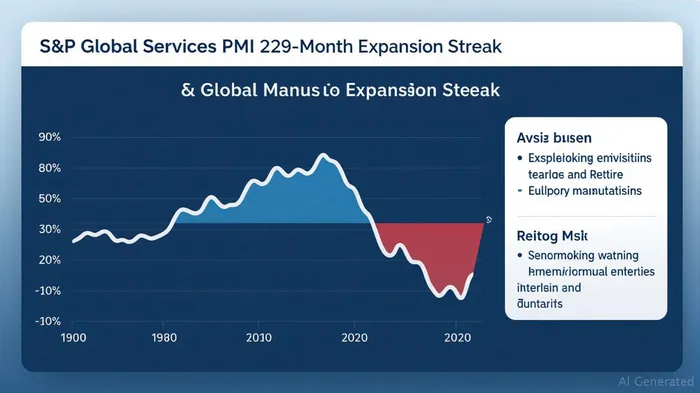
The Services-Sector Resilience Play
The services sector's durability stems from domestic demand and job market stickiness, even as manufacturing falters. Key takeaways from the data:
- Hiring Remains a Bright Spot: Services employment grew at the fastest pace in six months (PMI Employment Index: 51.3), contrasting with manufacturing's contraction. Sectors like transportation, utilities, and wholesale trade are adding workers to meet rising demand.
- Price Pressures Are Manageable: While input costs remain elevated (Prices Index: 67.5), services firms are absorbing costs better than manufacturers. This bodes well for margins in consumer-facing industries.
- Geopolitical Risks Are Priced In: Tariffs and Middle East tensions have spooked markets, but services firms—less reliant on global supply chains—are less exposed.
Contrarian Investment Strategy: Overweight Consumer Discretionary and Financials
Consumer Discretionary (ETF: XLY) and Financials (ETF: XLF) are the core beneficiaries of this resilience.
1. Consumer Discretionary: The Hidden Growth Engine
Despite broader economic concerns, discretionary spending (retail, autos, travel) remains robust. The PMI's New Orders Index for services hit 51.3% in June, signaling sustained demand.
Data shows XLY underperforming the S&P 500 in recent quarters, creating a contrarian entry point.
Why now?
- Debt-fueled spending: Services-driven industries like e-commerce and entertainment are insulated from manufacturing slumps.
- Labor shortages driving wage growth: Higher wages boost consumer confidence and spending power.
Top picks: Companies like Amazon (AMZN) (e-commerce), Nordstrom (JCP) (retail), and Marriott (MAR) (travel) benefit from sticky demand.
2. Financials: Leveraging Services-Sector Growth
Banks and insurers thrive in environments where services firms borrow and spend. The PMI's Backlog of Orders Index (now at a 1.5-year high) suggests pent-up demand for credit.
Data shows XLF yields are near historical lows, offering a value opportunity.
Why now?
- Loan growth: Services firms' hiring and inventory investments require financing.
- Stable interest rates: The Fed's pause at 4.5% keeps borrowing costs manageable for consumers and businesses alike.
Top picks: Regional banks like Wells Fargo (WFC) and insurers like Travelers (TRV), which benefit from steady economic activity.
Avoid Tariff-Sensitive Sectors: A Contrarian's Caution
While services shine, industrials (ETF: XLI) and materials (ETF: XLB) face headwinds from tariffs and global demand slowdowns.
Data shows CAT's struggles align with manufacturing contraction—stay away.
Why avoid these sectors?
- Global overhang: Manufacturing's PMI remains stuck below 51, with export orders collapsing.
- Inventory risks: US manufacturers' record stockpiles (front-loaded ahead of tariffs) could lead to overcorrection in coming quarters.
The Bottom Line: Bet on Domestic Resilience
The market's focus on manufacturing gloom has created a mispricing opportunity. The services sector's 29-month expansion streak is no fluke—it reflects the economy's true engine. Investors who overweight XLY and XLF while avoiding tariff-exposed names can capitalize on this divergence.
Final advice:
- Overweight consumer discretionary and financials for their domestic demand ties.
- Underweight industrials and materials until global trade uncertainty eases.
- Use dips to buy: Services stocks are lagging the broader market, offering a contrarian entry.
In a world of manufacturing malaise, the US services sector isn't just surviving—it's thriving. The data doesn't lie.





Comentarios
Aún no hay comentarios