
Content Coins and the Next Wave of Viral-Driven Crypto Speculation
The crypto landscape in late 2024 and early 2025 is witnessing a seismic shift as Content Coins-blockchain-native platforms enabling tokenized content creation, AI agents, and speculative assets-emerge as a dominant force. These platforms are not only redefining how value is generated and distributed but also creating new paradigms for liquidity and fee generation. This article analyzes the short-term dynamics of key platforms like Virtuals (VIRTUAL), Bittensor (TAO), and Pump.fun, while contextualizing their role in the next wave of viral-driven speculation.
The Rise of Content Coins: A New Liquidity Paradigm
Content Coins are reshaping the crypto ecosystem by merging blockchain's programmable money with decentralized content creation and AI-driven utility. Platforms like Virtuals and Bittensor are pioneering this shift, leveraging tokenized AI agents and decentralized machine learning networks to generate value. By mid-2025, Virtuals had a market cap of $1.6–1.8 billion, while Bittensor's $2.9 billion valuation underscored its role as a decentralized AI infrastructure provider.
The key to their success lies in platform-driven fee generation. For instance, Pump.fun, a Solana-based memeMEME-- coin launchpad, generated over $780 million in cumulative fees by mid-2025 through a simple 1% trading fee model. This democratization of token creation has turned internet culture into speculative assets, with over 11 million tokens created on the platform. Such models highlight how low barriers to entry and viral marketing can rapidly scale liquidity, albeit with inherent volatility.
Short-Term Liquidity Dynamics: Volatility and Concentration
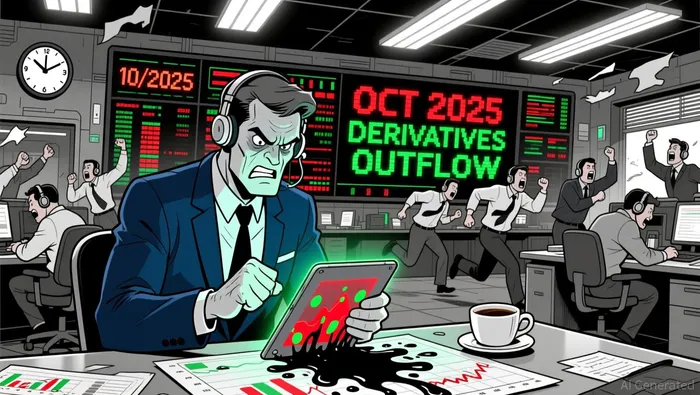
Liquidity in Content Coins is often thin and concentrated, creating fertile ground for speculative swings. Bittensor (TAO) exemplifies this: despite a $3.4 billion market cap, its daily trading volumes frequently hover between $50–100 million, with order books easily manipulated by large trades. For example, a $48 million derivatives outflow in October 2025 triggered a 15% price drop. This fragility is exacerbated by TAO's reliance on a handful of exchanges like Binance and CoinbaseCOIN--, where liquidity is shallow and prone to sudden shifts.
In contrast, Virtuals (VIRTUAL) has seen more stable liquidity dynamics, driven by its x402 platform integration. Daily agent-to-agent transactions surged to 25,000 weekly, and on-chain data revealed 22% of the supply staked, signaling growing institutional interest. However, VIRTUAL's price remains volatile, surging 105% to $1.63 in October 2025 before retreating to $1.45 amid profit-taking. This underscores the dual-edged nature of platform-driven liquidity: while innovation attracts capital, it also amplifies short-term speculation.
Fee Structures and Platform-Specific Strategies
The fee models of Content Coins vary widely, reflecting their unique value propositions. Pump.fun's simplicity-charging a flat 1% fee on all trades-has been a runaway success, enabling rapid fee accumulation and viral adoption. Meanwhile, Bittensor relies on subnet-based revenue generation, where validators earn fees from decentralized machine learning tasks. However, its liquidity risk remains high, with analysts warning that a post-halving price slump could trigger miner disengagement.
NEAR Protocol, a scalable smart-contract platform, takes a different approach by hosting AI-focused tools and infrastructure. While it hasn't explicitly detailed 2025 liquidity fees, its expansion to Solana and the introduction of a Strategic SOL Reserve signal a focus on cross-chain liquidity and creator incentives. This aligns with broader trends in the AI agent economy, where interoperability and standardized liquidity are critical for growth.
Viral Trends and the Role of Community-Driven Speculation
The virality of Content Coins is inextricably linked to community engagement and influencer marketing. Pump.fun and Bonk ($BONK) leveraged viral Twitter campaigns and influencer partnerships to drive adoption, transforming meme coins into cultural phenomena. Similarly, Virtuals' x402 integration was amplified by on-chain whale activity and social media buzz, illustrating how platform-driven narratives can catalyze speculative frenzies.
This dynamic is further amplified by AI-driven algorithmic optimizations. Platforms like EigenLayer and Babylon are using machine learning to automate yield generation and liquidity management, enhancing efficiency but also increasing complexity for retail investors. As a result, the line between utility and speculation blurs, with projects like Ocean Protocol (OCEAN) integrating compute-to-data features to monetize secure data sharing.
Regulatory Tailwinds and Institutional Adoption
Regulatory clarity has been a critical enabler for Content Coins. The EU's MiCA Regulation and the U.S. GENIUS Act for stablecoins have transformed stablecoins into core financial infrastructure, facilitating broader institutional adoption. This has allowed platforms like Virtuals and Bittensor to operate in a more predictable environment, with stablecoins serving as a settlement layer for transactions and collateral.
However, regulatory risks persist. For example, Bittensor's post-halving price trajectory hinges on whether institutional investors adopt the token as a hedge against AI infrastructure demand. Similarly, Pump.fun faces scrutiny over its role in fostering speculative assets with minimal utility, raising questions about long-term sustainability.
Conclusion: Navigating the Next Wave
Content Coins are at the forefront of a new era in crypto, blending AI, blockchain, and viral marketing to create unprecedented liquidity and fee generation models. While platforms like Pump.fun and Bittensor offer high-growth potential, their short-term volatility and liquidity risks demand cautious investment strategies. Conversely, Virtuals and NEAR Protocol demonstrate how platform-driven innovation can balance speculation with utility, albeit with regulatory and market uncertainties.
For investors, the key lies in understanding the interplay between fee structures, liquidity concentration, and viral narratives. As the sector matures, projects that align speculative appeal with real-world utility-such as AI agent monetization or secure data marketplaces-will likely outperform pure speculation-driven tokens. The next wave of Content Coins will not just ride the virality of the moment but redefine how value is created in the decentralized web.







Comentarios
Aún no hay comentarios