
Consumer Sentiment in 2025: Mixed Signals for Retail Investors to Watch
Consumer Sentiment: A Mixed Signal for 2026
Consumer sentiment has long been a leading indicator for the U.S. economy — and in late 2025, it’s sending mixed signals. While some data points show a slight bounce in optimism, especially among younger consumers, broader confidence in current conditions has hit worrying levels. For investors, this duality means keeping a close eye on how these trends evolve in 2026 and how they might affect spending, hiring, and ultimately, corporate profits. According to analysis.
A Split Outlook: Current Conditions vs. Future Expectations
The Michigan Consumer Sentiment Index, a closely watched barometer of consumer attitudes, — a welcome but modest uptick after five months of declines. This improvement was largely driven by younger consumers, who expressed growing confidence in their future financial prospects. Across age groups, income levels, and political affiliations, there was a noticeable shift in expected personal finances. According to the report.
However, this optimism is only one side of the coin. The Current Economic Conditions Index (CECI) — which reflects how consumers feel about the economy right now — fell to 50.7 in December 2025, marking its lowest level on record. That means most Americans are still struggling with the here and now, which could slow spending and growth in the short term.
What’s Driving the Divergence?
One of the key reasons for the slight upward trend in consumer expectations is the drop in inflation expectations. For the year ahead, consumers now expect prices to rise by just 4.1%, down from previous forecasts. Long-run inflation expectations also improved, dropping to 3.2%. These numbers suggest that while consumers aren’t feeling great about the economy today, they’re becoming more comfortable with the idea that things won’t keep getting more expensive at the same rate.
That said, other surveys show a different picture. The Conference Board’s Consumer Confidence Index, for instance, — the lowest level since April 2025. The drop was most pronounced in the expectations component, which measures how consumers see their personal income and job outlook in the coming months. This points to underlying anxiety about the labor market and broader economic stability, despite some optimism about the future.
The Fed and Tariffs: Uncertainty Looms
For investors, the broader picture is one of uncertainty. Finance executives surveyed by the Federal Reserve in Q4 2025 expect U.S. in 2026, with tariffs and trade risks still cited as top concerns. This aligns with the idea that while inflation may be slowing, it’s not going away anytime soon. Meanwhile, the Fed’s policy outlook remains cautious, officials still project only one more cut in 2026. This hawkish stance keeps borrowing costs elevated, which could dampen economic activity and corporate earnings.
Complicating matters further is the delayed release of October 2025 jobs data due to a government shutdown. The data, when eventually released, the uncertainty around these numbers makes it harder for the Fed to make informed decisions and for investors to plan for what’s next.
What This Means for Investors
At the end of the day, the consumer remains a key driver of the U.S. economy — and 2025 shows a tug-of-war between cautious optimism and lingering pessimism. For investors, this duality means a few key takeaways:
- Consumer-facing industries such as retail, hospitality, and automotive could see uneven performance in 2026. While expectations may support spending in some areas, current conditions may hold others back.
- Inflation-sensitive sectors, including consumer staples and utilities, may continue to benefit from the slower price rise and stable long-run inflation expectations.
- Employment and wage trends will remain a key watchpoint. If the labor market continues to weaken, consumer spending — and corporate profits — could follow.
- Tariff and trade concerns could introduce volatility, especially in export-heavy industries. Diversification across sectors and geographies could help mitigate this risk.
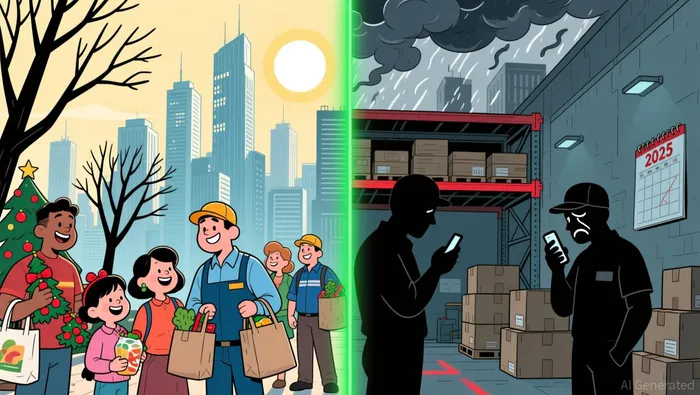
Looking Ahead: Balancing Hope and Caution
The bottom line for investors is that the consumer remains both a strength and a vulnerability. While the December 2025 data shows a slight uptick in confidence and a moderation in inflation fears, the broader picture is still one of uncertainty. The Federal Reserve’s policy path, the pace of job growth, and the trajectory of global trade tensions will all play a role in shaping what happens next.
For now, the data suggests that the consumer is navigating a delicate balance — one that investors should monitor closely. With 2026 still in its early stages, the coming months may offer more clarity — or more questions — about where the economy is headed.







Comentarios
Aún no hay comentarios