
Consumer Risk Perception and Retail Stock Volatility: The Costco Case Study
The Dual Impact of Product Recalls: Health Risks and Market Reactions
Product recalls, particularly those involving food safety, trigger dual concerns: public health risks and financial implications. In November 2024, Costco issued a Class I recall for Kirkland Signature organic eggs due to potential salmonella contamination. This classification, reserved for products posing "reasonable probability of serious adverse health consequences or death," signals a severe threat to consumer trust. While the recall itself did not immediately correlate with a stock price shift in available data, the broader context of recalls at Costco and its competitors-such as the December 2024 pork jerky recall-reveals a pattern of market sensitivity.
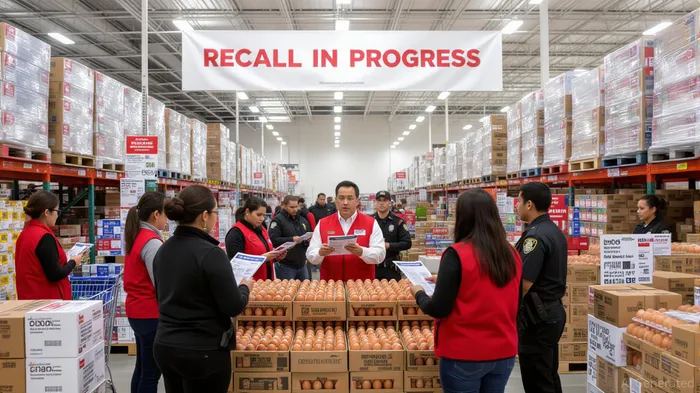
The pork jerky recall, involving 2 million pounds of Korean barbecue pork jerky sold at Costco and Sam's Club due to metal contamination, directly impacted Costco's stock. On the day of the announcement, , . This reaction highlights how investors penalize companies for perceived reputational and operational risks, even when recalls are not directly tied to their core business. The market's response to such events underscores a critical truth: in the retail sector, brand integrity is a financial asset as volatile as any balance sheet line item.
Analyst Reactions: A Barometer of Investor Sentiment
The aftermath of these recalls also influenced analyst ratings, further amplifying market uncertainty. Truist Securities lowered Costco's price target , citing valuation concerns despite the company's strong sales growth. Similarly, Evercore ISI reduced its target , while Morgan Stanley raised its target , emphasizing Costco's membership growth and profitability. These divergent assessments reflect a broader debate among investors: while Costco's fundamentals remain robust, recurring recalls and food safety challenges introduce a layer of risk that analysts are increasingly factoring into their models.
The tariff-impacted retail environment, as noted by Evercore ISI, compounds these concerns. In a landscape where margins are already under pressure, product recalls can exacerbate investor skepticism about a company's ability to maintain profitability and brand equity. This dynamic is particularly acute for retailers like Costco, where private-label products account for a significant portion of revenue. A single recall can erode months of trust-building, prompting investors to reassess long-term growth prospects.
The Long-Term Implications for Retail Stocks
While short-term stock price dips may be modest-such as the 1.05% decline following the pork jerky recall-the cumulative effect of repeated recalls can reshape investor behavior. Studies in suggest that negative events, especially those involving public health, are weighted more heavily in decision-making than positive ones. For Costco, this means that even a single high-profile recall could trigger a prolonged period of volatility, as investors recalibrate their risk assessments.
Moreover, the interconnected nature of modern supply chains means that recalls are no longer isolated incidents. The November 2024 egg recall, for instance, occurred alongside the pork jerky recall, creating a narrative of systemic risk in Costco's product offerings. This clustering of events can amplify investor anxiety, leading to broader sell-offs in the retail sector as risk-averse investors exit positions.
Conclusion: Navigating the New Normal
For investors, the key takeaway is clear: product recalls are not just operational hiccups but strategic risks that demand close monitoring. Costco's recent experiences illustrate how consumer risk perception-shaped by media coverage, regulatory actions, and social media-can rapidly translate into market volatility. While the company's strong membership base and defensive growth characteristics provide a buffer, they cannot fully insulate it from the reputational and financial fallout of high-profile recalls.
In this evolving landscape, investors must balance short-term reactions with long-term fundamentals. Costco's ability to mitigate recall impacts through transparent communication, swift corrective actions, and diversified product offerings will be critical in restoring investor confidence. For now, the interplay between consumer trust and stock performance remains a defining challenge for the retail sector-a challenge that will only grow more complex in an era of heightened scrutiny and rapid information dissemination.







Comentarios
Aún no hay comentarios