
Consumer-Driven Funding Models Fuel Sustainable Growth in Organic and Natural Food Sectors
The organic and natural food sector is undergoing a transformative shift, driven by consumer preferences for health-conscious, sustainable, and ethically produced goods. As global demand surges, innovative funding models are emerging to bridge the gap between consumer intent and scalable production. This analysis explores how consumer-driven mechanisms-such as crowdfunding, cooperative ownership, and Community Supported Agriculture (CSA)-are reshaping the sector's growth trajectory, supported by recent market data and case studies.
Market Dynamics: A Booming Landscape
The global organic food market is projected to grow at a compound annual growth rate (CAGR) of 11.1% from 2023 to 2030, reaching $316.6 billion by 2030, according to an organic food market outlook. In the U.S., organic food sales hit $71.6 billion in 2024, outpacing the overall market's 2.5% growth with a robust 5.2% increase, according to a FoodTank report. This expansion is fueled by shifting consumer priorities: 76% of U.S. adults prioritize health benefits when purchasing organic products, while 53% of millennials are willing to pay a premium for organic options, the report also found.
However, challenges persist. Organic products remain 20–50% more expensive than conventional alternatives, creating accessibility barriers, according to an Accio analysis. To address this, consumer-driven funding models are gaining traction, enabling direct investment in sustainable practices and infrastructure.
Crowdfunding: Democratizing Capital for Organic Innovation
Crowdfunding platforms like Kickstarter, Indiegogo, and Barnraiser have become critical tools for organic farmers and startups. These platforms allow producers to secure upfront capital by offering rewards such as produce boxes, farm experiences, or equity stakes. For instance, in 2025, companies like Culture Pop Soda and Ryl Tea raised significant funds to expand their organic and functional beverage lines, according to a NewHope report.
Infrastructure projects, such as solar power systems and water conservation technologies, have also attracted crowdfunding support. These initiatives not only reduce operational costs but also align with backers' environmental values, creating a symbiotic relationship between investors and producers, as noted in the FoodTank report.
Cooperative Ownership: Scaling Through Shared Resources
Cooperatives are redefining how organic farms manage risk and scale operations. Organic Valley, a U.S.-based cooperative, exemplifies this model. In 2023–2024, it added over 200 new organic family farms to its network, leveraging collective bargaining power and shared resources like machinery and distribution networks, according to the organic food market outlook. The cooperative's Carbon Insetting Program, which funds sustainable practices like agroforestry on 65 farms, underscores how cooperative structures can align profitability with environmental stewardship.
Similarly, the Local Harvest Collective in the Pacific Northwest uses a hub-and-spoke CSA model, pooling harvests from 12 specialized farms to offer diverse weekly produce boxes. This approach not only enhances efficiency but also fosters community engagement through educational programs and farm-to-table events, as the Accio analysis describes.
CSAs: Building Trust Through Direct Consumer Relationships
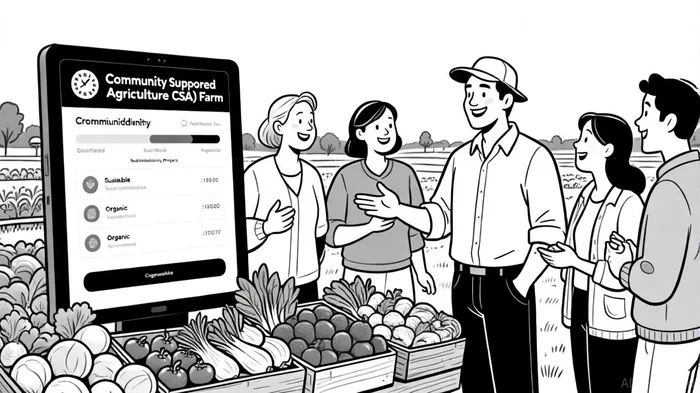
CSAs remain a cornerstone of consumer-driven funding, with members pre-paying for seasonal produce shares. This model provides farmers with upfront capital to cover operational costs while ensuring a stable customer base. To address affordability, many CSAs implement sliding-scale pricing, allowing wealthier members to subsidize lower-income participants, as the organic food market outlook notes.
A 2025 case study highlights the High Andean Association of Organic Quinoa Producers in Peru and Bolivia, where cooperative structures enabled quinoa farmers to expand cultivation areas, innovate production techniques, and improve cost management. This collaboration boosted profitability while maintaining organic standards, according to a ResearchGate case study.
Challenges and Opportunities for Investors
Despite the sector's promise, investors must navigate hurdles such as high certification costs, price premiums, and market competition. However, strategic interventions-like government grants (e.g., USDA's Organic Certification Cost Share Program) and impact investing-can mitigate these risks. For example, venture firms like Obvious Ventures and Acre Venture Partners are funding startups that combine organic production with AI-driven food assembly and microalgae-based proteins, as reported by NewHope.
Future Outlook: A Regenerative Food System
The convergence of consumer demand, technological innovation, and cooperative models is paving the way for a regenerative food system. By 2033, the global organic food market is projected to reach $615 billion, driven by functional beverages, plant-based organics, and climate-resilient farming practices, according to the organic food market outlook. Investors who prioritize transparency, sustainability, and community engagement will be well-positioned to capitalize on this growth.







Comentarios
Aún no hay comentarios