
Consumer Confidence Decline: Navigating Footwear Retail Risks and Finding Value in a Volatile Market
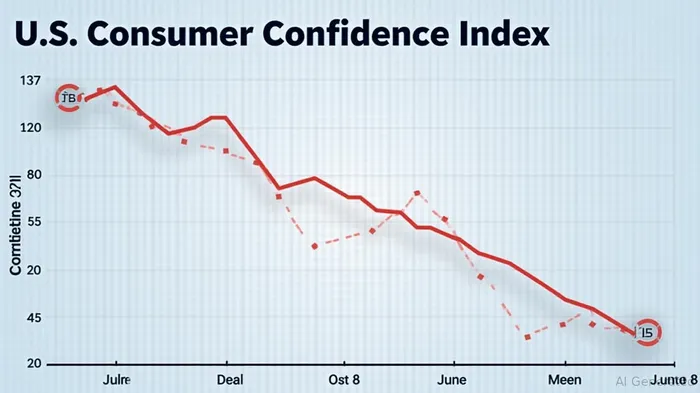
The June 2025 decline in the Consumer Confidence Index (CCI) to 93.0—a 5.4-point drop from May—has cast a shadow over discretionary spending sectors, including footwear retail. With the Expectations Index hovering below the recession-indicative 80 threshold for three consecutive months, consumers are increasingly wary of economic headwinds like tariffs, inflation, and labor market uncertainty. For footwear retailers, these trends amplify vulnerabilities tied to price sensitivity, trade policies, and shifting consumer preferences. Yet, within the gloom, strategic investors can identify undervalued opportunities by analyzing sector-specific risks and valuation metrics.
Sector-Specific Vulnerabilities: Trade, Tariffs, and Consumer Shrinkage
The footwear sector's reliance on imported goods—99% of U.S. sales come from overseas—makes it acutely sensitive to trade policy shifts. New tariffs could push duties as high as 150-220%, according to industry groups, exacerbating costs for brands like Nike (NKE) and Skechers (SKX). This pressure has already spurred consumer caution: 78% of shoppers report abandoning purchases due to price hikes, up 12% year-over-year, while 59% avoid items not on sale.
The data paints a stark picture:
- Work/dress shoes face a 29% spending decline, the steepest drop across categories.
- Athleisure, once a growth engine, is projected to shrink by 17%, signaling a broader retreat from discretionary spending.
Valuation Metrics: Identifying Undervalued Players
Footwear manufacturers' valuation multiples provide clues to relative opportunities. According to Equidam's analysis, the sector's EBITDA multiples range from 4.08x to 4.76x, while revenue multiples linger between 0.62x and 0.76x. These averages, however, mask disparities among companies.
Nike, for instance, trades at a premium due to its brand strength and innovation (e.g., AI-driven gait analysis). Its EBITDA margin of 13% comfortably exceeds the sector average of 9%, suggesting resilience against cost pressures. Meanwhile, Skechers—with a narrower 6% margin—faces greater vulnerability to input cost inflation but benefits from a diversified portfolio of comfort-driven products like its GoWalk series.
Smaller players like TOMS Shoes (under Bain Capital) or Allbirds (ABRD) may offer asymmetric upside if they can scale sustainably without overextending into high-tariff regions.
Strategic Investment Themes
Focus on Sustainable and Tech-Driven Brands
Consumers increasingly prioritize customization, sustainability, and performance—segments where brands like Allbirds (with its plant-based materials) and Under Armour (UAA) (known for tech-infused designs) hold advantages. These companies' premium pricing power and loyal followings can offset inflationary pressures.Geographic Diversification Matters
Companies with production hubs outside tariff-heavy regions (e.g., Vietnam vs. China) or those securing exemptions (like Deckers, which produces Ugg boots in the U.S.) face lower cost risks. Investors should scrutinize supply chain strategies in earnings reports.Value in Undervalued Casual and Comfort Brands
Skechers and CROCS (CROX), which dominate the casual footwear market, trade at EBITDA multiples closer to the sector's lower end (4.2x vs. Nike's 4.8x). Their focus on everyday comfort—critical as work-from-home norms persist—could position them as defensive plays.
Avoiding the Pitfalls
Steer clear of brands overly reliant on luxury or fashion-driven categories. Coach (COH) and Michael Kors (KORS), while not pure-play footwear companies, exemplify the risks of premium pricing in a cost-conscious era. Their stock performance over the past year——reflects this vulnerability.
Conclusion: A Sector Divided, but Opportunities Abound
The footwear sector is bifurcating into winners and losers. Investors should prioritize companies with:
- Strong brand equity and pricing power (e.g., NikeNKE--, Allbirds).
- Cost-efficient supply chains and tariff mitigation strategies.
- Exposure to growth niches like sustainability or ergonomic design.
While the near-term outlook is clouded by tariffs and inflation, the sector's long-term growth trajectory—driven by athleisure's enduring appeal and e-commerce dominance—supports selective optimism. For now, the best bets are in the middle: brands that balance innovation with value, like Skechers, or those with scalable sustainability models, like Allbirds, trading at multiples that offer room for upside.







Comentarios
Aún no hay comentarios