
Consolidation in the UK Media Landscape: Strategic Synergy and the Future of Streaming and Pay-TV Operators
Ad Revenue Pressures and the Rise of Ad-Supported Streaming
The UK's television advertising sector has faced significant headwinds in 2025. ITV, one of the country's largest broadcasters, reported a 9% drop in advertising revenue for the final quarter of 2025, citing budget uncertainty and advertiser caution, according to a Reuters report. This decline reflects broader challenges, as major players like Sky Media and ITV Media dominate a market increasingly sensitive to macroeconomic shifts, as noted in a TV Advertising Sector Discussion Paper by Ofcom.
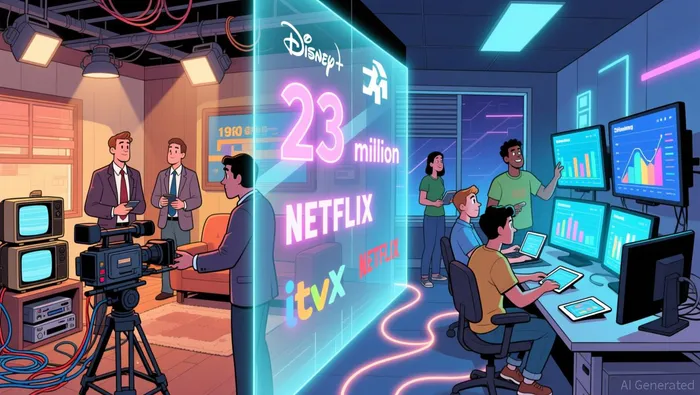
To counter these pressures, UK streaming and pay-TV operators have embraced ad-supported models. By Q3 2025, ad-supported streaming subscriptions had surged to 23 million, with 40% of new paid sign-ups opting for ad-supported tiers-a jump from 29% in the same period the prior year, according to a Senal News report. Platforms like Amazon Prime Video and Disney+ have positioned ad-supported tiers as a cornerstone of growth, leveraging lower pricing to attract price-sensitive consumers. However, data reveals a trade-off: ad-supported subscribers tend to watch 44% less content daily than those on ad-free plans, particularly on services like Prime Video, according to a Guardian article.
Strategic Synergies and Industry Consolidation
Post-2023, consolidation has emerged as a key strategy for UK media companies to enhance revenue resilience. ITV, for instance, has rebranded its streaming service ITVX to align with evolving consumption patterns, aiming to drive user engagement and ad revenue, Reuters reported. Meanwhile, the ad-supported streaming sector has become a battleground for innovation. Disney+ has notably improved its ad experience, overtaking NetflixNFLX-- in metrics like ad relevance and variation-a critical factor as dissatisfaction with ads correlates with a 47% increase in churn risk, according to a BroadbandTV News report.
Strategic partnerships and acquisitions are also reshaping the landscape. DAZN, for example, nearly doubled its user base after acquiring the FIFA Club World Cup rights, converting nearly one-third of free viewers to paid subscribers, according to the same BroadbandTV News report. Free ad-supported platforms like Tubi have similarly gained traction, capturing over 10% of the streaming audience, according to the same report. These moves highlight how consolidation and content acquisitions are enabling operators to diversify revenue streams and compete with global giants like Netflix.
Implications for Investors
For investors, the UK media landscape presents both opportunities and risks. The shift to ad-supported models has allowed platforms to mitigate revenue declines while expanding their user bases. However, the lighter viewing habits of ad-supported subscribers raise questions about long-term monetization potential. Additionally, the concentration of market power among a few players-such as Sky Media and ITV Media-could stifle competition and innovation, as noted in the TV Advertising Sector Discussion Paper.
Strategic partnerships and content acquisitions, as seen with DAZN and ITV, offer a path to differentiation. Yet, these strategies require significant capital and execution risk. Investors should closely monitor how operators balance ad load, user experience, and pricing to retain subscribers. For instance, Netflix's success in attracting 55% of new customers to its ad-supported tier in Q4 2024, as reported in the Guardian article, demonstrates the potential of this model-if executed effectively.
Conclusion
The UK media industry's consolidation and pivot to ad-supported streaming reflect a broader global trend: adapting to economic pressures through strategic synergy and innovation. While challenges like ad fatigue and market concentration persist, the growth of ad-supported tiers and content-driven partnerships offers a roadmap for resilience. For investors, the key will be identifying operators that can balance affordability, user experience, and ad revenue without compromising long-term growth.





Comentarios
Aún no hay comentarios