
Consolidation and Strategic Acquisitions Reshape Ghana's Wireless Sector: A Path to Sustainable Growth?
Ghana's wireless sector is undergoing a seismic shift, driven by strategic acquisitions, regulatory interventions, and the urgent need to modernize infrastructure. As the country's digital economy expands, market consolidation has emerged as both a challenge and an opportunity for investors. The sector's evolution-from a fragmented landscape to a highly concentrated market-offers critical insights into how strategic acquisitions and subscriber base optimization are reshaping competitive dynamics.
MTN's Dominance and Strategic Expansion
MTN Ghana has solidified its position as the market leader, capturing 78.88% of the subscriber base by April 2025, up from 61% in early 2022, according to a B&FT analysis. This growth is attributed to aggressive infrastructure investments, including a USD 1 billion commitment over the next five years, according to Budde research. The company's ability to scale operations and maintain network reliability has made it a preferred choice for consumers, even as rivals struggle. However, its dominance has raised concerns about market concentration, with industry observers warning that unchecked growth could stifle competition and innovation - a point highlighted in the B&FT analysis.
Telecel's Post-Acquisition Momentum
Telecel Ghana, which acquired Vodafone Ghana in 2023, has leveraged this consolidation to grow its subscriber base by 21% in 2025, securing a 15% market share. The acquisition not only streamlined operations but also positioned Telecel as a credible challenger to MTN. Its role in the government-mandated roaming agreement for AT Ghana's three million customers further underscores its strategic importance in stabilizing the sector. This move has allowed Telecel to expand its network footprint without the financial burden of building new infrastructure, a tactic that could attract investors seeking low-risk growth opportunities - a trend noted in commentary on the sector's restructuring.
AT Ghana's Decline and Rektron's Revival Play
AT Ghana's market share has plummeted from 25.82% in 2018 to 7.89% by the end of 2024, exacerbated by a US$342 million debt burden, according to The Herald Ghana. In a bold move to reverse this trend, Rektron Group Incorporated-a global energy and infrastructure firm-has proposed acquiring a 60% stake in AT Ghana alongside local partner Afritel Ghana Limited. Rektron announced its proposed deal in a Newswire release, outlining a USD 150 million investment to inject capital, modernize infrastructure, and expand 4G coverage to underserved regions. If approved, the deal could transform AT Ghana into a viable competitor, leveraging Rektron's global expertise to address affordability and connectivity gaps, a possibility also discussed in sector analyses.
Government Interventions and Regulatory Challenges
The Ghanaian government has played a pivotal role in shaping the sector's trajectory. By mandating AT Ghana's customers to roam on Telecel's network, regulators have sought to prevent market fragmentation while ensuring service continuity - a measure covered in the B&FT analysis. Additionally, stricter enforcement of SIM card registration and the establishment of a national 5G wholesale network signal a commitment to quality and security, as highlighted by Budde research. However, the delayed commercialization of 5G services-due to low LTE penetration and insufficient demand-highlights lingering infrastructure challenges.
Strategic Acquisitions and Subscriber Optimization: A Path Forward
For investors, the sector's consolidation trends present a dual opportunity. On one hand, acquiring underperforming assets like AT Ghana offers a chance to revitalize networks and capture market share. On the other, optimizing subscriber bases through targeted infrastructure investments-such as MTN's USD 1 billion plan-can drive long-term profitability. The key lies in balancing scale with regulatory compliance, as seen in Telecel's successful integration of Vodafone's subscriber base, a development detailed in a Ghanawebbers piece.
Yet, risks remain. MTN's dominance could deter new entrants, while AT Ghana's financial instability requires careful due diligence. Rektron's proposed acquisition, though promising, hinges on regulatory approvals and the ability to execute a complex turnaround, a caveat noted in coverage by The Herald Ghana.
Conclusion
Ghana's wireless sector is at a crossroads. Strategic acquisitions and subscriber base optimization are not just survival tactics but essential strategies for fostering a competitive, inclusive digital economy. As the government and private sector align on infrastructure modernization, investors must weigh the potential of high-growth opportunities against the risks of market concentration. The coming years will test whether consolidation can drive innovation or merely entrench monopolies-a question with profound implications for Ghana's digital future.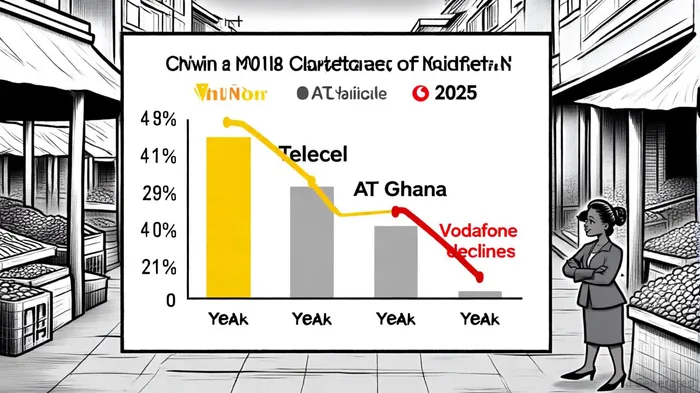







Comentarios
Aún no hay comentarios