
Conflict Zones as Crucibles for Renewable Energy Investment: The Untapped Potential of Resource-Rich Economies
The World Bank's grim warning that 435 million people in 39 conflict zones will face extreme poverty by 2030 has masked a paradox: many of these regions sit atop mineral reserves critical to the global energy transition. As Western aid budgets shrink, investors should pivot toward strategic opportunities in post-conflict economies rich in cobalt, lithium, and other resources vital to electric vehicle (EV) batteries and renewable infrastructure. The Democratic Republic of Congo (DRC), with 70% of global cobalt reserves, exemplifies this duality—staggering humanitarian need paired with untapped wealth. For shrewd investors, this presents a high-risk, high-reward frontier.
The Aid Gap Creates an Investment Vacuum
The World Bank's data paints a dire picture: conflict zones have seen per capita GDP stagnate at $1,500 since 2010, while non-conflict developing economies doubled theirs to $6,900. Yet, this stagnation is not due to lack of resources. The DRC, for instance, holds 70% of global cobalt reserves and significant lithium potential. Meanwhile, Sudan's Darfur region has untapped gold and uranium deposits, and Afghanistan's lithium reserves rival those of Chile.
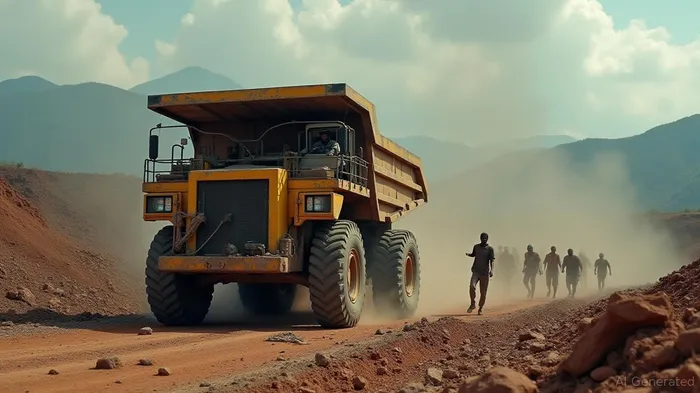
The problem? Underinvestment in extractive infrastructure and geopolitical instability. Western aid cuts have starved these economies of capital for basic services, let alone mining infrastructure. For example, the DRC's cobalt production remains inefficiently sourced through artisanal mining, with only 10% of reserves extracted. This inefficiency creates an opening: private-sector capital could modernize mining operations, aligning with soaring demand for EV batteries (projected to hit $800 billion by 2030).
Targeting Post-Conflict Recovery Sectors
Investment in conflict economies must be paired with risk-mitigation strategies and infrastructure development. Consider the following opportunities:
- Strategic Mineral Plays
- Cobalt in the DRC: Firms like Glencore (GLEN.L) and First Quantum Minerals (FM.G) already operate in the DRC, but smaller players could secure concessions in stable post-conflict zones.
Lithium in Afghanistan: The U.S. Geological Survey estimates Afghanistan's lithium reserves at 6 million tons, but extraction requires political stability. Investors might partner with governments or multilaterals to secure rights.
Infrastructure for Resource Transport
Roads, railways, and ports are critical to unlock mineral potential. Investors could fund public-private partnerships (PPPs) in regions like Niger, where uranium mines lack reliable transport links.
Green Energy Synergies
- Pair mineral extraction with renewable projects. In the DRC, solar-powered mining operations could reduce reliance on grid electricity, while hydro projects could power EV battery factories.
Policy Pressure as a Catalyst
Investors must advocate for reallocated aid budgets focused on sustainable development, not just humanitarian relief. The World Bank's call for “targeted policies to strengthen governance” hints at a shift. Investors could push for:
- Debt-for-minerals swaps: Forgive national debt in exchange for equity stakes in mineral projects.
- Conflict-sensitive ESG frameworks: Encourage mining firms to fund local healthcare and education, reducing instability risks.
Risks and Mitigation
- Geopolitical Volatility: Invest in regions with nascent peace agreements (e.g., South Sudan's oil sector post-2020 ceasefire).
- Environmental Degradation: Prioritize firms with closed-loop mining practices to reduce ecological damage.
- Governance Gaps: Partner with local communities and NGOs to ensure revenue sharing and prevent artisanal labor exploitation.
The Bottom Line
Conflict zones are the next frontier for renewable energy investors. The DRC's cobalt, Afghanistan's lithium, and Niger's uranium are not just “resources”—they're leverage points to shape a low-carbon future. For those willing to navigate instability, these economies offer returns far beyond traditional markets.
Action Items for Investors:
1. Allocate 5–10% of emerging markets portfolios to mineral ETFs with exposure to conflict economies (e.g., GDXJ for junior miners).
2. Engage with policymakers to redirect aid toward infrastructure and governance reforms.
3. Prioritize firms with local stakeholder partnerships and ESG compliance.
The choice is clear: ignore these regions and watch poverty deepen—or invest strategically to turn conflict zones into engines of sustainable growth. The minerals are there; the only missing ingredient is courage.







Comentarios
Aún no hay comentarios