
Comparing Pre-Crisis USD Strength: 1997 vs. 2007
The U.S. dollar's resilience during global financial crises has long been a focal point for investors. A comparative analysis of the periods preceding the 1997 Asian Financial Crisis and the 2007 Subprime Mortgage Crisis reveals stark differences in macroeconomic drivers and dollar behavior. These insights offer critical lessons for understanding how structural economic policies and global market dynamics shape currency stability.
Macroeconomic Drivers: Interest Rates, Growth, and Trade Deficits
In the 1994–1997 period, the Federal Reserve raised the federal funds rate from 3.0% to 6.0% to curb inflation, which remained modest (2.0%–2.3%) despite robust GDP growth averaging 3.8% annually, according to Macrotrends. This "soft landing" was underpinned by low unemployment (falling from 6.6% to 5.4%) and a surge in productivity driven by the tech boom. The U.S. trade deficit, however, widened to $203.2 billion in 1994, reflecting growing reliance on foreign capital and global supply chains, according to Davemanuel.com.
By contrast, the 2004–2007 cycle saw the Fed increase rates from 1.0% to 5.25%, but inflation rose to 3.4%, and GDP growth averaged 2.7%, according to Macrotrends. The trade deficit ballooned to $413 billion in 2004, driven by low domestic savings and a housing-led consumption boom, according to Davemanuel.com. While the Fed's tightening aimed to stabilize prices, it failed to address systemic risks in the mortgage market, setting the stage for the 2007 collapse.
Dollar Resilience: Safe Haven vs. Systemic Fragility
During the 1997 crisis, the USD surged as East Asian currencies-pegged to the dollar-collapsed under speculative attacks. The Thai baht depreciated 56%, and the Indonesian rupiah lost 81% of its value, forcing capital inflows into the U.S. market, as Investopedia explains. The dollar's strength was reinforced by its role as a global reserve currency and the U.S. economy's relative stability.
In 2007, the subprime crisis unfolded differently. While the USD remained resilient, the crisis was internal, rooted in toxic mortgage-backed securities and a liquidity freeze. Central banks, including the Fed, injected liquidity to stabilize markets, but the dollar's role as a safe haven was tested as confidence in U.S. financial institutions waned, as Federal Reserve History describes. Unlike 1997, the crisis exposed vulnerabilities in the U.S. financial system rather than currency markets.
Lessons for Investors
The 1997 and 2007 episodes highlight divergent paths to crisis. In 1997, the USD thrived amid external shocks due to strong macroeconomic fundamentals and prudent monetary policy. By 2007, however, structural imbalances-such as a bloated trade deficit and lax lending standards-undermined the dollar's resilience. For investors, these cases underscore the importance of monitoring both global capital flows and domestic policy coherence.
As the U.S. navigates today's inflationary pressures and geopolitical risks, the interplay between monetary tightening, trade dynamics, and systemic vulnerabilities will remain pivotal. History suggests that a currency's strength is not guaranteed but earned through economic discipline and adaptability.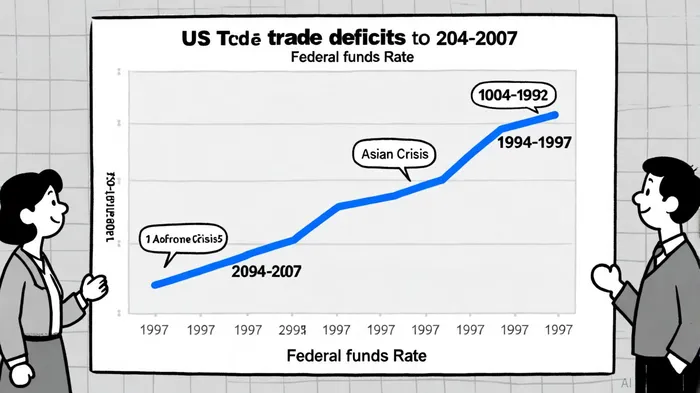







Comentarios
Aún no hay comentarios