
Community Colleges Gain Edge as Students Prioritize Affordability Over Prestige
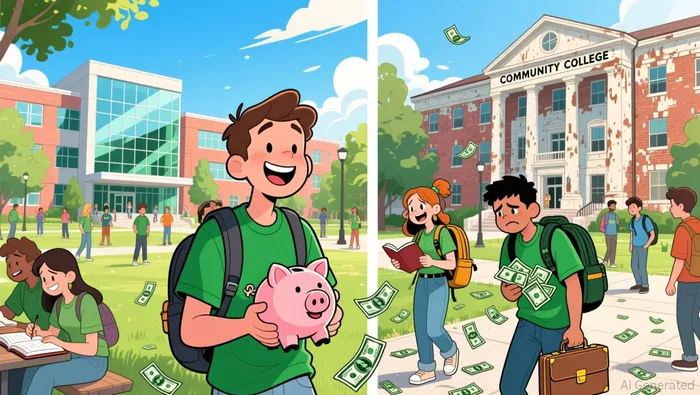
Chris Tomasso, CEO of First WatchFWRG--, a $1 billion breakfast-and-lunch chain, has become a vocal advocate for community colleges, echoing the paths of icons like Steve Jobs and George Lucas. The 55-year-old executive, who began his higher education at Manatee Community College before transferring to the University of Central Florida, argues that young professionals should prioritize practicality over prestige. "Don't let ego get in the way," Tomasso told Fortune, emphasizing that financial prudence and flexibility can shape a successful career trajectory. His journey underscores a growing shift in higher education, where community colleges are increasingly seen as a strategic first step rather than a fallback option.
The appeal of community colleges is amplified by rising student debt and the financial burden of four-year institutions. According to the National Student Clearinghouse, community college enrollment rose 4% in 2025, outpacing growth at public and private universities. Tomasso, who cited his decision to start at a community college as a "business decision," noted that saving on tuition and housing allowed him to stay academically on track without accumulating debt. His experience resonates as more than 30 states now offer tuition-free programs for qualifying students, further cementing community colleges as a cost-effective alternative.
The trend extends beyond individual choices. Institutions like Legacy EducationLGCY--, a for-profit education company, have seen enrollment surges drive revenue growth. In its first quarter of fiscal 2026, Legacy reported a 38.5% revenue increase, attributed to a 37.7% rise in student population. This growth reflects a broader demand for accessible, career-focused education. However, not all players in the sector are thriving. Stride Inc. (LRN), a provider of online education services, faces a shareholder lawsuit alleging inflated enrollment metrics and compliance violations. The case claims the company used "ghost students" and cut staffing to meet profit targets, leading to a 10,000–15,000 student drop in enrollments. These contrasting outcomes highlight the sector's volatility and the need for accountability.
Technology is also reshaping enrollment strategies. Havana, an education tech firm, recently launched an AI-driven student recruitment platform, enabling institutions to engage prospects 24/7 across multiple channels. The tool has already helped universities convert 10% more leads and save over 250 hours of manual work. For institutions struggling with declining enrollments, such innovations offer a lifeline to meet evolving student expectations. Yet, as Stride's legal troubles demonstrate, ethical and operational challenges remain critical risks.
Tomasso's message to Gen Z-prioritize resourcefulness over prestige-resonates in an era where traditional career pathways are being redefined. His own career, marked by early determination (he worked a retail job to afford a suit for an NBA internship), underscores the value of initiative. "Make sure people know you want to learn more," he advised, urging young professionals to exceed job expectations. As higher education continues to evolve, the interplay between affordability, innovation, and accountability will shape the next generation's opportunities.





Comentarios
Aún no hay comentarios