
Community Bank Resilience and Leadership Transition: The Power of Board Stewardship and Values-Driven Leadership
In an era marked by rapid technological disruption, economic volatility, and shifting investor priorities, community banks face a dual challenge: maintaining operational resilience while navigating leadership transitions that preserve stakeholder trust. Recent research and case studies underscore a critical insight: long-term board stewardship and values-driven leadership are not merely governance best practices—they are strategic imperatives for stability and investor confidence.
The Role of Board Stewardship in Navigating Transitions
Effective board stewardship begins with proactive succession planning. Data from Russell Reynolds Associates reveals that community banks without long-term succession plans experience a 7% average drop in stock value following an abrupt CEO departure, while those with robust plans see a 6% increase[1]. This stark contrast highlights the financial stakes of leadership continuity. For example, Midwest BankCentre and Pioneer Bank & Trust have embedded succession planning into their governance frameworks, ensuring seamless transitions that align with evolving employee and community expectations[2].
Board composition also plays a pivotal role. Institutions with technology-savvy board members demonstrate stronger oversight during digital transformations, correlating with higher revenue growth[3]. This expertise is critical as regional banks adopt AI-driven governance tools to enhance risk assessment and compliance monitoring[4].
Values-Driven Leadership: A Pillar of Trust
Values-driven leadership transcends corporate jargon; it is a deliberate strategy to align organizational purpose with stakeholder expectations. Texas Security Bank, led by CEO Craig Scheef, exemplifies this approach. By prioritizing community impact—such as supporting small businesses during the Great Recession—the bank cultivated resilience and trust[5]. Similarly, Beneficial State Bank under Kat Taylor's stewardship has redefined banking through mission-driven initiatives, including renewable energy lending and climate crisis mitigation[6]. These examples illustrate how purpose-driven models foster loyalty among employees, customers, and investors.
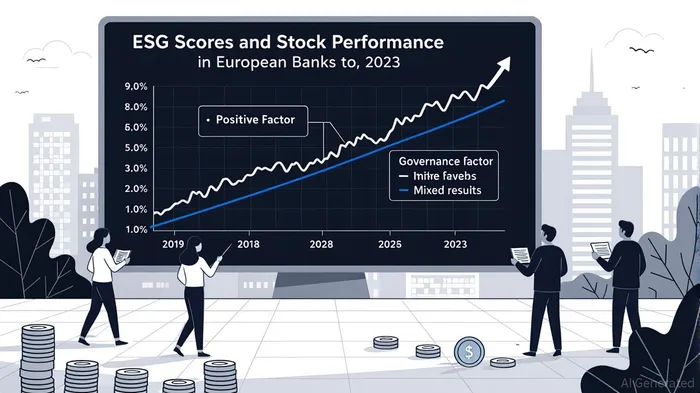
Quantitative evidence further supports this narrative. A 2025 study of European banks found that environmental factors positively influence credit ratings, while governance and social dimensions show mixed but significant correlations with market stability[7]. Though U.S.-specific data on ESG integration remains limited, the broader trend suggests that values-driven practices reduce systemic risks and enhance creditworthiness[8].
Succession Planning as a Competitive Advantage
The urgency for succession planning is underscored by demographic trends: 40% of U.S. community bank CEOs are expected to retire within five years, yet only 18% have identified successors[1]. The National Credit Union Administration (NCUA) has even mandated succession plans for credit unions by 2026, reflecting regulatory recognition of this risk[9]. Internally promoted CEOs, who typically serve 1.4 years longer than external hires, further justify the cost of long-term development programs[1].
ESG Integration: Bridging Governance and Financial Performance
While ESG integration remains a nascent focus for U.S. community banks, its potential to drive financial outcomes is evident. A 2025 study of Turkish firms revealed a positive relationship between ESG disclosure and profitability, emphasizing transparency's role in investor trust[10]. Though greenwashing concerns persist[11], institutions like Beneficial State Bank demonstrate that authentic ESG commitments can differentiate banks in competitive markets[6].
Challenges and the Path Forward
Despite these insights, challenges remain. U.S. community banks often lack the resources to implement sophisticated ESG reporting systems, and regulatory frameworks for sustainable finance are still evolving[12]. However, the benefits of early adoption—enhanced resilience, improved credit ratings, and stronger investor relations—justify prioritizing these initiatives.
Conclusion
Community banks that embrace board stewardship and values-driven leadership are not only weathering current challenges but also positioning themselves for long-term success. By investing in succession planning, leveraging technology-savvy governance, and aligning with ESG principles, these institutions can build trust in an era of uncertainty. For investors, the message is clear: resilience in community banking is no longer a byproduct of stability—it is a calculated outcome of intentional leadership.







Comentarios
Aún no hay comentarios