
Commodity Trading Enters a New Era Through Blockchain Tokenization
The global commodity market is transitioning into a new era driven by blockchain technology. A strategic partnership between Asara Group and Locus Chain aims to tokenize physical commodities, creating a bridge between traditional markets and digital asset infrastructure according to Morningstar. This initiative seeks to enhance transparency, efficiency, and accessibility for a market valued at approximately USD 6 trillion.
Commodity trading has long been plagued by structural limitations such as complex processes, high barriers to entry, and fragmented information flows as reported. Through tokenization, these challenges can be addressed by digitizing ownership and enabling seamless global trading according to CoinFomania. The integration of blockchain technology is expected to reduce transaction times and improve liquidity for participants with smaller capital bases as observed.
Asara Group and Locus Chain are working to develop a regulated RWA (Real-World Asset) platform that maintains compliance and operational trust according to analysis. This move reflects a broader trend of institutions adopting blockchain solutions for asset management as noted.
Why Did This Happen?
Market participants increasingly view blockchain as a solution rather than an experiment. The growing demand for faster settlements, transparent pricing, and improved accessibility is driving this transformation according to industry sources. Blockchain-based tokenization allows physical commodities to be represented as digital assets, enabling direct ownership transfers through secure smart contracts as explained.
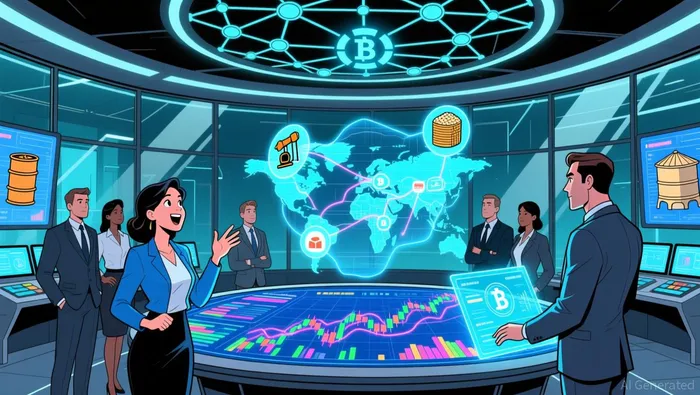
The partnership between Asara Group and Locus Chain is not an isolated effort. The broader RWA tokenization market is expected to grow significantly, reaching potentially trillions of dollars in value by 2030 according to Morningstar. This growth is supported by advancements in blockchain infrastructure, which are addressing throughput, stability, and cost efficiency issues that have limited large-scale adoption as reported.
How Did Markets React?
The RWA tokenization market has already seen accelerated growth in 2025, valued at approximately USD 20–35 billion according to Morningstar. Financial institutions and global consulting firms are forecasting further expansion, with some projecting a market size of up to USD 10 trillion by 2030 as forecasted.
Emerging markets stand to benefit significantly from this shift. Tokenization can provide access to global liquidity that was previously constrained by infrastructure limitations according to CoinFomania. This change supports greater financial inclusion and could redefine the structure of global commodity markets as noted.
What Are Analysts Watching Next?
Regulatory clarity and institutional adoption are key factors that analysts are monitoring. Partnerships like the one between Asara Group and Locus Chain demonstrate how regulation and innovation can coexist according to analysis. As more institutions seek compliant platforms for blockchain-based asset exposure, the balance between compliance and technological advancement will become increasingly important as observed.
Investors are also looking at how tokenization affects capital efficiency and portfolio diversification. The ability to trade assets across borders without physical movement or complex logistics is expected to attract broader participation according to CoinFomania. This could lead to increased liquidity and market efficiency as predicted.
Institutions are gaining operational efficiencies through automated settlement and compliance processes. Blockchain reduces reconciliation errors and administrative overhead according to industry reports. These efficiencies create competitive advantages and support scalable trading strategies across jurisdictions as noted.
As the market evolves, participants must adapt to technological shifts. Early adoption provides strategic positioning and liquidity benefits. RWA tokenization represents a foundational upgrade rather than a passing trend according to analysis. Markets reward readiness and innovation.
The transition of RWA tokenization from an institution-centric niche into a mainstream market is expected to be driven by public blockchain infrastructure according to Morningstar. If these blockchains can meet the demands of retail and commercial users, the market could expand from tens of billions to trillions of dollars as projected.
This shift marks a structural necessity for modernizing commodity finance. The evolution of global commodity markets is not just about technology; it is about creating a more open, efficient, and inclusive trading environment according to Morningstar.





Comentarios
Aún no hay comentarios