
Comcast's Peanut Sculptures and the Strategic Power of Community-Aligned Branding in Telecom
The Dothan project, which saw the unveiling of two fiberglass peanut sculptures-"Xfi-nutty" and "Biz-nut"-in October 2025, is emblematic of Comcast's dual focus on infrastructure and social capital. These sculptures, placed outside the Xfinity Store, were accompanied by a $10,000 donation to the Alfred Saliba Family Services Center for digital skills programs and a $4.5 million investment to expand broadband access in Houston County. While the direct financial impact of such initiatives on customer retention metrics remains unquantified in public reports, the strategic logic is clear: by embedding itself in the local culture, Comcast fosters goodwill that can translate into long-term customer relationships.
This approach aligns with broader telecom industry insights. A 2025 Simon-Kucher study highlights that customers with high service engagement exhibit a 19% higher customer lifetime value (CLTV) compared to those with minimal interactions. Moreover, loyalty programs and community-driven initiatives are shown to uplift CLTV by up to 43%, underscoring the value of sustained engagement. For Comcast, the Dothan project is not merely an act of corporate philanthropy but a calculated move to deepen emotional ties with a regional customer base.
The financial rationale for such investments is further supported by Comcast's broader community strategy. Its Project UP $35 million commitment in 2024 to funding digital literacy and entrepreneurship programs demonstrates a long-term vision of bridging the opportunity gap while cultivating a customer base that views the company as a partner in economic mobility. While no direct causal link has been established between these efforts and investor returns, the indirect benefits are significant. A 2024 McKinsey analysis notes that firms with strong ESG (Environmental, Social, and Governance) performance often outperform peers in shareholder returns, though the value is frequently tied to intangible assets like brand trust and risk mitigation.
Critics may argue that the Dothan sculptures are a symbolic gesture with little tangible impact on retention. However, the telecom industry's own data suggests otherwise. A Bain case study on a struggling telco revealed that restructuring engagement strategies-such as improving first-contact resolution and deploying predictive analytics-could lift retention rates from 35% to 60% within a year. While Comcast's approach is less about fixing service gaps and more about fostering brand affinity, the principle remains: engagement drives loyalty.
For investors, the key question is whether these community investments translate into sustainable financial performance. Comcast's Q2 2025 results, which included $4.5 billion in free cash flow and $2.9 billion returned to shareholders, suggest that the company's diversified strategy-including infrastructure expansion and community alignment-is resonating. While it is impossible to isolate the impact of the Dothan project from broader trends, the cumulative effect of Comcast's localized initiatives likely contributes to a customer base that is less price-sensitive and more resistant to churn.
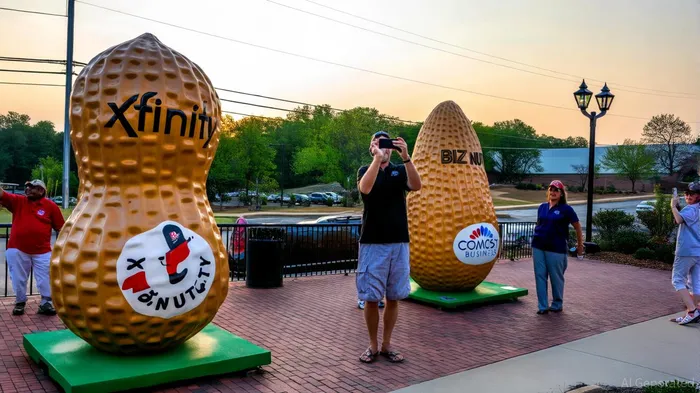
In conclusion, Comcast's Dothan peanut sculptures may seem like an oddity, but they represent a strategic pivot toward community-aligned branding-a tactic increasingly vital in a competitive telecom landscape. By investing in local culture and infrastructure, Comcast not only enhances its public image but also builds a foundation for long-term customer loyalty. For investors, the lesson is clear: in an era where differentiation is paramount, the value of community engagement may be as critical as the next fiber-optic upgrade.





Comentarios
Aún no hay comentarios