
Comcast's OIC Philadelphia Lift Zone: A Strategic Catalyst for Digital-First Business Growth
In an era where digital equity is increasingly tied to economic mobility, Comcast's OIC Philadelphia Lift Zone emerges as a transformative initiative with profound implications for next-generation digital ecosystems. Launched in partnership with the Opportunities Industrialization Center (OIC) Philadelphia, this $1 million investment in infrastructure and training is notNOT-- merely a philanthropic gesture but a strategic catalyst for fostering digital-first business growth. By bridging the digital divide and aligning workforce development with high-demand industries, the Lift Zone positions itself as a compelling investment opportunity in the evolving digital economy.
Infrastructure as a Foundation for Digital Ecosystems
The OIC Philadelphia Lift Zone exemplifies how targeted infrastructure investments can unlock economic potential. The facility's upgrades-free 6GHz WiFi access, 50+ new computers, and enhanced classroom technology-create a robust digital ecosystem that supports both immediate access and long-term skill development. According to a Comcast announcement, these enhancements enable training in sectors like healthcare, hospitality, green jobs, and digital media, aligning with industries projected to grow significantly in the coming decade. For instance, the healthcare IT market alone is forecasted to expand at a compound annual growth rate (CAGR) of 15.24% from 2025 to 2030, reaching $839.67 billion by 2030, driven by AI-driven clinical systems and paperless technologies, according to a Mordor Intelligence report.
The Lift Zone's integration of Per Scholas' tuition-free tech training further amplifies its impact. Programs in cloud computing, cybersecurity, and data engineering directly address labor shortages in critical tech fields, creating a pipeline of skilled workers for local businesses. As stated by ComcastCMCSA--, this initiative is part of its $1 billion Project UP, which aims to connect 50 million people to the internet and provide digital skills training to 5 million individuals by 2026. Such scale underscores the initiative's potential to generate measurable economic returns through workforce readiness and business innovation.
Workforce Development as a Driver of ROI
While specific ROI metrics for Philadelphia's Lift Zone are still emerging, the success of earlier Flagship Lift Zones in Atlanta and Houston offers a compelling precedent. In Atlanta, a $500,000 investment in Inspiredu's facility enabled the expansion of cybersecurity and coding programs, doubling the organization's teaching staff and extending remote training across Georgia, as reported in a PR Newswire release. Similarly, Houston's SERJobs Lift Zone, funded with $500,000, introduced 48 new computers and privacy pods for virtual job interviews, directly addressing barriers to employment in underserved communities, as detailed by Building Texas Show.
These examples highlight a consistent pattern: investments in digital infrastructure yield returns through increased employment rates, wage growth, and business productivity. A 2025 Benenson study found that 90% of Lift Zone users reported the facilities as "helpful," with 62% returning for multiple sessions, indicating sustained engagement and skill retention. For investors, this translates to a scalable model where digital equity initiatives generate both social and economic value.
Economic Impact and Sector-Specific Opportunities
The OIC Philadelphia Lift Zone's focus on high-growth sectors like healthcare and digital media aligns with broader market trends. The healthcare IT sector, for example, is attracting cautious optimism from investors due to its role in streamlining clinical workflows and reducing costs, according to an OpusConnect analysis. Meanwhile, digital media and audio engineering-fields emphasized in the Lift Zone's training programs-are gaining traction as content creation becomes a cornerstone of the digital economy.
Moreover, the initiative's emphasis on bilingual education and accessibility features caters to Philadelphia's diverse population, opening new markets for businesses targeting multilingual communities. As noted in a 2025 McKinsey analysis, digital transformation in healthcare systems is critical for addressing workforce challenges and improving care quality, yet many organizations underinvest in these areas. The Lift Zone's targeted approach fills this gap, offering a blueprint for investors seeking to capitalize on underserved niches.
A Model for Future-Proofing Communities
Comcast's Lift Zones are not isolated projects but part of a national strategy to future-proof communities against digital exclusion. With five Flagship Lift Zones launched in 2025 across cities like Chicago and St. Paul, the model demonstrates replicability and adaptability, as noted in a Morningstar report. For Philadelphia, the OIC Lift Zone serves as a testbed for innovations that could be scaled to other urban centers, creating a ripple effect of economic growth.
Conclusion
Comcast's OIC Philadelphia Lift Zone represents more than a local initiative-it is a strategic investment in the digital ecosystems that will define the next decade of economic growth. By combining infrastructure upgrades, workforce training, and partnerships with organizations like Per Scholas, the project creates a self-sustaining cycle of digital empowerment and business innovation. For investors, the Lift Zone model offers a rare alignment of social impact and financial returns, particularly in sectors poised for exponential growth. As the digital divide narrows and high-demand industries evolve, initiatives like these will become increasingly vital to unlocking the full potential of tomorrow's workforce and economy.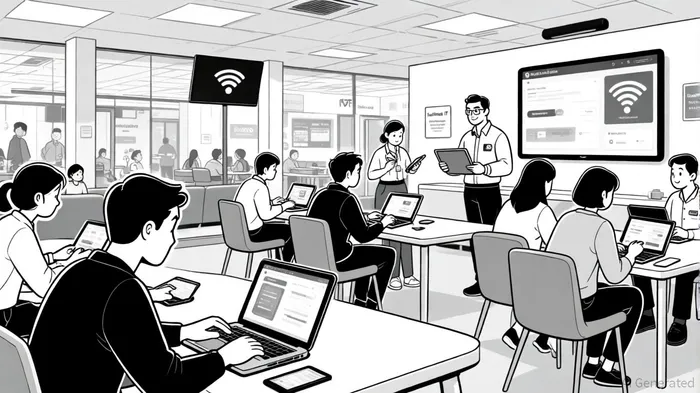





Comentarios
Aún no hay comentarios