
Combating Transnational Fraud: Investment Opportunities in Cybersecurity and Financial Compliance in Southeast Asia
The U.S. and U.K. have launched unprecedented joint actions to dismantle transnational cybercrime networks in Southeast Asia, targeting operations that defrauded victims of over $16.6 billion through cryptocurrency scams and human trafficking[1]. These efforts, including sanctions against the Cambodia-based Prince Group Transnational Criminal Organization (TCO) and its financial enabler, the Huione Group, signal a strategic shift toward securing the region's digital infrastructure. For investors, this creates a unique window to capitalize on growing demand for cybersecurity solutions and financial compliance technologies, backed by U.S.-U.K. funding and regional policy reforms.
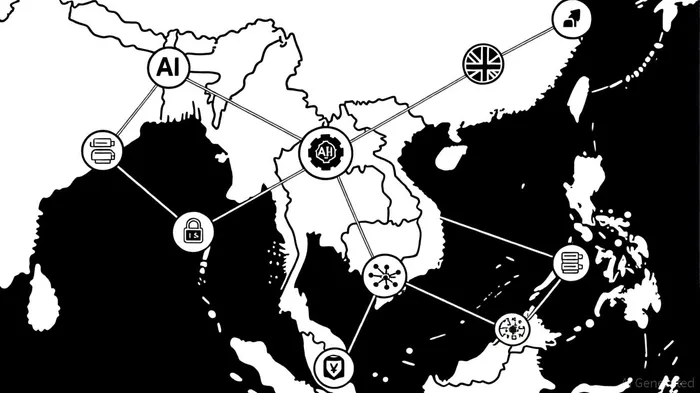
Strategic Implications of U.S.-U.K. Joint Action
The U.S. and U.K. have leveraged their diplomatic and financial clout to disrupt cybercriminal ecosystems in Southeast Asia. In October 2025, the Treasury's Office of Foreign Assets Control (OFAC) and the U.K.'s Foreign, Commonwealth & Development Office (FCDO) froze $4 billion in illicit assets linked to the Huione Group, a key player in laundering funds for cyber heists[2]. These actions are part of a broader strategy to stabilize the region's digital economy, which is projected to grow to $1 trillion by 2030[3]. By targeting the financial lifelines of criminal networks, the U.S. and U.K. are not only deterring fraud but also creating a more secure environment for legitimate tech and financial investments.
The U.S.-U.K. Technology Prosperity Deal, signed in September 2025, further underscores this alignment. The agreement includes £130 billion in private-sector investments from U.S. firms like Microsoft and NVIDIA to expand AI infrastructure and nuclear energy projects in the U.K.[4]. While the deal focuses on transatlantic collaboration, its ripple effects are evident in Southeast Asia, where U.S. and U.K. agencies are funding cybersecurity capacity-building programs. For instance, the U.K. announced a £13 million initiative at the 2023 Singapore International Cyber Week to strengthen ASEAN's cyber defenses, emphasizing threat detection and critical infrastructure protection[5].
Cybersecurity Market Growth and Investment Hubs
Southeast Asia's cybersecurity market is set to reach $4.53 billion by 2025, driven by rising cyber threats and rapid digitalization[6]. Countries like Singapore and Malaysia are leading the charge, with Singapore positioning itself as a cyber innovation hub and Malaysia launching initiatives like the ASEAN Cyber Capacity Programme (ACCP). Startups are emerging to fill gaps in SME protection and cybersecurity-as-a-service (CaaS). For example, Malaysia-based ArmourZero has raised significant funding to offer affordable security solutions for SMEs, while Singapore's watchTowr uses AI-driven threat detection to secure enterprise networks[7].
The U.S. and U.K. are directly supporting these ecosystems. The U.S. Department of Defense's Southeast Asia Partnership Expansion Act, introduced in 2023, extends cybersecurity training and operational support to partner nations like Vietnam, Thailand, and the Philippines[8]. Similarly, the U.K. has prioritized gender-inclusive programs, such as the UK-Southeast Asia Women in Cyber Fellowship, to address talent shortages in the sector[5]. These initiatives not only build local capacity but also create fertile ground for foreign investment in cybersecurity startups and infrastructure.
Financial Compliance as a Growth Sector
The U.S. and U.K. have also strengthened financial compliance frameworks to combat money laundering and fraud. A 2024 Memorandum of Understanding (MoU) between OFAC and the U.K.'s Office of Financial Sanctions Implementation (OFSI) enables real-time information sharing and coordinated investigations[9]. This collaboration is critical in Southeast Asia, where financial institutions are increasingly targeted by cybercriminals. For instance, the U.S. Treasury sanctioned 19 entities in Burma and Cambodia linked to scam operations that exploited victims through forced labor and violent coercion[1].
Investors can capitalize on this by supporting compliance tech startups that leverage AI and blockchain for transaction monitoring. The U.S.-UK Financial Regulatory Working Group has already emphasized the role of AI in detecting financial crimes, signaling a shift toward tech-driven solutions[10]. Additionally, the U.S. International Development Finance Corporation (DFC) and the U.K. Foreign, Commonwealth & Development Office (FCDO) have launched joint programs to fund financial infrastructure projects in the region, prioritizing transparency and anti-corruption measures[11].
Conclusion: A Strategic Investment Landscape
The U.S. and U.K. have transformed Southeast Asia's cybersecurity and financial compliance landscape through targeted sanctions, capacity-building programs, and private-sector partnerships. For investors, this creates opportunities in three key areas:
1. Cybersecurity-as-a-Service (CaaS) startups addressing SME vulnerabilities.
2. Financial compliance tech firms leveraging AI and blockchain for real-time fraud detection.
3. Government-backed infrastructure projects in cloud security and digital identity management.
As the region's digital economy expands, the alignment of U.S.-U.K. priorities with Southeast Asia's needs will continue to drive demand for secure, rights-respecting technologies. Investors who align with these strategic initiatives will not only mitigate risks but also position themselves at the forefront of a $1 trillion digital transformation.







Comentarios
Aún no hay comentarios