
Color Trends as Economic Barometers: How Pantone's 2026 Color of the Year Reflects Consumer Sentiment and Retail Opportunities
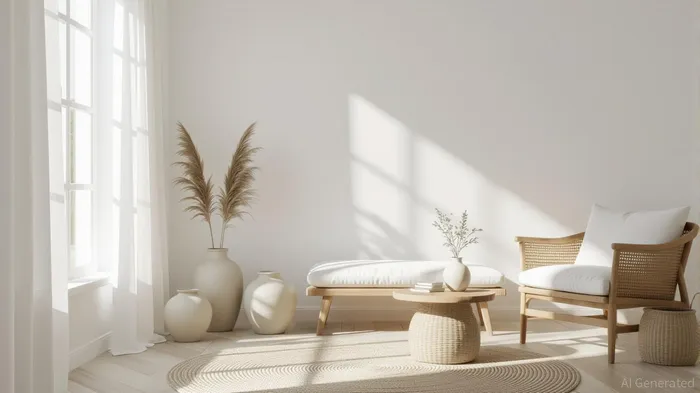
Pantone's annual Color of the Year has long served as a barometer for cultural and psychological shifts, offering insights into consumer behavior and market dynamics. For 2026, Pantone has selected Cloud Dancer (PANTONE 11-4201), a soft, ethereal white, as its Color of the Year. This choice reflects a global yearning for serenity and simplicity in an increasingly frenetic, hyper-connected world. As consumers seek respite from digital overload and economic uncertainty, Cloud Dancer's calming influence signals a pivot toward mindfulness and minimalism-a trend with profound implications for discretionary retail sectors.
Color Trends as Macroeconomic Indicators
Color trends are not merely aesthetic choices; they are deeply intertwined with macroeconomic and psychosocial currents. According to the Pantone Color Institute, Cloud Dancer embodies "a fresh start and a blank canvas for creativity," resonating with a post-pandemic generation prioritizing mental well-being and authenticity. This aligns with broader economic narratives: as inflationary pressures ease and consumers shift toward value-driven purchases, understated elegance and functional design gain traction.
Historically, Pantone's selections have mirrored societal shifts. For instance, the 2023 Color of the Year, Viva Magenta, symbolized resilience and digital saturation, while 2024's Peach Fuzz reflected a return to warmth and human connection according to industry analysis. The 2026 choice of a neutral white suggests a cultural recalibration-a desire to "reset" amid geopolitical tensions, climate anxieties, and the lingering effects of remote work culture as experts note.
Home Goods: A Market Poised for Growth
The home goods sector stands to benefit significantly from Cloud Dancer's rise. As consumers invest in creating serene living spaces, demand for minimalist, textural designs is surging. Joybird has already integrated Cloud Dancer into 300 customizable silhouettes, leveraging its versatility to appeal to a broad audience. Meanwhile, the U.S. home decor market is projected to grow at a 4.11% CAGR through 2030, driven by renovation spending and the rise of hybrid workspaces.
Investors should also consider the role of sustainability. Cloud Dancer's association with natural materials-such as linen, ceramic, and unpolished wood-aligns with eco-conscious consumer preferences. Brands that emphasize sustainable sourcing and low-impact production, like West Elm or Article, could see outsized gains as the trend gains momentum.
Design Tech: A Canvas for Innovation
Design technology firms are uniquely positioned to capitalize on Cloud Dancer's adaptability. As a neutral base, the color facilitates seamless integration into digital interfaces, smart home systems, and augmented reality (AR) platforms. Motorola has incorporated Cloud Dancer into its Edge 70 smartphone, leveraging its "visual refuge" qualities to differentiate in a crowded market.
Moreover, the color's psychological benefits-reducing cognitive load and enhancing focus-make it ideal for productivity tools and wellness apps. Startups specializing in AI-driven interior design (e.g., Havenly, Modsy) could use Cloud Dancer as a default palette to streamline user experiences, potentially boosting engagement metrics.
Luxury Sector: Quiet Luxury and Brand Premiumization
Luxury brands are redefining opulence through Cloud Dancer's understated elegance. Mandarin Oriental has introduced Cloud Dancer-themed afternoon tea sets and spa treatments, positioning serenity as a premium offering. This aligns with the "quiet luxury" trend, where consumers prioritize craftsmanship and subtlety over overt branding-a shift reflected in the success of labels like The Row and Bottega Veneta.
Financially, Mandarin Oriental's Q3 2025 results underscore the sector's resilience. The company reported stable net profit and a strong liquidity position, with $470 million in committed debt facilities and $316 million in cash reserves. Its asset-light strategy-exemplified by the partial sale of One Causeway Bay to Alibaba-demonstrates how luxury hospitality firms are optimizing capital to meet evolving consumer demands as reported in financial analysis.
Investment Validation and Risks
While Cloud Dancer's adoption is still nascent, early movers in home goods and design tech are already seeing traction. However, investors must remain cautious. Skepticism persists about the commercial viability of white as a dominant color, given its perceived lack of warmth compared to earthy tones or bold hues. Additionally, macroeconomic headwinds-such as potential interest rate hikes-could dampen discretionary spending.
That said, the broader shift toward mindfulness and sustainability offers a buffer. As noted by WGSN, neutral palettes are expected to dominate 2026, with "Scandinese" and "rustic revival" aesthetics gaining traction. This suggests that Cloud Dancer is part of a larger movement, not a fleeting fad.
Conclusion
Pantone's 2026 Color of the Year is more than a design choice-it is a reflection of collective consumer sentiment and a harbinger of economic trends. For investors, the key lies in identifying companies that align with the values Cloud Dancer represents: simplicity, authenticity, and emotional resonance. From Joybird's tactile furniture to Mandarin Oriental's curated experiences, the opportunities span sectors and geographies. As the world continues to seek balance in an unbalanced era, those who embrace the quiet power of Cloud Dancer may find themselves at the forefront of a transformative retail cycle.







Comentarios
Aún no hay comentarios