
Colombia's Strategic Rebalancing: Navigating Global Shifts with Resource Resilience
Colombia's 2025 economic landscape is a masterclass in strategic recalibration. As global markets grapple with decarbonization pressures, resource scarcity, and geopolitical fragmentation, Colombia has positioned itself as a paradoxical blend of traditional strength and forward-looking innovation. The country's recent reforms—spanning fiscal discipline, infrastructure modernization, and green energy pivots—reflect a calculated effort to align with global economic shifts while safeguarding its resource-driven economy. For investors, this duality presents both risks and opportunities, demanding a nuanced understanding of Colombia's evolving role in the 21st-century global economy.
Fiscal Prudence Meets Structural Ambition
Colombia's 2025 fiscal consolidation measures, including diesel subsidy removals and targeted social spending, are not mere austerity but deliberate steps to stabilize a headline deficit of 6%. These actions, paired with a cautious monetary easing cycle (interest rates projected to hit 7% by 2026), signal a commitment to macroeconomic stability. The central bank's data-dependent approach—cutting rates by 25 basis points in April 2025—demonstrates a balance between inflation control and growth support. For investors, this stability is critical: a 2.5% GDP growth projection for 2025, though modest, is underpinned by a resilient private sector and a gradual recovery in consumption.
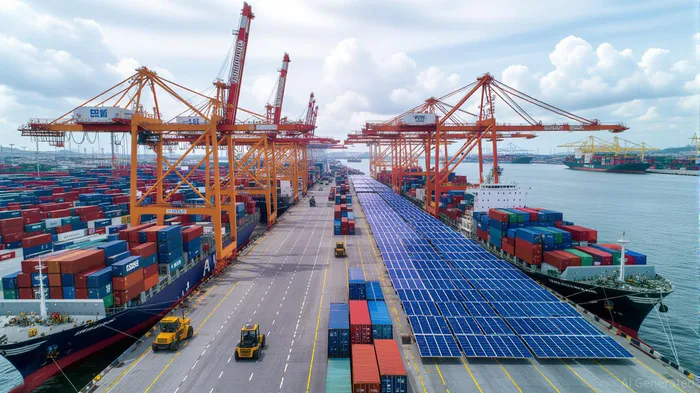
However, the true test lies in structural reforms. Colombia's $150 billion infrastructure investment deficit is not a liability but a $150 billion opportunity. Projects like the Port of Buenaventura expansion and urban transport upgrades are designed to integrate remote regions into the global supply chain, reducing territorial inequalities while boosting productivity. These initiatives align with global trends in supply chain diversification, as companies seek to mitigate risks from over-reliance on China and the U.S.-China trade tensions.
FDI Diversification: Beyond the Extractive Era
Colombia's foreign direct investment (FDI) profile is undergoing a seismic shift. While mining and energy historically dominated inflows, 2024 data reveals a 75% share of FDI now flowing into non-extractive sectors. Financial services, manufacturing, and tourism are leading this charge, with USD 4.395 billion, USD 1.974 billion, and USD 1.814 billion respectively. This diversification is not accidental; it's a response to global decarbonization pressures and the declining appeal of high-emission industries.
The mining sector, though still vital, is adapting. Colombia's Green Taxonomy—launched in 2022—classifies sustainable mining practices, while ESG criteria are increasingly embedded in infrastructure projects. For example, lithium extraction (Colombia holds 3% of global reserves) is being paired with green hydrogen production, aligning with European and U.S. demand for clean energy materials. Investors in this space must weigh the risks of regulatory uncertainty and narco-criminal activity against the potential of Colombia's third-largest lithium reserves and 10% global gold production.
Renewable Energy: A New Gold Rush
Colombia's renewable energy sector is emerging as a cornerstone of its global positioning. Solar energy projects, green hydrogen pilot programs, and energy efficiency initiatives are attracting capital from ESG-focused funds and multilateral lenders. The World Bank's Country Partnership Framework (CPF) underscores this shift, allocating USD 2.5 billion for climate-resilient infrastructure by 2026.
The strategic logic is clear: Colombia's equatorial location provides abundant solar potential, while its lithium and gold reserves position it as a critical node in the clean energy supply chain. For instance, the “Heart of the Amazon” initiative—aimed at conserving biodiversity while promoting sustainable land use—has drawn interest from European investors seeking to offset carbon footprints.
Yet challenges persist. Regulatory delays, inconsistent enforcement of ESG standards, and security risks in rural mining regions remain hurdles. Investors must prioritize projects with government green bonds or sustainability-linked loans, which offer both financial and reputational safeguards.
Strategic Risks and the Path Forward
Colombia's “Total Peace” policy under President Gustavo Petro remains a double-edged sword. While negotiations with armed groups aim to reduce violence, progress is uneven, particularly in coca-producing regions. This instability deters FDI in agriculture and mining, sectors that could benefit from post-conflict reconstruction. Additionally, the Petro administration's emphasis on domestic sovereignty—such as reindustrialization and local value creation—has introduced policy uncertainty, with structural reforms in labor and pensions lacking clarity.
For investors, the key is to balance these risks with Colombia's strategic assets. The country's open legal framework for FDI, OECD membership, and proximity to U.S. markets (via the U.S.-Colombia Free Trade Agreement) provide long-term appeal. However, short-term volatility—exacerbated by peso depreciation and a widening current account deficit—demands a hedged approach.
Investment Advice: Diversify and Hedge
Colombia's 2025 market moves reflect a nation in transition. For those with a 5–7 year horizon, the following strategies merit consideration:
1. Infrastructure Equity: Target firms involved in urban and coastal projects, such as port expansions and smart grid developments. These align with global supply chain trends and offer stable returns.
2. Green Mining Partnerships: Invest in lithium and gold producers adopting ESG-aligned practices, particularly those with government-backed green bonds.
3. Tourism and Services: The 3.4% annual growth in non-extractive sectors suggests resilience. Real estate and hospitality ventures in Bogotá, Medellín, and Cartagena could capitalize on Colombia's improving safety and digital nomad influx.
In conclusion, Colombia's strategic positioning in a shifting global economy hinges on its ability to balance fiscal discipline with structural innovation. While challenges like security risks and regulatory uncertainty persist, the country's resource endowments, geographic advantages, and commitment to decarbonization make it a compelling case study in adaptive economic strategy. For investors willing to navigate the complexities, Colombia offers a unique blend of resilience and reinvention.







Comentarios
Aún no hay comentarios