
The Collapse of Marriott-Backed Sonder and Its Ripple Effects on Alternative Lodging Investments
A Failed Partnership and Financial Freefall
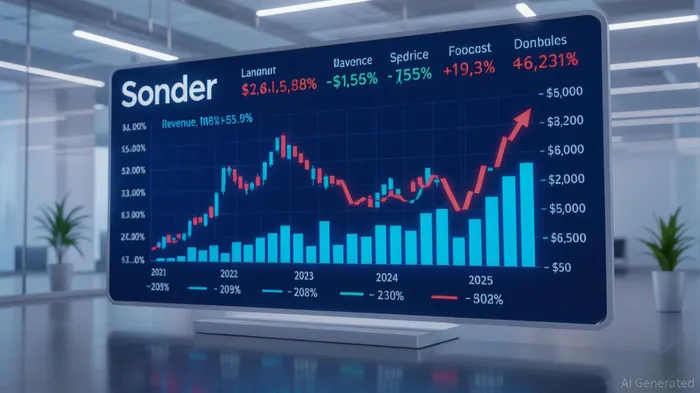
Sonder's downfall was precipitated by its failed integration with Marriott's systems. The company had pinned its revival on a licensing agreement with Marriott's Bonvoy reservation platform, but prolonged technical challenges and unanticipated costs rendered the partnership unsustainable. Interim CEO Janice Sears acknowledged that integration expenses far exceeded projections, while revenue from Bonvoy participation plummeted, exacerbating Sonder's liquidity crisis, according to a Skift report. By the time the partnership was terminated, SonderSOND-- had already posted a net loss of $44.5 million in Q2 2025 and operated with a current ratio of 0.25-a stark indicator of insolvency risk, according to a Meritage Hospitality Group Q3 report.
The collapse highlights a recurring theme in real estate-backed hospitality: the difficulty of balancing capital-intensive operations with scalable profitability. Sonder's business model-leasing properties, renovating them, and offering short-term stays-required heavy upfront investment and precise execution. Yet, as the Meritage report revealed, even established players in the sector are not immune to financial strain, with the company reporting a $9.0 million net loss, according to a Pro Real Estate Investment Trust Q3 report.
Ripple Effects on the Alternative Lodging Sector
Sonder's liquidation has reshaped investor sentiment and market strategies in the alternative lodging space. The failure of an asset-heavy, lease-driven model has prompted heightened scrutiny of ventures lacking clear paths to profitability. Airbnb and other short-term rental platforms are poised to absorb Sonder's displaced customer base and property owners, potentially consolidating their market dominance, according to the Meritage report. Meanwhile, competitors like Mint House may benefit from reduced competition and opportunities to acquire Sonder's liquidated assets.
The fallout also signals a broader shift in investor priorities. The post-pandemic era, marked by speculative SPAC-driven growth, is giving way to a focus on sustainable earnings and unit economics. As the Pro Real Estate Investment Trust Q3 report illustrates, even resilient performers face challenges: a 91.1% AFFO payout ratio and a 49.0% debt-to-asset ratio highlight the sector's vulnerability to leverage risks, according to a St. Joe Company Q3 report. Investors are now demanding robust financial health, diversified revenue streams, and operational discipline-qualities Sonder conspicuously lacked.
Expert Insights and Industry Risks
Industry experts caution that Sonder's collapse is emblematic of systemic risks in real estate-backed hospitality. The integration of technology with physical assets, a hallmark of proptech ventures, remains fraught with execution challenges. As one analysis notes, "Physical logistics in hospitality cannot be substituted by software alone," a lesson Sonder's failed integration with Marriott starkly demonstrated, according to a Yahoo report.
Moreover, the sector's sensitivity to macroeconomic fluctuations-such as interest rate hikes and shifting travel trends-has been amplified by recent global shocks. The St. Joe Company's Q3 2025 results, which saw a 9% increase in hospitality revenue to $60.6 million, offer a counterpoint to Sonder's struggles. However, this growth was driven by strategic pivots, such as repurposing senior living communities, rather than reliance on speculative models.
Conclusion: Lessons for Investors
Sonder's collapse serves as a cautionary tale for investors in real estate-backed hospitality ventures. Key takeaways include:
1. Operational Discipline: Hybrid models require rigorous execution and cost control.
2. Financial Transparency: Metrics like current ratios and net operating income must be closely monitored.
3. Adaptability: Companies must pivot in response to market shifts, as seen in The St. Joe Company's strategic asset sales.
As the sector recalibrates, investors should prioritize ventures with proven unit economics, diversified revenue streams, and prudent debt management. The Sonder case underscores that in hospitality, growth without profitability is a precarious foundation.





Comentarios
Aún no hay comentarios