
**The Collapse of Louisiana's $3 Billion Mid-Barataria Diversion and the Fragile Future of Coastal Infrastructure Bonds**
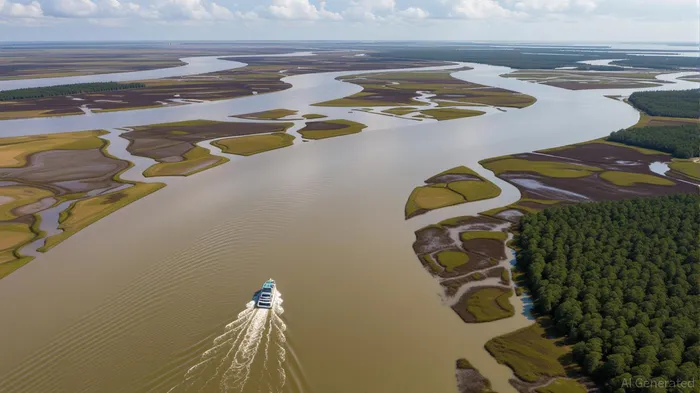
Louisiana's decision to cancel its $3 billion Mid-Barataria Sediment Diversion Project in July 2025 has sent shockwaves through the infrastructure bond market, particularly for state-level environmental and energy-linked projects. Once hailed as a flagship initiative in the fight against coastal land loss, the project's termination—driven by escalating costs, legal battles, and political opposition—has exposed the vulnerabilities of large-scale, science-backed infrastructure in a politically polarized and economically uncertain landscape. For investors, this case study raises critical questions about the risks and opportunities in funding coastal resilience projects, especially as climate-driven disasters accelerate and state budgets face mounting pressure.
The Mid-Barataria Collapse: A Case of Political and Financial Volatility
The Mid-Barataria project was designed to divert up to 75,000 cubic feet of sediment-laden water per second from the Mississippi River into the Barataria Basin, a region losing land at an alarming rate. Funded largely by the BPBP-- Deepwater Horizon oil spill settlement, it was a cornerstone of Louisiana's 50-year Coastal Master Plan. However, the project's budget ballooned from $1.5 billion to over $3 billion, with costs exacerbated by inflation, permitting delays, and litigation from local oystermen and Plaquemines Parish. Governor Jeff Landry's administration, which viewed the project as a threat to the state's fishing industry and a financial albatross, spearheaded its cancellation, redirecting over $1.5 billion in unspent funds to a smaller, $278 million alternative: the Myrtle Grove project.
This abrupt shift underscores a key risk for investors: the susceptibility of large-scale infrastructure to political realignments. Unlike traditional energy or transportation projects, environmental initiatives often hinge on long-term scientific consensus and cross-sector collaboration—factors that can be upended by changes in leadership or public sentiment. The U.S. Army Corps of Engineers' suspension of the project's federal permit in April 2025 further highlighted the regulatory and legal uncertainties that can derail even the most well-funded plans.
Ripple Effects on Infrastructure Bonds and Investor Sentiment
The cancellation has already had measurable impacts on Louisiana's environmental and energy bond markets. Credit rating agencies like S&P and Moody'sMCO-- have downgraded or placed under review several bond issues, citing concerns over the state's ability to execute large-scale projects and its shifting policy priorities. For instance, S&P revised the outlook for Louisiana environmental bonds to “negative,” noting that the Mid-Barataria termination signals a lack of political continuity and could delay future restoration efforts. Moody's similarly flagged the cancellation as a potential drag on long-term environmental resilience, which could affect bond performance tied to coastal adaptation.
Investor confidence has also waned. The Mid-Barataria project was a high-profile example of a science-driven, multi-decade initiative, attracting both public and private capital. Its cancellation has prompted a reevaluation of risk profiles for similar projects. Smaller, community-focused alternatives like Myrtle Grove may appeal to investors seeking more politically stable ventures, but they also raise concerns about scalability and ecological impact. Environmental groups argue that the scaled-back approach delays critical land-building efforts, potentially increasing future costs as erosion accelerates.
Broader Implications for State-Level Infrastructure Funding
Louisiana's experience is not isolated. States across the U.S. are grappling with the dual challenges of aging infrastructure and climate adaptation, often with funding tied to federal settlements, tax incentives, or green bonds. The Mid-Barataria case highlights a recurring theme: the interplay between political will, scientific consensus, and economic feasibility. For example, California's recent struggles with wildfire mitigation bonds and Florida's debates over sea-level rise funding mirror Louisiana's dilemma—balancing ecological imperatives with short-term political and economic realities.
However, there are opportunities amid the uncertainty. The shift toward smaller, localized projects could foster innovation in modular infrastructure solutions, such as nature-based coastal defenses or hybrid energy-environmental systems. Investors who prioritize resilience and adaptability may find value in projects that incorporate community input and phased implementation, reducing exposure to regulatory and political risks.
Investment Advice: Navigating the New Normal
For investors considering state-level environmental or energy-linked bonds, the Mid-Barataria collapse offers three key lessons:
- Demand Policy Continuity: Prioritize projects with bipartisan or multi-stakeholder support. Bonds tied to initiatives with broad political backing (e.g., renewable energy credits with federal tax incentives) are less vulnerable to abrupt cancellations.
- Assess Scientific and Community Engagement: Projects with robust public consultation and transparent environmental impact assessments are more likely to withstand legal and political challenges. The Myrtle Grove project, for example, has already incorporated community feedback, though critics argue it lacks the Mid-Barataria's scientific rigor.
- Diversify Across Scales: While large-scale projects remain critical for systemic resilience, smaller, localized initiatives can offer more predictable returns and lower regulatory risk. A balanced portfolio might include both municipal green bonds and private equity in regional restoration ventures.
Conclusion: A Tipping Point for Coastal Infrastructure
The Mid-Barataria project's collapse is a cautionary tale for an era of climate-driven infrastructure investment. It underscores the need for investors to navigate not just financial metrics, but also the political and ecological contexts of their portfolios. While the cancellation has introduced volatility, it also presents an opportunity to rethink how coastal resilience is funded—prioritizing flexibility, community engagement, and long-term adaptability over rigid, politically vulnerable mega-projects. For those willing to adapt, the path forward may yet reveal a new frontier in sustainable infrastructure.





Comentarios
Aún no hay comentarios