
Coinbase's OIF Partnership and the Future of Cross-Chain Liquidity
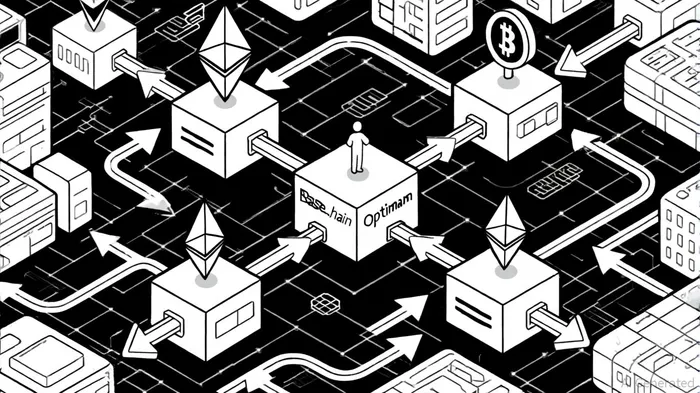
The crypto industry is at a pivotal inflection point, where infrastructure development is no longer a technical afterthought but a strategic lever for mass adoption and institutional capital inflow. Coinbase's recent partnerships with the OptimismOP-- Infrastructure Fund (OIF) and its broader involvement in cross-chain standards mark a critical step in this evolution. By aligning with Optimism's Superchain vision and championing the Open Intents Framework (OIF), CoinbaseCOIN-- is notNOT-- merely building a LayerLAYER-- 2 network—it is architecting a foundational layer for a unified, interoperable DeFi ecosystem. This analysis explores how these initiatives position Coinbase as a linchpin in the next phase of crypto infrastructure, with implications for liquidity, governance, and institutional trust.
Strategic Infrastructure as a Catalyst for Adoption
Coinbase's collaboration with the Optimism Infrastructure Fund (OIF) is a masterclass in strategic infrastructure design. The partnership involves Base, Coinbase's Layer 2 network, sharing a portion of its sequencer revenue with the Optimism Collective—either 2.5% of total sequencer revenue or 15% of net on-chain revenue, whichever is greater [1]. This revenue-sharing model is paired with a grant of up to 118 million OPOP-- tokens over six years, capped at 9% of voting power to preserve decentralization [2]. Crucially, protocol upgrades to Base require a two-of-two multisig governance mechanism, ensuring alignment between Coinbase and the Optimism Foundation [3].
These arrangements reflect a broader philosophy: infrastructure must be neutral, decentralized, and open to avoid fragmentation. The “Law of Chains,” a set of principles guiding Superchain protocols, underscores this ethos by emphasizing free markets for transaction ordering and interoperability [4]. For investors, this signals a shift from siloed blockchain ecosystems to a modular, composable infrastructure layer—a prerequisite for scaling DeFi to mainstream audiences.
Cross-Chain Liquidity: From Friction to Fluidity
The Open Intents Framework (OIF), backed by Coinbase and the EthereumETH-- Foundation, is a game-changer for cross-chain liquidity. By enabling users to declare high-level intents—such as swapping tokens across chains—while automated solvers handle execution, the OIF reduces technical complexity and transaction costs [5]. This modular framework, built on standards like ERC-7683 and customizable smart contracts, addresses a $21 billion surge in cross-chain crime in 2025 by creating auditable, permissionless infrastructure [6].
Coinbase's role in this ecosystem is amplified by its Stablecoin Bootstrap Fund, which is incentivizing liquidity for USDCUSDC-- in DeFi protocols like AaveAAVE-- and Morpho [7]. This effort directly counters Tether's dominance in stablecoin markets and aligns with the Optimism SuperStacks campaign, which drove $100 million in TVL and 27,200 unique wallets in its first week [8]. Such initiatives demonstrate that cross-chain liquidity is no longer a niche concern—it is the bedrock of a global financial system.
Institutional Capital: A New Era of Trust
For institutional investors, the appeal of Coinbase's infrastructure lies in its emphasis on governance transparency and risk mitigation. The OIF's standardized protocols and Base's revenue-sharing model create predictable, auditable systems that reduce the volatility of cross-chain operations. This is critical for institutions, which prioritize regulatory clarity and operational efficiency.
Moreover, Coinbase's Base network has already demonstrated its utility by enabling users to monetize dormant assets—such as borrowing USDC against BitcoinBTC-- holdings [9]. This financial innovation, combined with the Superchain's points-based incentives for cross-chain participation, creates a flywheel effect: increased liquidity attracts developers, which in turn attracts users and capital.
Conclusion: The Infrastructure Play of the Decade
Coinbase's OIF partnership and cross-chain initiatives are not incremental improvements—they are a redefinition of what blockchain infrastructure can achieve. By prioritizing interoperability, neutrality, and institutional-grade security, Coinbase is laying the groundwork for a future where DeFi is as seamless as traditional finance. For investors, this represents a rare opportunity to back infrastructure that is both a technical necessity and a financial catalyst.





Comentarios
Aún no hay comentarios