
The Coinbase Data Breach: A Wake-Up Call for Crypto Security and Governance
In May 2025, CoinbaseCOIN--, one of the largest cryptocurrency exchanges in the world, suffered a catastrophic data breach orchestrated through insider collusion. Cybercriminals bribed and recruited rogue overseas support agents to access sensitive user data, exposing names, addresses, phone numbers, masked Social Security numbers, and transaction histories according to a government report. While no funds, private keys, or login credentials were directly stolen, the breach enabled highly convincing social engineering attacks, with some victims losing significant sums of money according to Coinbase's blog. The incident, which was traced back to December 2024 but publicly disclosed in May 2025, has since become a pivotal case study in the risks of centralized crypto platforms and the accelerating shift toward self-custody solutions.
The Anatomy of the Breach and Its Financial Fallout
The breach exposed vulnerabilities in Coinbase's internal access controls and employee monitoring systems. Attackers exploited the trust placed in customer support agents, who were bribed to extract data. Coinbase responded by firing the involved employees, offering free credit monitoring to affected customers, and establishing a 20 million reward for information leading to the arrest of the perpetrators. Despite these measures, the company estimated remediation costs could range between $180 million and $400 million, covering legal fees, customer reimbursements and security upgrades.
The breach also triggered a 7% drop in Coinbase's stock price and a class-action lawsuit alleging negligence in protecting user data according to legal analysis. Regulatory bodies, including the SEC, launched inquiries into Coinbase's internal controls, underscoring the growing scrutiny of centralized custodians in the crypto space according to Chainalysis.
Investment Risks in Centralized Platforms
The Coinbase breach highlights a critical risk for investors: the inherent vulnerabilities of centralized systems. Unlike decentralized networks, where data is distributed across a peer-to-peer network, centralized platforms like Coinbase store user data in a single, high-value target. This creates a "single point of failure" that can be exploited through insider threats, as demonstrated in this case according to Zyphe.
Experts argue that the breach underscores the need for robust internal monitoring and employee vetting. According to a report by Zyphe, decentralized identity frameworks - where data is encrypted and stored across a distributed network - could mitigate such risks by eliminating centralized repositories of sensitive information. However, the adoption of these solutions remains uneven, leaving many platforms exposed to similar attacks.
The financial and reputational costs of the breach also raise questions about the long-term viability of custodial models. For investors, this incident serves as a stark reminder that centralized platforms, despite their convenience, are not immune to systemic risks. The 2.17 billion in crypto-related thefts in 2025, including a $1.5 billion hack of ByBit, further reinforces the urgency of rethinking custody strategies.
The Rise of Self-Custody Solutions
In the wake of the breach, the crypto industry has seen a renewed push toward self-custody solutions. Non-custodial wallets, which allow users to retain control of their private keys, have gained traction as a response to the risks of centralized exchanges. For example, Coinbase Wallet - a non-custodial Web3 wallet - reported 3.2 million monthly active users in 2025, representing 2.7% of Coinbase's total user base.
Industry experts argue that the breach accelerated adoption of decentralized custody models. As stated by Chainalysis in its 2025 mid-year crypto crime report, the incident highlighted the limitations of relying on intermediaries to secure digital assets according to Chainalysis. Decentralized finance (DeFi) and non-fungible token (NFT) platforms, which inherently require self-custody, also saw growth, with 198 million active DeFi wallets and 294 million NFT-linked wallets globally in 2025.
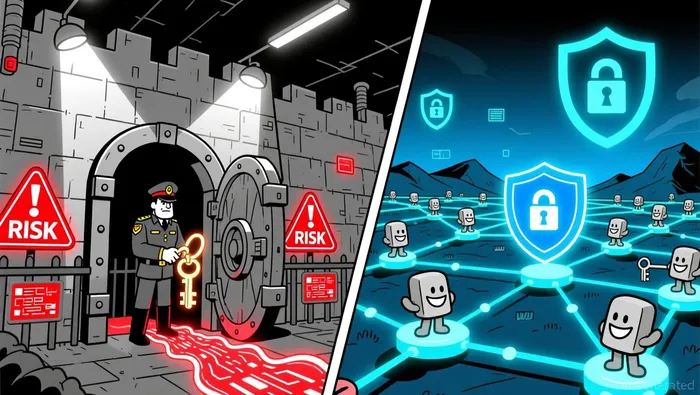
However, the transition to self-custody is not without challenges. Managing private keys requires a higher level of technical literacy, and the lack of customer support in non-custodial models can deter mainstream adoption. Nevertheless, the breach has spurred innovation in user-friendly self-custody tools, such as hardware wallets and multi-signature solutions, according to industry analysis.
Regulatory and Investor Implications
The Coinbase breach has also intensified regulatory pressure on centralized platforms. In 2025, courts began to rule on arbitration agreements and the classification of crypto assets, with some rulings favoring investors in cases of negligence. This legal landscape is likely to shape future governance models, pushing platforms to adopt stricter compliance measures and transparency protocols.
For investors, the incident underscores the importance of diversifying custody strategies. While centralized platforms offer convenience and liquidity, self-custody solutions provide a hedge against systemic risks. As noted by TokenMetrics in its 2025 risk analysis, the growing frequency of hacks and insider threats is driving institutional interest in institutional-grade custody solutions, such as multi-party computation (MPC) wallets and decentralized autonomous organizations (DAOs) for fund management.
Conclusion: A New Era of Crypto Security
The 2025 Coinbase data breach is a wake-up call for the crypto industry. It exposed the fragility of centralized custodial models and the urgent need for decentralized alternatives. For investors, the incident highlights the importance of balancing convenience with security, particularly as regulatory scrutiny and cyber threats continue to evolve.
While self-custody solutions are not a panacea, they represent a critical step toward a more resilient crypto ecosystem. As the industry moves forward, the lessons from Coinbase's breach will likely shape the next generation of security protocols, governance frameworks, and investment strategies. In a world where data is the new currency, the ability to control one's own keys may prove to be the ultimate safeguard.





Comentarios
Aún no hay comentarios