
The Coinbase Data Breach and Its Implications for Crypto Security and Investor Trust
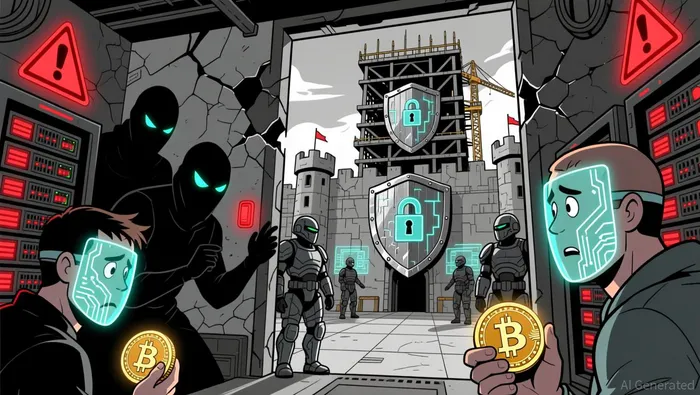
The 2025 CoinbaseC-- data breach, a watershed moment in the crypto industry, has exposed critical vulnerabilities in centralized exchange (CEX) security frameworks while reshaping regulatory and investor perceptions. This incident, involving an insider threat orchestrated by bribed customer support agents, compromised sensitive data of 69,461 users, including government ID images, transaction histories, and masked Social Security numbers. The breach not only triggered immediate financial and reputational fallout for Coinbase but also catalyzed a broader reevaluation of cybersecurity risks and regulatory compliance in the crypto sector.
The Breach: A Wake-Up Call for Centralized Exchanges
The breach was not the result of a technical vulnerability but a failure in internal controls. Rogue agents from a third-party vendor, TaskUs, were bribed to access user data, which cybercriminals leveraged for social engineering attacks, including account takeovers and fraudulent transactions according to Coinbase. One victim lost over $2 million in a targeted scam. While Coinbase's response-firing the agents, offering reimbursements, and establishing a $20 million reward fund-demonstrated accountability, the incident underscored the risks of relying on offshore contractors for sensitive operations as reported by financial analysts.
The financial impact of the breach is estimated at $180–400 million, covering legal costs, customer reimbursements, and security upgrades. This figure excludes potential regulatory penalties, as the SEC launched an inquiry into Coinbase's compliance with KYC/AML standards. The breach also sparked 13 class-action lawsuits, with plaintiffs alleging negligence in protecting user data.
Regulatory Reckoning and Compliance Overhaul
Post-breach regulatory scrutiny has intensified, particularly in the U.S. and EU. The SEC's Project Crypto, launched in 2025, now emphasizes stricter oversight of CEXs' internal controls and third-party risk management. In the EU, the full enforcement of MiCA in 2025 mandated stringent compliance measures, including stablecoin reserve requirements and enhanced KYC protocols. These changes increased operational costs for CEXs but also reduced systemic risks, fostering institutional adoption.
The U.S. response under the Trump administration prioritized regulatory clarity, with the CLARITY Act and GENIUS Act for stablecoins enabling banks to offer crypto custody services. This shift blurred lines between traditional finance (TradFi) and crypto, increasing expectations for CEXs to meet institutional-grade security standards.
Valuation Trends: Between Crisis and Compliance
The breach's long-term impact on CEX valuations is multifaceted. On one hand, incidents like the Bybit hack ($1.5 billion stolen in 2025) and Coinbase's breach have eroded investor trust, leading to a 7% drop in Coinbase's stock price post-disclosure. On the other, regulatory clarity has attracted institutional capital. For example, the CLARITY Act's passage enabled banks to integrate crypto services, boosting demand for compliant CEXs.
However, compliance costs remain a drag. The EU's MiCA and U.S. stablecoin regulations have increased capital expenditures for CEXs, with some platforms passing these costs to users via higher trading fees. This tension between compliance and profitability will likely define CEX valuations in the coming years.
Investor Trust and the Path Forward
Investor trust in CEXs has been further strained by the rise of decentralized alternatives. Post-breach, platforms like Coinbase have accelerated the adoption of decentralized identity verification and token approval alerts to mitigate risks. Yet, the breach highlighted the inherent custodial risks of centralized models, prompting a shift toward non-custodial solutions among security-conscious users.
For CEXs to retain market share, they must balance innovation with transparency. Coinbase's pledge to enhance fraud prevention and employee training is a step forward, but long-term trust will require systemic changes, such as decentralized data storage and real-time threat detection.
Conclusion: A New Era for Crypto Security
The Coinbase breach serves as a cautionary tale for the crypto industry. While regulatory clarity and institutional adoption offer growth opportunities, cybersecurity risks and compliance costs remain significant headwinds. For investors, the key takeaway is that CEX valuations will increasingly hinge on their ability to navigate these dual challenges. As the industry evolves, the line between security, compliance, and profitability will become ever more critical.







Comentarios
Aún no hay comentarios