
Why Coffee Producers Are Poised for Long-Term Gains Amid Volatile Prices
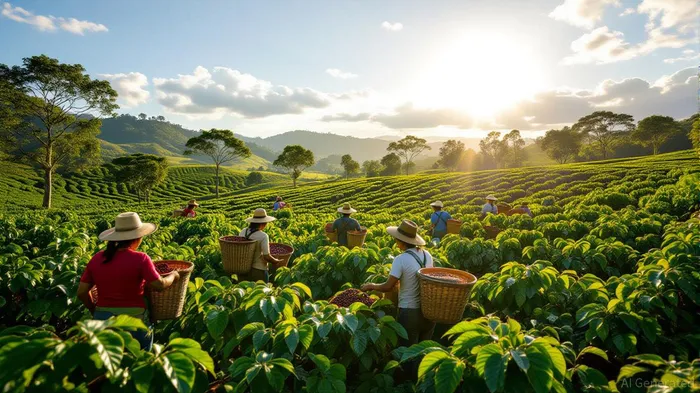
The global coffee industry is at a crossroads. While 2025 has seen Arabica and Robusta prices plummet to multi-year lows—$2.80 and $1.73 per pound, respectively—these short-term fluctuations mask a far more compelling narrative: structural shifts in supply, climate-driven scarcity, and policy tailwinds are creating a foundation for long-term gains in coffee production. For investors, this is not a market in decline but one undergoing a transformation that could redefine value chains and profitability for decades.
Structural Shifts: From Vulnerability to Resilience
Climate change has already disrupted traditional coffee-growing regions. Brazil, the world's largest producer, faced 110,000 wildfires and catastrophic flooding in 2025, while Vietnam's Robusta output dropped 20% due to drought. These shocks have exposed the fragility of conventional supply chains. Yet, they've also accelerated innovation. Producers are now shifting to higher altitudes, experimenting with heat-resistant varieties like Stenophylla, and adopting advanced breeding techniques such as genomic selection (GS) and marker-assisted selection (MAS). These technologies are not just mitigating yield risks—they're enabling the development of coffee plants that thrive in warmer, drier conditions.
Geographic diversification is another key trend. China's Yunnan province, Burundi, and Papua New Guinea are emerging as critical players, reducing reliance on traditional hubs like Brazil and Vietnam. This shift is driven by necessity but also opportunity: new regions offer untapped markets and lower exposure to climate extremes. For investors, this means capitalizing on companies and cooperatives that are pioneering these transitions.
Climate-Driven Scarcity: A Double-Edged Sword
Arabica, which accounts for 60% of global production, is particularly vulnerable. Studies project its optimal growing areas could shrink by 50% by 2050 due to rising temperatures. This scarcity could drive prices higher in the long term, especially as demand grows. The Asia-Pacific region, led by China's 21% annual coffee consumption growth since 2010, is becoming a dominant force. Meanwhile, the specialty coffee segment is expanding at a 10.4% CAGR, with consumers willing to pay premiums for traceable, high-quality beans.
However, scarcity alone isn't enough to guarantee gains. Producers must adapt. The rise of alternative coffee sources—such as ramón seeds and date pits—and lab-grown coffee are diversifying supply. These innovations, while still nascent, could stabilize markets and open new revenue streams. Investors should watch for early movers in these spaces, particularly those with partnerships in R&D or access to emerging markets.
Policy Tailwinds: Sustainability as a Competitive Advantage
Governments and international bodies are increasingly aligning with the industry's sustainability goals. Colombia's Coffee, Forest & Climate Agreement—a public-private partnership—has become a global benchmark. By 2025, it has incentivized agroforestry, forest conservation, and carbon sequestration, with farmers receiving subsidies for shade-grown coffee and soil conservation. Similarly, the Green Climate Fund's $120 million AROMA initiative is scaling regenerative agriculture in Mexico, Guatemala, Honduras, and Uganda, home to 20% of the world's smallholder coffee farmers.
These policies are not just environmental boons—they're economic accelerants. Certifications like Fair Trade and Rainforest Alliance are now non-negotiable for major retailers, with 70% of global coffee brands targeting 100% certified supply chains by 2030. For producers, sustainability is no longer a cost—it's a revenue multiplier.
Investment Opportunities: Where to Position Capital
The intersection of climate resilience, policy support, and demand growth points to three key areas for investors:
1. AgTech and Breeding Firms: Companies like ClimaCell (weather data for precision agriculture) and AgBiome (biocontrol solutions for coffee pests) are enabling farmers to adapt.
2. Sustainable Producers: Look to cooperatives in Colombia, Ethiopia, and Guatemala that are certified under the Rainforest Alliance or 49th Parallel. These entities benefit from premium pricing and long-term contracts.
3. Alternative Coffee Sources: Startups like Atomo Coffee (lab-grown coffee) and Koffee Kult (ramón seed coffee) are disrupting traditional supply chains.
The Bottom Line
While 2025's price volatility may deter short-term speculators, the structural changes in coffee production are creating a more resilient, diversified, and sustainable industry. Climate-driven scarcity is pushing innovation, policy tailwinds are embedding sustainability into value chains, and demand growth is outpacing supply. For investors with a 5–10 year horizon, this is a market where risk is being transformed into reward.
The next time you sip your morning brew, consider the forces at play: a warming planet, a shifting supply chain, and a global push for sustainability. These aren't just challenges—they're catalysts for long-term gains.







Comentarios
Aún no hay comentarios