
Cocoa and Coffee: Navigating Geopolitical and Climate-Driven Volatility in 2025/26
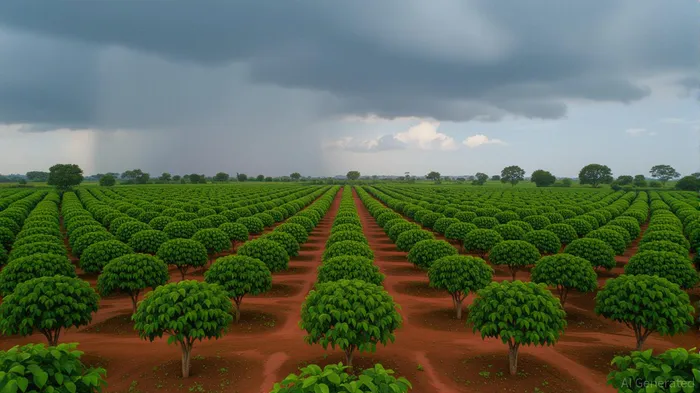
The global cocoa and coffee markets in 2025/26 are defined by a collision of forces: climate anomalies, geopolitical tariffs, and structural supply constraints. These factors have created a landscape of asymmetric risks and opportunities, demanding strategic positioning for investors. While coffee markets show signs of temporary stabilization, cocoa remains entrenched in a cycle of volatility driven by climate fragility and policy uncertainty. Understanding this divergence is critical for hedging or long-position investments in soft commodity futures.
Climate and Policy: Twin Engines of Disruption
Climate change has become the dominant driver of supply shocks. Cocoa and coffee, both tropical crops, are acutely sensitive to weather patterns. In 2024, El Niño-induced droughts in West Africa—home to 60% of global cocoa production—exacerbated the spread of cacao swollen shoot virus (CSSV), reducing yields by 15–20%. Meanwhile, erratic rainfall in Brazil's coffee belt delayed harvests, pushing prices to record highs. These shocks were compounded by policy interventions. The U.S. imposed a 46% tariff on Vietnamese Robusta in April 2025, while the EU's anti-deforestation law, set to take effect in late 2025, has already tightened supply chains by requiring traceability for commodities linked to deforestation.
Divergent Trajectories: Coffee's Stabilization vs. Cocoa's Fragility
The coffee market has seen a 9% price correction in the past three months, buoyed by Brazil's favorable harvest and normalized rainfall. However, this stability is precarious. U.S. tariffs have forced buyers to shift to lower-cost alternatives, such as Brazilian Conilon, but this reshuffling masks underlying vulnerabilities. Demand for coffee remains inelastic, with prices up 220–240% since 2023 yet consumption declines limited to 2–3%. The market's resilience is a double-edged sword: while it absorbs short-term shocks, it also delays necessary structural adjustments.
Cocoa, by contrast, is in a state of structural fragility. Despite a 25% price drop from its $13,000/ton peak in late 2024, cocoa remains 50% above historical averages. This is due to persistent bottlenecks: aging plantations, CSSV outbreaks, and a 3–5-year production cycle that limits responsiveness to price signals. The Commitments of Traders (COT) report for May 2025 reveals a rare alignment of speculative and institutional long positions, with open interest surging by 6,000 contracts. This suggests sustained volatility and a bullish bias, as both non-commercial traders and commercial hedgers bet on further price appreciation.
Strategic Positioning: Hedging Coffee, Longing Cocoa
For investors, the key lies in distinguishing between temporary and structural risks. Coffee's stabilization is a short-term reprieve. While favorable weather and tariff-driven substitutions have eased immediate pressures, the market remains exposed to demand-side shifts and geopolitical recalibrations. Hedgers may find value in short-term coffee futures to capitalize on this volatility, but long-term exposure is fraught with uncertainty.
Cocoa, however, presents a compelling case for long positions. Its structural challenges—climate vulnerability, disease, and slow production cycles—ensure prolonged supply-side stress. The EU's anti-deforestation law will further tighten supply chains, increasing compliance costs and reducing available inventory. Meanwhile, demand resilience (grindings down only 3–4%) and speculative inflows suggest cocoa's price floor is well above historical norms. The COT report's bullish accumulation signal, combined with technical indicators pointing to a $6,000/ton support level, reinforces this view.
Policy and Climate: The Unseen Arbitrage
Geopolitical tariffs are reshaping trade flows in ways that amplify market asymmetries. The U.S. “Liberation Day” tariffs—20% on EU chocolate imports and 145% on Chinese packaging materials—have increased costs for confectionery businesses, indirectly supporting cocoa prices. For coffee, U.S. tariffs have created arbitrage opportunities, with buyers pivoting to lower-taxed sources like Brazilian Conilon. However, these shifts are temporary; the EU's anti-deforestation law and potential U.S. policy reversals under a Trump administration could reintroduce volatility.
Conclusion: A Call for Asymmetric Exposure
In 2025/26, investors must adopt an asymmetric approach to soft commodity markets. Coffee offers limited upside for hedgers, with its stabilization likely to be short-lived. Cocoa, however, is a high-conviction opportunity. Its structural supply constraints, coupled with speculative momentum and policy-driven costs, position it as a long-term bet against a consensus that underestimates climate and geopolitical risks. For those willing to navigate the volatility, cocoa futures present a compelling case for strategic positioning.







Comentarios
Aún no hay comentarios