
Coca-Cola's Strategic Resilience Amid Macroeconomic Volatility: A Deep Dive into Consumer Behavior and Regional Performance
The global beverage industry in 2025 faces a landscape of macroeconomic turbulence, from inflationary pressures to shifting consumer preferences. Against this backdrop, The Coca-ColaKO-- Company has demonstrated a remarkable ability to adapt, leveraging strategic innovation and regional agility to maintain growth. A closer look at its Q3 2025 results and insights from its upcoming Morgan Stanley Conference presentation reveals how the company is navigating these challenges through a dual focus on consumer behavior adaptation and regional performance optimization.
Consumer Behavior Adaptation: From Volume to Value
Coca-Cola's shift from a volume-driven to a value-centric strategy has been pivotal. In Q3 2025, the company reported a 1% increase in global unit case volume, but this modest growth masked a more significant 6% rise in organic revenue (non-GAAP), driven by pricing actions and a favorable product mix. This underscores a strategic pivot toward premiumization and diversification. For instance, Coca-Cola Zero Sugar grew 14% globally, while Diet Coke/Coca-Cola Light saw a 2% increase in North America and Asia Pacific. Such performance highlights the company's ability to align with health-conscious trends without sacrificing profitability.
Innovation has further cemented this adaptability. The launch of prebiotic soft drinks like Simply Pop and the expansion of the Fairlife dairy brand reflect a proactive response to consumer demand for functional beverages. Additionally, regional experiments-such as Sprite Plus Tea in North America and Bacardi mixed with Coca-Cola in Mexico and Europe-demonstrate localized product development tailored to evolving tastes. These initiatives not only diversify revenue streams but also mitigate risks tied to stagnant categories like traditional sparkling flavors, which declined by 1% in Q3.
Regional Performance: Navigating Divergent Dynamics
Coca-Cola's regional performance in Q3 2025 reveals a nuanced picture of resilience. While Latin America and North America saw stagnant or slightly negative unit case volume growth, regions like Europe, the Middle East, and Africa (EMEA) achieved 4% growth. Central Asia, North Africa, Brazil, and the United Kingdom also contributed to the 1% global volume increase. This divergence underscores the importance of localized strategies.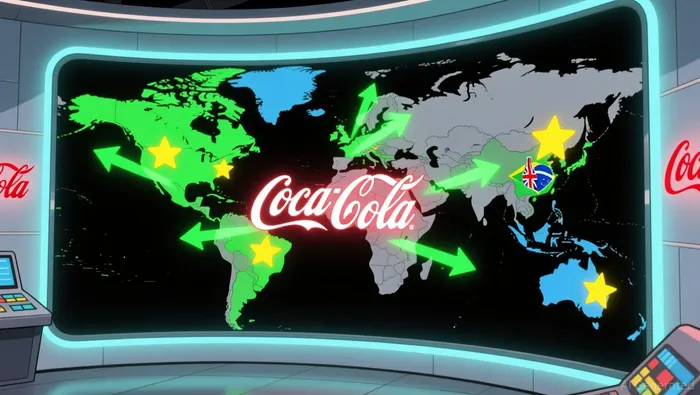
Asia Pacific, for example, faced a 1% decline in unit case volume but still managed 4% organic revenue growth, driven by pricing and a shift toward higher-margin products like Santa Clara lactose-free milk. Meanwhile, Coca-Cola FEMSA reported a 3.3% revenue increase to $71.9 billion pesos in Q3 2025, despite a 0.6% volume decline. This resilience is attributed to its sustainable growth model and the success of Coca-Cola Zero Sugar and Santa Clara dairy brands. However, FEMSA anticipates a low to mid-single-digit volume decline in Mexico in 2026 due to an 87% excise tax on soft drinks, though it remains optimistic about a potential 5% volume uplift from the 2026 World Cup.
The company's refranchising strategy has also bolstered regional performance. By divesting bottling operations in India and Africa, Coca-Cola has unlocked long-term growth while reducing capital intensity. This approach not only strengthens local expertise but also aligns with its "Total Beverage Company" vision, which prioritizes value over volume.
Strategic Resilience: A Blueprint for the Future
Coca-Cola's Q3 results and strategic roadmap highlight its capacity to thrive amid macroeconomic volatility. The company's operating income surged 59% in Q3 2025, with a 32.0% operating margin, driven by cost management and organic revenue growth. This margin expansion, coupled with a 15% increase in currency-neutral operating income (non-GAAP), signals robust financial discipline.
Looking ahead, the company's focus on innovation and portfolio diversification will be critical. As James Quincey, Coca-Cola's CEO, prepares to present at the 2025 Morgan Stanley Conference, investors can expect further emphasis on its "all-weather strategy," which prioritizes agile execution and high-return activities. This includes the upcoming launch of cane sugar Coke, a product designed to meet demand for natural ingredients.
Conclusion: A Model of Adaptive Resilience
Coca-Cola's Q3 2025 performance and strategic initiatives illustrate a company that is not merely weathering macroeconomic storms but actively reshaping its business to thrive in them. By adapting to consumer preferences through health-conscious innovations and premiumization, while optimizing regional strategies to counter divergent market dynamics, the company has built a resilient framework for long-term growth. As global volatility persists, Coca-Cola's ability to balance volume with value-and to innovate without losing sight of its core brands-positions it as a compelling case study in strategic agility.







Comentarios
Aún no hay comentarios