
Coca-Cola's Strategic Exit from Costa Coffee: A Lesson in Portfolio Rationalization and Sector Misalignment
Coca-Cola's decision to divest its £3.9 billion acquisition of Costa Coffee in 2019 marks a pivotal case study in the risks and rewards of cross-sector mergers and acquisitions (M&A) in the beverage and hospitality industries. The venture, intended to expand Coca-Cola's footprint into the hot drinks market, has instead become a cautionary tale of strategic misalignment and operational incompatibility. As the company grapples with selling Costa Coffee at a fraction of its original valuation, the case underscores the critical importance of sector-specific expertise, cultural integration, and financial due diligence in cross-industry deals.
Strategic Rationale and Initial Expectations
Coca-Cola's acquisition of Costa Coffee was driven by a clear strategic intent: to capitalize on the growing demand for coffee and ready-to-drink (RTD) beverages while leveraging Costa's established retail network and vending machine infrastructure. The deal was expected to create synergies by combining Costa's brand equity in the UK and global coffee markets with Coca-Cola's distribution capabilities and asset-light business model. Analysts initially viewed the acquisition as a bold but logical move to diversify Coca-Cola's portfolio beyond carbonated soft drinks.
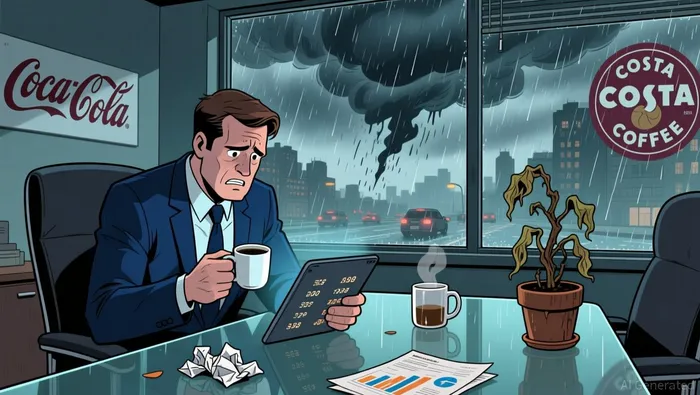
However, the venture's failure to meet financial expectations-Costa reported a £9.6 million pre-tax loss in 2023-reveals the inherent challenges of merging a service-heavy retail chain with a beverage company accustomed to low-capital, high-volume operations. The mismatch between Coca-Cola's operational strengths and Costa's complex retail requirements, including real estate management, labor-intensive service delivery, and perishable inventory logistics, became a critical liability.
Operational and Strategic Challenges
The acquisition's struggles highlight the risks of cross-sector M&A when core competencies diverge. Costa's operational demands-such as managing high-turnover staff, maintaining café locations, and navigating supply chain volatility for green coffee-fell outside Coca-Cola's expertise. Meanwhile, the pandemic exacerbated these challenges, disrupting supply chains and accelerating shifts in consumer behavior toward home consumption, which hurt Costa's café business.
Compounding these issues was the competitive landscape. Costa faced stiff competition from established players like Starbucks and a surge of independent coffee shops, many of which offered more agile, localized experiences. Despite some success with Costa Express vending machines, a nod to Coca-Cola's distribution strengths, the broader café business failed to adapt to inflationary pressures and evolving customer preferences.
Comparative Case Studies: Successes and Failures
Coca-Cola's Costa Coffee experience is not unique in the beverage-hospitality M&A space. Cross-sector deals often hinge on strategic alignment and operational compatibility. For instance, Campbell Soup's acquisition of Sovos Brands for $2.7 billion succeeded by leveraging Campbell's supply chain scale and Sovos' strong brand equity in the pasta sauce market. Similarly, Mars' $810 million acquisition of Kevin's Natural Foods preserved the latter's brand identity while expanding Mars' presence in the healthy food sector. These cases demonstrate how successful integration requires respecting the acquired brand's culture and leveraging complementary strengths.
In contrast, failed cross-sector deals often stem from poor strategic fit. Idilia Foods' acquisition of Cacaolat, a milk-based beverage company, faced uncertainty due to a low enterprise value-to-revenue multiple and undisclosed EBITDA figures, raising questions about long-term viability. Meanwhile, hospitality M&A failures frequently arise from inadequate due diligence on cultural and operational integration, as seen in cases where traditional companies acquired sharing-economy platforms without understanding their unique dynamics.
Broader Implications for Investors
The Costa Coffee case offers critical lessons for investors evaluating cross-sector M&A opportunities. First, sector-specific expertise is non-negotiable. Coca-Cola's lack of experience in retail hospitality exposed vulnerabilities in managing labor, real estate, and perishable goods-areas where Costa's prior expertise should have been a strategic asset but instead became a liability. Second, cultural alignment is as important as financial metrics. The clash between Coca-Cola's corporate structure and Costa's retail-centric operations eroded agility and innovation.
Third, market conditions and macroeconomic risks must be factored into long-term planning. The pandemic and inflationary pressures disproportionately impacted Costa's profitability, illustrating how external shocks can amplify the weaknesses of misaligned acquisitions. Finally, portfolio rationalization is a necessary response when strategic bets fail. Coca-Cola's pivot to refocus on core growth areas-such as sparkling beverages and RTD coffee-reflects a broader trend among consumer packaged goods (CPG) companies to streamline operations.
Conclusion: Lessons for Future Acquisitions
Coca-Cola's exit from Costa Coffee underscores the importance of rigorous due diligence, strategic alignment, and flexibility in cross-sector M&A. While the acquisition initially seemed to offer a logical path to diversification, the operational and cultural misalignment proved insurmountable. For investors, the case reinforces the need to scrutinize not only financial metrics but also the operational and cultural fit between acquiring and target companies. As the beverage and hospitality industries continue to evolve, successful cross-sector deals will require a nuanced understanding of sector-specific challenges and a willingness to adapt-or exit-when strategic mismatches emerge.







Comentarios
Aún no hay comentarios