
Coca-Cola Bottler's Workforce Retrenchment in South Africa: Strategic and Financial Implications for Shareholders
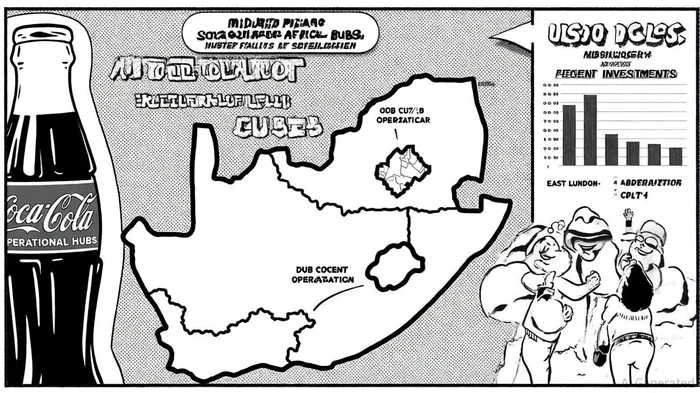
The recent announcement by Coca-Cola Beverages South Africa (CCBSA) to retrench 680 employees—nearly 9% of its 7,700-person workforce—has sparked intense debate about the strategic calculus of multinational corporations in volatile markets. This restructuring, coupled with the closure of plants in Bloemfontein and East London, reflects a broader recalibration of operations amid financial pressures and shifting consumer dynamics. For shareholders, the move raises critical questions: Will these cuts yield sustainable cost savings, or exacerbate reputational and operational risks? How do they align with CCBSA's long-term value proposition in a market defined by high unemployment and regulatory scrutiny?
Strategic Rationale: Efficiency vs. Entrenched Challenges
CCBSA attributes the retrenchments to “financial constraints” and the need to “streamline operations” in a landscape marked by declining sales, rising input costs, and a 15% year-on-year revenue drop[1]. The company has simultaneously invested R365 million in a high-speed bottling line at its Midrand plant, underscoring a paradoxical strategy of cutting costs while modernizing infrastructure[2]. This duality highlights a key tension: Can efficiency gains from automation offset the short-term pain of workforce reductions?
The decision also aligns with global trends in the beverage industry, where companies are increasingly prioritizing leaner supply chains and digital transformation. However, South Africa's unique challenges—such as load-shedding, inflation, and a 33% unemployment rate—complicate this calculus. As noted by analysts at Deloitte, restructuring in emerging markets often requires balancing operational efficiency with social license to operate[3]. CCBSA's gamble appears to hinge on the assumption that reduced labor costs will improve margins, even as it risks alienating a workforce and communities already strained by economic hardship.
Financial Implications: Short-Term Savings, Long-Term Risks
While CCBSA has not disclosed specific retrenchment costs, severance packages in South Africa typically range from three to six months' salary, depending on tenure. For 680 employees, this could amount to tens of millions of rand in immediate expenses. However, the company projects long-term savings from reduced labor and operational overheads, particularly with the closure of two underperforming plants.
The financial risks, however, are non-trivial. According to a 2023 GartnerIT-- report, workforce reductions often lead to “increased contractor costs, demands for higher compensation from remaining employees, and reduced growth,” eroding initial savings within three years[4]. For CCBSA, this could manifest in higher turnover rates or union demands for better terms, both of which could undermine profitability. Moreover, the R365 million investment in Midrand—a move aimed at boosting productivity—may struggle to justify itself if market conditions deteriorate further.
Shareholder Impact: Market Reactions and Strategic Uncertainty
The stock market's response to CCBSA's announcement has been mixed. While some analysts view the retrenchments as a necessary step to stabilize the business, others question the timing. South African equities have underperformed in 2025 due to macroeconomic instability, and CCBSA's restructuring could amplify investor concerns about its resilience. A Reuters analysis notes that similar job cuts by multinational bottlers in emerging markets have historically led to volatility, as investors weigh cost discipline against brand reputation[5].
Shareholder activism, meanwhile, is intensifying. As highlighted in a 2025 Harvard Corporate Governance report, activist campaigns targeting board changes and operational overhauls have surged, with 59 such campaigns globally in the first half of the year[6]. CCBSA's management must now navigate this landscape, ensuring transparency in its restructuring while addressing demands for ESG alignment. The company's emphasis on “fairness and transparency” in consultations[1] may help mitigate backlash, but the Food and Allied Workers Union's (FAWU) legal challenge—arguing procedural violations—could delay or derail the plan, creating further uncertainty.
Risks and Opportunities in a Fragile Market
The retrenchments also expose CCBSA to reputational and legal risks. FAWU's assertion that the cuts are driven by “business realignment” rather than financial necessity[2] has drawn public sympathy, particularly in a country where unemployment remains a political flashpoint. If the union succeeds in challenging the retrenchments, CCBSA could face fines, operational disruptions, or a loss of trust among local stakeholders.
Conversely, the restructuring could position CCBSA to compete more effectively in a market where smaller players are struggling. By consolidating operations and investing in technology, the company may gain cost advantages that allow it to maintain market share despite broader industry headwinds. The success of this strategy, however, will depend on its ability to execute swiftly and avoid the pitfalls of over-reliance on cost-cutting.
Conclusion: A Delicate Balancing Act
CCBSA's retrenchment underscores the precarious position of multinational corporations in South Africa. For shareholders, the key takeaway is that restructuring in volatile markets requires more than cost discipline—it demands a nuanced understanding of social, regulatory, and economic dynamics. While the immediate financial benefits of reducing labor costs are clear, the long-term success of CCBSA's strategy will hinge on its ability to navigate union resistance, maintain operational efficiency, and adapt to a consumer base increasingly prioritizing ethical consumption. In an environment where every decision carries political and economic weight, CCBSA's next moves will be closely watched by investors and stakeholders alike.







Comentarios
Aún no hay comentarios