
Coal Market Dynamics and Energy Transition Risks: A Capital Reallocation Analysis in 2025
The global energy landscape in 2025 is defined by a stark divergence in capital flows: clean energy investments have surged to $2.2 trillion, outpacing fossil fuel spending by more than double, while coal markets face mounting structural headwinds. This shift reflects a broader reallocation of capital driven by policy mandates, technological innovation, and the urgency of climate goals. Yet, the persistence of coal in key economies like China and India underscores the complexity of the energy transition-and the risks it poses to investors.
Coal Demand: Stability Amid Diverging Regional Trends
Global coal demand in 2025 remains stable at 8.85 billion tonnes, but regional dynamics reveal a fractured picture. In the United States, coal demand is projected to rise by 8% due to policy support and elevated natural gas prices. Meanwhile, the European Union's coal consumption is expected to decline by only 2%, a slower rate than in prior years, as lower hydropower and wind output force a temporary reliance on fossil fuels. China, the world's largest coal consumer, has maintained its demand near 2024 levels but reiterated its commitment to peaking coal consumption before 2030.
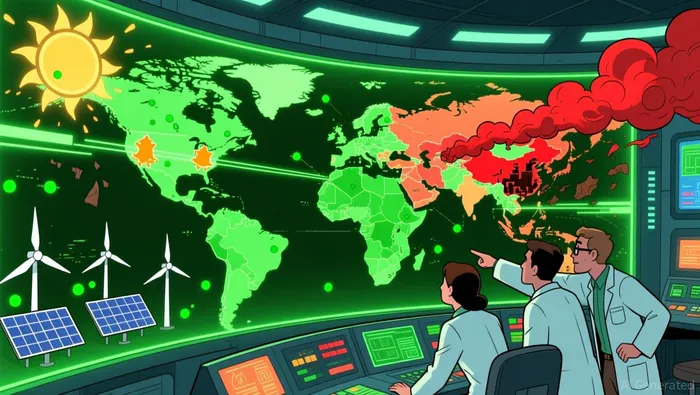 India and Southeast Asia, however, are bucking the global trend. Coal demand in India is growing at 3% annually, driven by industrialization and energy security concerns. Similarly, Southeast Asia's coal consumption is rising by 4% per year, fueled by low-cost baseload power needs in manufacturing hubs. These regional disparities highlight the uneven pace of the energy transition and the enduring role of coal in economies prioritizing affordability and reliability over decarbonization.
Capital Reallocation: The Rise of Renewables and the Struggle of Fossil Fuels
Renewable energy investments have become the dominant force in global energy capital allocation. In the first half of 2025 alone, global renewable investments reached $386 billion, a 10% increase from 2024. Solar energy, in particular, has dominated electricity demand growth, accounting for 83% of new capacity additions in H1 2025. However, utility-scale solar and onshore wind investments have declined by 13%, signaling a shift toward small-scale solar and diversified technologies.
The financial sector is also recalibrating its priorities. In Q3 2025, U.S. clean energy and transportation investments hit a record $75 billion, with electric vehicles (EVs) driving 76% of retail clean investment. Meanwhile, traditional oil, gas, and coal investments plateaued at $1.1 trillion, a figure that pales in comparison to the $2.2 trillion allocated to clean energy. This divergence is not merely a reflection of market forces but also of regulatory and investor pressures. For instance, banks continue to allocate $1.12 in coal financing for every $1 invested in renewables, a marginal improvement from 2022 but still insufficient to align with climate goals.
Energy Transition Risks: Stranded Assets and Financial Exposure
The energy transition is creating significant financial risks for coal-dependent assets. According to Carbon Tracker, $112 billion in future capital expenditures for thermal coal production (excluding China) is at risk of becoming stranded, as high-cost producers struggle to justify new investments in a low-carbon economy. This risk is compounded by the rising competitiveness of solar and wind, which now outprice coal in most regions, due to cost reductions exceeding 80% over the past decade.
Regulatory pressures further exacerbate these risks. The International Monetary Fund (IMF) estimates that a 1.5°C-aligned coal phase-out could unlock $85 trillion in global economic benefits, but transitioning coal-dependent economies requires innovative financing and public-private partnerships. For example, POSCO Holdings has already begun rethinking its coal-based steel production strategies amid tightening emissions regulations and overcapacity concerns.
Strategic Implications for Investors
The energy transition is not a binary shift from fossil fuels to renewables but a nuanced reallocation of capital shaped by regional priorities, technological advancements, and policy frameworks. For investors, this means:
1. Diversification and Consolidation: Clean energy firms are increasingly consolidating to build scalable, best-in-class operations according to recent analysis. This trend is particularly evident in the U.S., where midstream energy companies gained 8.2% in Q3 2025, driven by strong shipping demand.
2. Risk Mitigation: Coal investments remain exposed to stranded asset risks, particularly in OECD markets where demand is peaking. Investors must weigh short-term returns against long-term climate liabilities.
3. Geographic Nuance: While global coal demand is plateauing, regional growth in India and Southeast Asia offers opportunities for investors seeking to balance decarbonization with energy security.
Conclusion
The energy transition in 2025 is a tale of two markets: a rapidly expanding clean energy sector and a coal industry clinging to relevance in a carbon-constrained world. For investors, the key lies in navigating this duality with strategic foresight. As capital continues to flow toward renewables and grid infrastructure, the financial risks of coal-stranded assets, regulatory penalties, and declining competitiveness-will only intensify. The challenge is not merely to reallocate capital but to do so in a way that aligns with both profitability and planetary survival.







Comentarios
Aún no hay comentarios