
The COAI Token Scam and Its Ripple Effects on Crypto Regulation
The Collapse and Its Immediate Impact
The COAI token's failure was not merely a technical malfunction but a systemic breakdown rooted in governance flaws and market manipulation.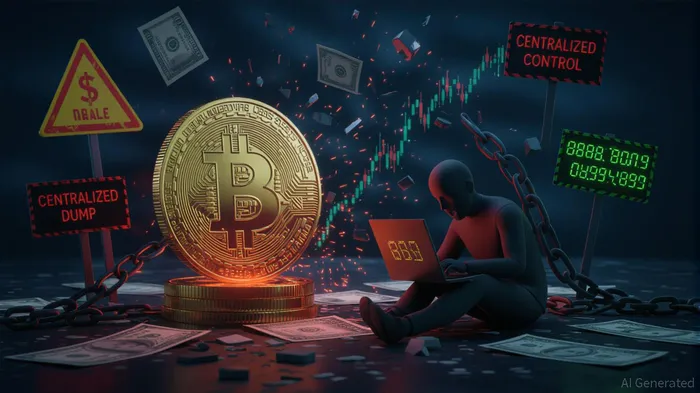 The algorithmic design of its stablecoins, xUSDXUSD-- and deUSD, failed to maintain their dollar peg, triggering a cascade of panic selling according to analysis. This collapse highlighted the fragility of DeFi systems reliant on opaque liquidity mechanisms and centralized governance. As one analyst noted, "The illusion of decentralization was shattered when the rug was pulled by a handful of insiders" according to the report.
Regulatory responses were swift but uneven. The U.S. froze assets linked to the fraud, while Singapore's Monetary Authority (MAS) blocked $150 million in funds tied to the broader Prince scam network. However, these actions exposed jurisdictional challenges, particularly in Southeast Asia, where lax oversight has made the region a haven for crypto scams, costing investors an estimated $10 billion annually.
Regulatory Responses and Enforcement Gaps
The COAI incident has forced regulators to confront the ambiguity of existing frameworks. In the U.S., the CLARITY Act, enacted in 2025, seeks to clarify whether stablecoins are securities or commodities-a distinction critical to enforcement. Yet, as the SEC's Q4 2025 enforcement newsletter notes, the agency has shifted focus toward traditional fraud cases, signaling a need for clearer definitions to avoid regulatory arbitrage.
Post-Scam Reforms and Investor Protection Measures
In the wake of COAI, investor protection has become a top priority. The U.S. Securities and Exchange Commission (SEC) and Commodity Futures Trading Commission (CFTC) have intensified scrutiny of unregistered token promotions, while the Department of Justice (DOJ) has pursued criminal cases against Ponzi schemes and ransomware-linked fraud according to regulatory filings. Legal protections for victims now include civil lawsuits and class actions, with attorneys leveraging blockchain analytics to trace stolen assets.
Technological solutions are also emerging as critical tools. AI-driven monitoring systems, such as those developed by Anthropic, are being deployed to detect governance weaknesses and fraudulent activities in real time. Smart contract audits by firms like CertiK and OpenZeppelin have become standard practice, addressing vulnerabilities exposed by the COAI collapse. These measures, however, are only as effective as the transparency and compliance they enforce.
The Role of Technology in Enhancing Security
The dual-edged nature of AI is evident in the crypto space. While advanced AI agents can exploit smart contracts, they also offer defensive capabilities. For instance, Anthropic's research has demonstrated how AI can uncover novel vulnerabilities in recently deployed contracts, enabling preemptive fixes. Similarly, the EU's GPAI Code of Practice, approved in 2025, aims to streamline compliance for AI providers, emphasizing transparency and responsible development.
Yet, technology alone cannot resolve the human element of fraud. Investor education remains paramount. Industry leaders now advocate for self-custody solutions, rigorous due diligence, and adherence to KYC/AML protocols according to industry reports. As one expert put it, "The future of crypto depends on balancing innovation with accountability" according to the policy roundtable.
Conclusion: A Wake-Up Call for the Industry
The COAI token scam is a cautionary tale for emerging asset classes. It has laid bare the risks of unregulated experimentation and the need for robust governance. While regulatory frameworks like MiCAR and the CLARITY Act represent progress, their success hinges on global coordination and enforcement.
For investors, the lesson is clear: due diligence is no longer optional. The tools exist-smart contract audits, AI monitoring, and legal recourse-but their effectiveness depends on widespread adoption. As the crypto market evolves, so too must the safeguards that protect it. The COAI collapse may have been a setback, but it is also a catalyst for a more resilient and transparent financial ecosystem.







Comentarios
Aún no hay comentarios