
CNOOC Limited's Strategic Shift: Navigating Fossil Fuels and Renewables Under New Leadership
The global energy sector is at a crossroads. Governments and investors are pushing for rapid decarbonization, yet demand for traditional fossil fuels remains stubbornly high. For state-owned giants like CNOOC Limited (0883.HK), the challenge is clear: maintain China's energy security through oil and gas production while pivoting toward renewables to meet ESG mandates. Enter Zhang Chuanjiang, the newly appointed chairman whose coal industry pedigree may hold the key to this balancing act.
A Coal Veteran in a Petro-Market: Why Zhang's Background Matters
Zhang's career has been defined by reshaping legacy energy sectors through technology. At China Shenhua, he spearheaded smart mining systems that boosted productivity by over 40%, while implementing AI-driven safety protocols in Shanxi's coal mines. This focus on operational efficiency and risk mitigation now positions him to tackle CNOOC's dual mandate.
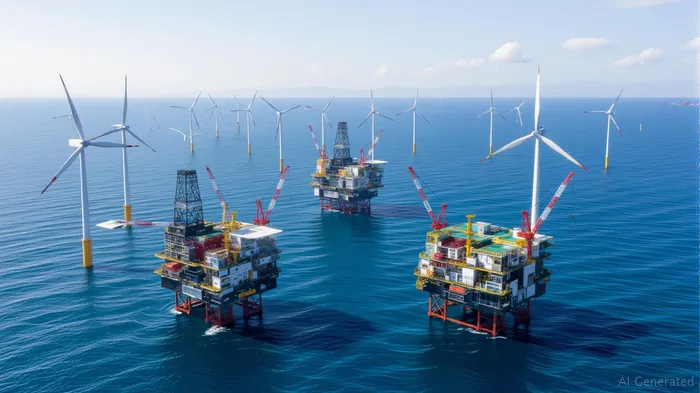
His tenure at China Datang—where he oversaw a sprawling coal and power portfolio—also reveals a knack for strategic pivots. By transitioning from coal leadership to CNOOC's helm, Zhang brings a tested framework for modernizing energy infrastructure. This is critical: CNOOC must simultaneously expand offshore oil/gas production (to meet China's energy needs) and invest in low-carbon projects like offshore wind (to satisfy sustainability goals).
Data-Driven Momentum: CNOOC's Hybrid Model in Action
CNOOC's recent moves under Zhang underscore this dual strategy. In June 2025, he assumed leadership of the Strategy and Sustainability Committee, signaling a prioritization of ESG-aligned projects. Meanwhile, production targets remain aggressive: the company aims to boost crude output by 10% annually through 2027.
Investors should note the correlation between oil prices and CNOOC's valuation. However, its renewable ventures—like the $5 billion Bohai Wind Farm—add a buffer against fossil fuel volatility. This hybrid model could make CNOOC a rare “all-weather” play in the energy space.
Market Implications: A Transition-Era Bargain?
Critics may dismiss CNOOC as a “fossil fuel relic,” but its valuation suggests otherwise. At 10x forward EV/EBITDA, it trades at a discount to peers like PetroChina (8.5x) and Chevron (12x), despite stronger balance sheet metrics (debt-to-equity of 25%, below industry averages).
Zhang's leadership could unlock value by accelerating renewables while maintaining oil/gas dominance. For instance, CNOOC's offshore expertise positions it to dominate China's 200GW offshore wind target by 2030, a market currently underserved by pure-play renewables firms.
Investment Takeaway: Embrace the Hybrid
CNOOC's valuation discount and Zhang's track record suggest an attractive risk/reward profile. The company's low dividend yield (3.5%) compared to peers (PetroChina: 4.2%) hints at room for growth. Investors seeking exposure to China's energy transition should consider:
1. Near-term upside from rising oil prices and production growth.
2. Long-term resilience via renewables diversification.
3. ESG appeal: Zhang's emphasis on safety and sustainability could attract ESG-focused capital fleeing pure fossil fuel plays.
While risks include regulatory shifts and geopolitical volatility, CNOOC's hybrid model may prove more durable than single-sector bets. For now, the stock represents a compelling entry point to a transitional energy giant.
Final Note: Monitor CNOOC's Q2 2025 production reports for clues on offshore wind progress and oil/gas output trends.







Comentarios
Aún no hay comentarios