
CMS Reimbursement Expansion: A Catalyst for Avita Medical's RECELL System and Wound Care Innovation
The recent policy shift by the Centers for Medicare & Medicaid Services (CMS) has positioned AvitaRCEL-- Medical's RECELL System at the forefront of wound care innovation. Effective October 1, 2025, CMS introduced a New Technology Add-on Payment (NTAP) for the system, offering hospitals up to $4,875 in supplemental reimbursement per case for treating non-burn, full-thickness acute wounds caused by trauma or surgery, as reported by Yahoo Finance. This decision, valid until September 30, 2026, marks a pivotal moment for Avita, as it directly addresses the financial barriers that previously hindered widespread adoption of the technology, according to Avita's investor release.
Reimbursement as a Scalability Driver
The NTAP mechanism is designed to accelerate the integration of transformative medical technologies into clinical practice. For the RECELL System, this means hospitals can now offset the upfront costs of the device, which has been designated a Breakthrough Device by the U.S. Food and Drug Administration, according to a Gurufocus report. As noted in a Bloomberg report, the $4,875 per-case reimbursement-added to standard CMS payments-creates a financial incentive for healthcare providers to prioritize the system over traditional wound care methods, which often involve costly grafting procedures.
This policy shift is not merely a short-term boon. The temporary nature of the NTAP (through 2026) introduces a sense of urgency for hospitals to adopt the technology before the window closes, potentially driving rapid volume growth for Avita. Data from Avita's investor relations team suggests that the company has already bolstered its reimbursement support infrastructure, including coding guides and dedicated patient access services, to streamline adoption as detailed in Avita's reimbursement resources.
Market Implications and Competitive Edge
The wound care market is projected to grow significantly in the coming years, driven by an aging population and rising incidence of chronic conditions like diabetes. Avita's RECELL System, which uses a patient's own cells to regenerate tissue, offers a clinically proven alternative to allografts and synthetic dressings. The NTAP reimbursement now aligns financial incentives with clinical outcomes, creating a virtuous cycle: hospitals adopt the technology, achieve better patient outcomes, and justify continued use through documented cost savings.
A critical factor in this equation is the system's Breakthrough Device status, which underscores its innovative potential and may expedite future regulatory approvals or expanded indications. As stated by Avita's Health Economic and Market Access Team on AVITA Patient Access Services, the NTAP is expected to reduce the total cost of care for complex wounds by minimizing hospital stays and reoperations. This dual benefit-clinical efficacy and cost containment-positions Avita to capture market share in a sector where payers and providers are increasingly focused on value-based care.
Risks and Considerations
While the NTAP represents a significant tailwind, investors should remain cognizant of potential challenges. The temporary reimbursement period (through 2026) creates uncertainty about long-term sustainability. If CMS does not extend the NTAP or transition the system to a standard reimbursement rate, hospitals may scale back adoption post-2026. Additionally, the system's niche application to non-burn wounds limits its addressable market compared to broader wound care solutions.
However, Avita's proactive engagement with payers and providers-evidenced by its reimbursement resources and patient access services-suggests a strategic focus on maximizing the NTAP's impact during its window. The company's ability to demonstrate long-term cost savings and patient outcomes could influence CMS to extend support or secure private payer contracts.
Conclusion
The CMS NTAP for Avita's RECELL System is a masterstroke of policy and market alignment. By addressing the financial hurdles to adoption, the reimbursement expansion transforms a niche innovation into a scalable solution for acute wound care. For investors, this represents a compelling case of regulatory tailwinds driving revenue growth and market penetration. As the system's clinical and economic value becomes more entrenched in the healthcare ecosystem, Avita is well-positioned to redefine standards in regenerative medicine. 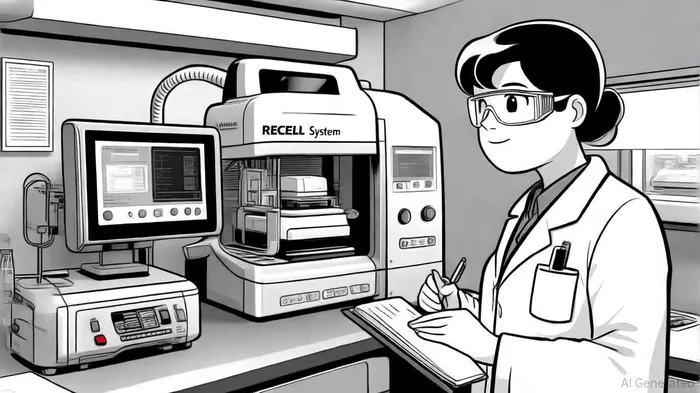







Comentarios
Aún no hay comentarios