
CME Group's New Options on Solana and XRP: A Catalyst for Institutional Adoption and Market Evolution
The launch of CMECME-- Group's options on SolanaSOL-- (SOL) and XRPXRP-- futures on October 13, 2025, marks a pivotal moment in the institutionalization of digital assets. By introducing both standard and micro-sized options with daily, monthly, and quarterly expiries, CME is notNOT-- only expanding its crypto derivatives arsenal but also addressing the growing demand for sophisticated risk management tools among institutional and retail investors, according to a CME Group announcement. This move builds on the robust performance of existing SOLSOL-- and XRP futures, which have already attracted over $38.5 billion in combined notional trading volume since their launches in March and May 2025, as reported in a Coin-Views article.
Institutional Adoption: From Speculation to Strategic Hedging
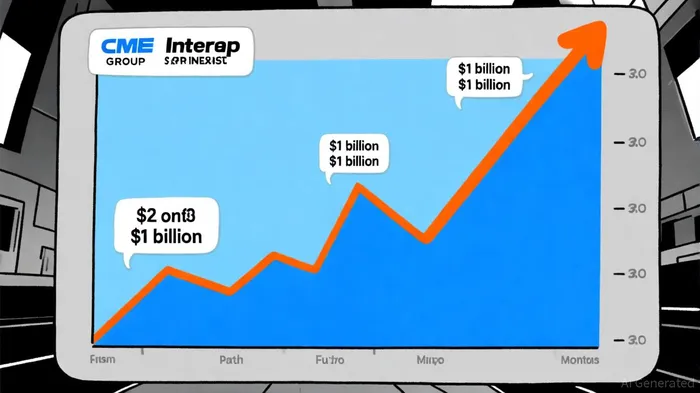
Institutional investors are increasingly shifting from speculative trading to structured strategies, leveraging regulated derivatives to hedge exposure and capture yield. According to a CoinLaw report, 82% of institutions now use crypto derivatives for risk mitigation, with 74% prioritizing cybersecurity and custodial solutions to safeguard assets. The introduction of CME's options on SOL and XRP aligns with this trend, offering tools to manage volatility in assets that have historically been more susceptible to retail-driven price swings. For example, Solana's rapid rise in open interest-from $0 to $1 billion in just five months-demonstrates its appeal to institutions seeking high-throughput blockchain infrastructure for DeFi and cross-border payments, according to a CoinDesk report.
The micro-sized options, in particular, democratize access to these tools, enabling smaller players to participate in institutional-grade strategies. FalconX, a leading institutional crypto execution platform, has highlighted the growing demand for hedging solutions as digital asset treasuries become mainstream in the CME GroupCME-- release. This shift mirrors Bitcoin's trajectory, where the introduction of CME BitcoinBTC-- futures in 2017 laid the groundwork for subsequent ETF approvals and broader institutional adoption, as noted in an Observer analysis.
Price Volatility: Short-Term Turbulence, Long-Term Stability
While the launch of these options may initially amplify short-term volatility-driven by speculative positioning and liquidity provider adjustments-the long-term effect is likely to be stabilizing. Historical analysis of Bitcoin and EthereumETH-- shows that derivatives markets reduce volatility through improved price discovery and hedging, according to a ScienceDirect study. For instance, Ethereum's post-merge volatility dropped by 30% as institutional capital flowed into structured products like options and futures, a trend documented in a Digital Finance News report.
However, the introduction of new instruments often triggers temporary turbulence. Data from CME's existing XRP futures market reveals that open interest surged to $1 billion within three months, accompanied by sharp price swings as traders recalibrated strategies, according to CoinDesk data. Similarly, Solana's futures hit record average daily volumes of 9,000 contracts in August 2025, coinciding with a 20% price correction, as reported in a CryptoTimes report. These patterns suggest that CME's options could catalyze similar dynamics in the short term, as market participants test the boundaries of these new tools.
Actionable Insights for Investors
- Monitor Open Interest and Volume: Track the growth of open interest and trading volume in CME's SOL and XRP options to gauge institutional sentiment. A surge in open interest relative to price could signal impending volatility or trend continuation, according to CME research.
- Leverage Micro Options for Flexibility: Retail and smaller institutional investors should consider micro-sized options to hedge positions without large capital outlays. These contracts could become critical during periods of high volatility, such as regulatory announcements or network upgrades, as discussed in a Currency Analytics article.
- Adopt Asymmetric Strategies: Given the potential for short-term price swings, investors might explore strategies like straddles or risk-reversals to profit from volatility while capping downside risk, following guidance in a CCN guide.
- Watch for Regulatory Catalysts: The success of these options will depend on broader regulatory clarity. The pending approval of U.S. spot Ether ETFs and the GENIUS Act's progress could further legitimize crypto derivatives, attracting more institutional capital, per a CoinDesk analysis.
The Bigger Picture: Crypto's Evolution into a Traditional Asset Class
CME's expansion into altcoin derivatives underscores a broader trend: digital assets are no longer fringe investments but integral components of diversified portfolios. As institutions adopt tools like options and futures, they bring with them the infrastructure, compliance frameworks, and liquidity mechanisms that characterize traditional markets. This evolution is not without challenges-concentration risks in custodians and the potential for market bifurcation remain concerns noted in a Digital Finance News report. Yet, the benefits of enhanced risk management and price stability are undeniable.
For investors, the key takeaway is clear: the launch of CME's SOL and XRP options is not just a product update but a signal of crypto's maturation. Those who position themselves to navigate the short-term volatility while embracing the long-term structural shift stand to gain the most.





Comentarios
Aún no hay comentarios