
Why CLPR Poses a High-Risk Investment in Today's Market Environment
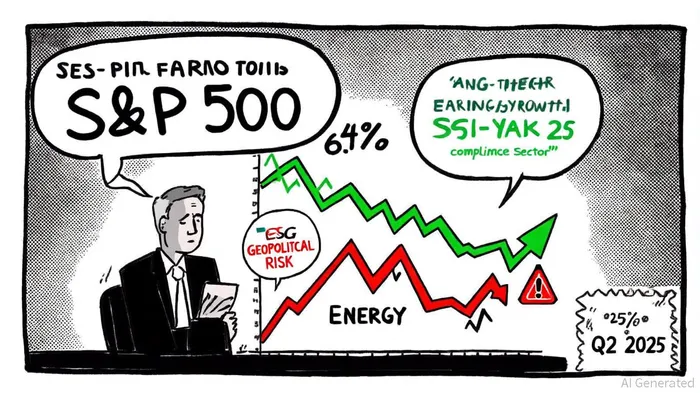
The energy sector's Q2 2025 earnings season painted a stark picture of divergence: while the S&P 500 celebrated 6.4% year-over-year earnings growth, the Energy Sector alone reported a 25% decline in profits, driven by collapsing oil prices and economic weakness[1]. For Calpurnia Energy (CLPR), a midstream player in this volatile landscape, the risks are magnified by structural vulnerabilities and a lack of clarity on risk mitigation strategies.
Geopolitical and Macroeconomic Headwinds
The energy industry's top risk remains geopolitical instability, with 55% of executives citing it as their primary concern[2]. Recent executive orders imposing tariffs on imports from Canada, Mexico, and China have further strained supply chains and operational costs[3]. For CLPR, which operates in a capital-intensive sector, these tariffs could erode margins by inflating input costs for equipment and labor. Compounding this, former President Trump's proposed trade policies—aimed at triggering a trade war—threaten to destabilize global commodity demand, directly impacting CLPR's revenue streams[2].
The energy transition adds another layer of uncertainty. While the sector has seen a slowdown in decarbonization efforts, with increased investment in fossil fuels, this shift creates a paradox: short-term profitability is bolstered, but long-term market stability is undermined by regulatory and environmental risks[2]. CLPR's exposure to this duality—relying on traditional energy assets while facing pressure to pivot to renewables—leaves it vulnerable to both price volatility and stranded asset risks.
Financial Vulnerabilities: Liquidity and Leverage
Though CLPR's specific financials remain opaque, sector-wide metrics highlight systemic fragility. The Energy Sector's Quick Ratio of 0.24 in Q2 2025 signals weak short-term liquidity, with limited capacity to meet immediate obligations[1]. While the Working Capital Ratio of 1.24 offers some buffer, the Leverage Ratio of 0.98 and Debt-to-Equity Ratio of 0.36 suggest moderate debt reliance[1]. However, in a high-interest-rate environment, even stable leverage ratios can become precarious if cash flows shrink. For CLPR, a downturn in commodity prices or a spike in borrowing costs could trigger liquidity crunches, particularly if its capital structure is not optimized for stress scenarios.
ESG Gaps and Regulatory Exposure
CLPR's risk profile is further exacerbated by gaps in ESG (Environmental, Social, and Governance) risk management. KPMG emphasizes that ESG risks are transverse, affecting reputational, operational, and credit risk pillars[4]. Yet, CLPR's public disclosures lack detailed frameworks for integrating ESG into core operations. For instance, the company has not demonstrated robust data governance practices critical for accurate climate-related reporting under the SEC's new disclosure rules[4]. This opacity could lead to regulatory penalties or investor divestment, as stakeholders increasingly demand transparency on carbon intensity, resource efficiency, and board accountability[5].
Moreover, the energy sector's shift toward sustainable production—such as carbon capture and recycled water usage—highlights CLPR's potential lag in innovation. Without clear strategies to reduce its environmental footprint, CLPR risks being outcompeted by peers adopting cleaner technologies, further eroding its market value[5].
Conclusion: A High-Risk Proposition
CLPR's position in the energy sector exposes it to a perfect storm of macroeconomic, geopolitical, and regulatory risks. While the sector's leverage and liquidity metrics are not catastrophically weak, the absence of proactive ESG integration and risk mitigation strategies leaves CLPR ill-prepared for a prolonged downturn. Investors must weigh these vulnerabilities against the company's lack of transparency and the sector's structural headwinds. In today's market environment, where volatility and regulatory scrutiny are rising, CLPR's risk profile warrants caution.







Comentarios
Aún no hay comentarios