
Cloudflare Outage: A Systemic Risk for Crypto Infrastructure?
Centralized Weaknesses in a Decentralized World
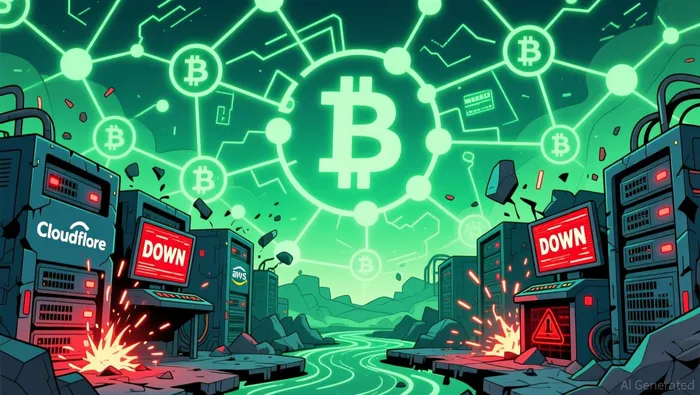
The outage, triggered by an internal server error in Cloudflare's global network, caused widespread disruptions for crypto platforms. BitMEX, a major derivatives exchange, reported outages linked to the incident, while DeFiLlama and Arbiscan faced intermittent 500 errors. CoinbaseCOIN-- and Kraken, two of the largest crypto exchanges, were also affected, alongside blockchain analytics tools like Etherscan and lending protocols such as AaveAAVE-- according to reports. These platforms, despite their decentralized aspirations, depend on centralized infrastructure for front-end operations, API delivery, and user access.
This over-reliance on third-party services mirrors broader trends in the tech industry. For instance, the AWS outage weeks prior had crippled Coinbase, Robinhood, and Base, a Layer-2 network according to reports. Such incidents highlight how a single point of failure-whether in Cloudflare's DNS services or AWS's cloud infrastructure-can cascade across the crypto ecosystem, disrupting trading, data availability, and user confidence.
Market Reactions and Financial Implications
The stock market's response to the Cloudflare outage further quantifies the financial stakes. Shares of the cybersecurity giant fell over 3% in premarket trading as investors fretted over operational risks. With a market capitalization of $70 billion, Cloudflare's stock volatility reflects its outsized role in global internet infrastructure. For crypto investors, the event serves as a reminder that the financial health of infrastructure providers directly impacts the platforms they support. A prolonged outage or repeated failures could erode trust in crypto services, particularly among retail users who associate reliability with traditional financial systems.
Systemic Risks and the Illusion of Decentralization
While blockchain networks themselves remain resilient-blockchains are inherently decentralized and continue to process transactions even during outages-the surrounding infrastructure is not. The 2025 outage revealed that crypto platforms' user interfaces, data feeds, and liquidity tools are often hosted on centralized services. For example, DeFiLlama's 500 errors during the outage left investors unable to track portfolio values, while BitMEX's trading disruptions highlighted the fragility of order-book systems reliant on cloud-based APIs.
This duality-decentralized protocols underpinned by centralized infrastructure-poses a unique risk. Unlike traditional finance, where centralization is the norm, crypto's value proposition hinges on trustless, distributed systems. Yet, when a single provider like Cloudflare or AWS controls critical components of the tech stack, the ecosystem's resilience is compromised. As one analyst noted, "The blockchain is a fortress, but the gates are made of paper" according to blockchain news.
Investor Takeaways: Scrutinizing the Tech Stack
For investors, the 2025 outage offers three key lessons:
1. Diversify Infrastructure Dependencies: Platforms that rely on a single cloud or network provider face heightened operational risks. Investors should prioritize projects with multi-provider strategies or self-hosted solutions.
2. Monitor Liquidity and Redundancy: DeFi platforms and exchanges must demonstrate robust redundancy in their tech stacks. The absence of concrete data on liquidity changes during the outage according to reports suggests a need for greater transparency.
3. Factor in Infrastructure Costs: The financial impact of outages-both direct (lost revenue) and indirect (reputational damage)-should be factored into valuations of crypto-native companies.
Conclusion: A Call for Resilience
The Cloudflare outage of 2025 is not an isolated incident but a symptom of a deeper issue: the crypto industry's unmet promise of true decentralization. While blockchain networks proved resilient, the surrounding infrastructure remains a soft underbelly. For investors, the takeaway is clear: systemic risks in crypto infrastructure are not hypothetical. They are real, quantifiable, and increasingly tied to the fortunes of centralized providers. As the industry matures, the pressure to build decentralized, self-sufficient tech stacks will only intensify. Those who ignore this risk may find themselves on the wrong side of the next outage.







Comentarios
Aún no hay comentarios