
Cloud Reliability and Investment Risks: Lessons from the 2025 AWS Lambda Outage
The October 2025 AWS Lambda outage, triggered by a cascading DNS resolution failure in the US-East-1 region, exposed the fragility of centralized cloud infrastructure and sent shockwaves through the global digital economy. Services like Snapchat, Fortnite, and financial platforms such as CoinbaseCOIN-- and RobinhoodHOOD-- faced prolonged disruptions, underscoring the systemic risks of over-reliance on a single cloud provider, according to a Forbes analysis. For investors, the event raises critical questions about the long-term viability of cloud infrastructure providers and the financial implications of reliability failures.
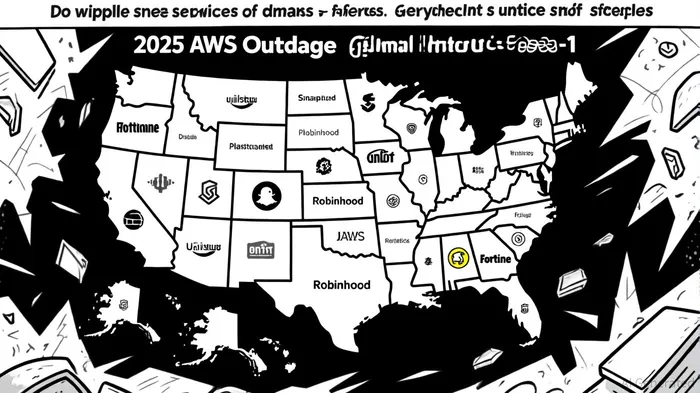
The Financial Toll of the Outage
The outage's impact extended beyond technical disruptions. Businesses faced immediate revenue losses, reputational damage, and compliance risks. For instance, UK banks like Lloyds and Barclays reported transaction failures, while fintech platforms grappled with duplicate charges and customer trust erosion, as reported by FinTech Magazine. According to industry estimates, the outage cost affected companies hundreds of millions in lost revenue, with mid-sized organizations losing thousands of dollars per minute of downtime, per a Finance Monthly report.
AWS's service level agreements (SLAs) offer limited financial recourse, typically in the form of service credits, which do little to offset the broader operational and reputational costs, as explained in a TechCabal overview. This gap highlights a growing concern: as cloud dependency deepens, the financial exposure for businesses-and by extension, investors-increases exponentially.
Stock Market Reactions and Competitive Dynamics
While AWS's stock (AMZN) remained stable in the immediate aftermath, trading near $213.08, the outage amplified existing investor anxieties about AWS's market position. Amazon's cloud growth has lagged behind Microsoft Azure and Google Cloud, with Azure's AI-driven workloads and Microsoft's 49% stake in OpenAI providing a strategic edge, according to Stansberry Research. In Q2 2025, AWS reported 17.5% year-over-year growth, compared to Azure's 39% and Google Cloud's 32%, per a NY Post report.
The outage also intensified scrutiny of AWS's ability to compete in the AI era. Microsoft's Azure, with its exclusive access to OpenAI's APIs and robust AI infrastructure, has attracted enterprises seeking scalable, high-availability solutions, per an Io Fund analysis. Meanwhile, Google Cloud's Vertex AI and TPUs are gaining traction in generative AI, further diversifying the competitive landscape, as illustrated in a CNBC chart.
Long-Term Investment Risks and Analyst Insights
Analysts warn that cloud reliability risks are no longer theoretical. Gartner has labeled cloud concentration a top emerging risk, citing the "wide incident blast radius" and regulatory compliance challenges posed by single-provider dependencies, according to a Gartner press release. The Cloud Security Alliance (CSA) adds that misconfigurations and insecure APIs remain critical vulnerabilities, with ransomware-as-a-service (RaaS) exploiting these gaps to target cloud environments, as noted in a SentinelOne roundup.
For AWS, the outage underscores the need to address architectural bottlenecks. While AWS boasts a 37% global cloud market share, its dominance in the US-East-1 region-a key hub for critical services like DynamoDB and IAM-leaves it vulnerable to regional failures, as reported by Converge Digest. Competitors like Azure are capitalizing on this by promoting multi-region architectures and "Active Active" redundancy models, a trend discussed in a Maxthon blog post.
Strategic Implications for Investors
The 2025 outage serves as a wake-up call for investors. Key considerations include:
1. Diversification: Portfolios should weigh cloud providers with robust multi-cloud or hybrid strategies, reducing exposure to single-point failures.
2. Resilience Metrics: Evaluate providers based on uptime guarantees, disaster recovery capabilities, and transparency in outage communication.
3. AI-Driven Growth: Prioritize providers with scalable AI infrastructure, as AI workloads are expected to amplify cloud reliability challenges.
While AWS remains a dominant player, its recent struggles highlight the importance of resilience in an increasingly interconnected digital economy. For investors, the lesson is clear: cloud reliability is not just a technical issue-it's a strategic imperative.





Comentarios
Aún no hay comentarios